'Don't believe in fairy tales' — Russia scrambles for front-line signal after Starlink cut-off
 on Google

Russia's assault on Ukraine has gone dark thanks to a recent cut-off of satellite internet.
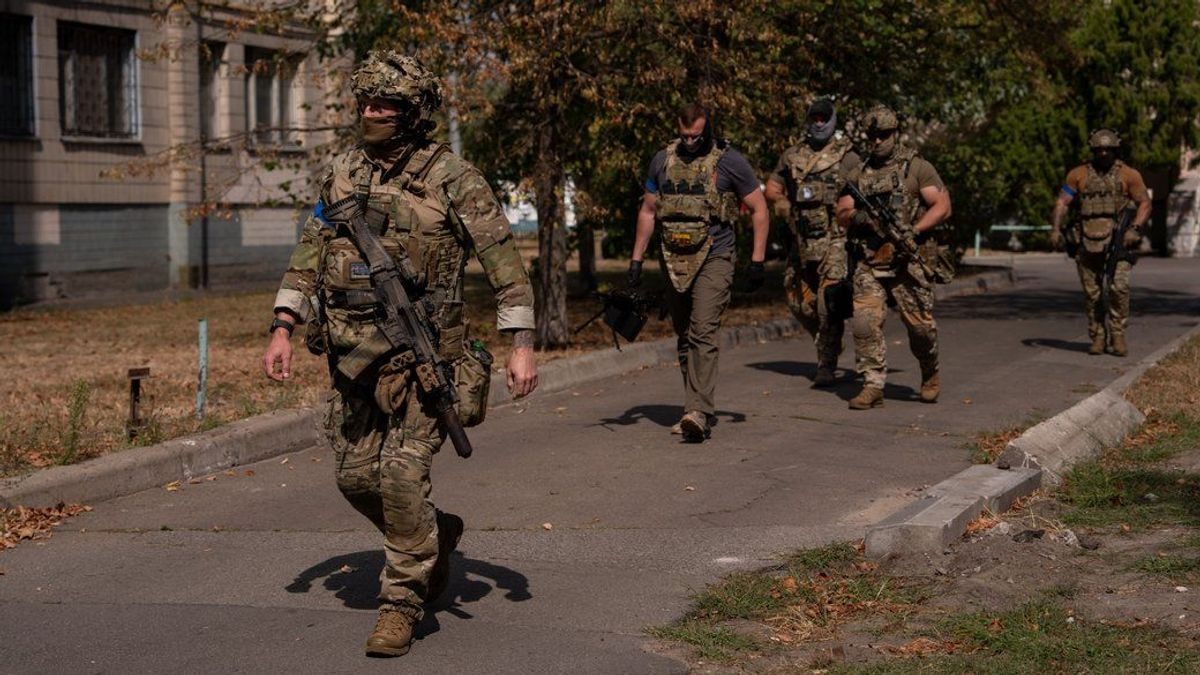
"Their pilots are now forced to pass on information by radio, and I can intercept those messages," Tymur, a deputy battalion commander in the Lyman sector, told the Kyiv Independent.
"They have their own versions and alternatives to Starlink. They just need time to expand their use."
At the start of February, SpaceX and the Ukrainian Defense Ministry implemented a "white list" for Starlinks to operate in Ukrainian territory, as well as a maximum speed limit for the terminals.
The low-earth orbit satellite network cut off unregistered Starlink terminals, with immediate consequences for the Russian military. The aggregate impact continues to manifest across the line.
Starlink has long been the go-to means for internet access across the Ukrainian front line, with upwards of 50,000 terminals sent over the past four years. Amid a political standoff with SpaceX founder and erstwhile White House advisor Elon Musk, Ukraine was forced last spring to consider the prospect of fighting without Starlink internet.
The alternatives were limited, but Ukraine never had to resort to them. Russia now finds itself facing them for real.
Russia has moved to register its remaining Starlink terminals by hook or by crook. Ukrainian forces have used this desperation as bait to dupe Russian units into giving up their positions or even donating to Ukrainian units.
"Use your head, there's simply no way of activating them," one Russian milblogger wrote on Feb. 13. "Forget about it, it's over, we're looking for new means of connection, we're pulling out mesh networks and a lot more."
The Runet is bustling with Russian-made alternatives for frontline internet. Some are highly optimistic, some absurd, none equals the Starlink network for remote robustness.
As that milblogger cautioned, "Don't believe in fairy tales."
Maybe the most whimsical is using hot air balloons as alternatives to cell phone towers, which are in short supply at the front line. Russian forces use cell networks much of the time, but they are limited at the front line.
Another is to affix mesh networking devices to the tops of fixed-wing UAVs en masse.
"Mesh network" is a term favored by military technologists, but it is in many ways just like setting up heavy-duty routers to extend a signal. There is a reason cell towers route data through space: small-unit terrestrial routing can handle radio repeaters, but the data volumes drones generate are quickly choked off.
Fixed-wing drones, moreover, have longer battery lives than quadrocopters, but even the top-shelf varieties have to recharge after around 24 hours. Most drones last closer to three.
The clearest Russian domestic analog to Starlink is a project called "Rassvet," or "Dawn" in English, which is a constellation of low-earth orbit satellites. Unlike the Starlink constellation, it is prospective. Since the Starlink cutoff, Russia's Defense Ministry has touted the Rassvet project as an alternative.
At the moment, even Maksut Shadayev, Russia's Digital Development Minister, said 16 Rassvet satellites had been built, with launches not yet planned until later this year.
The Kyiv Independent examined the comparative signal strength of European alternatives, repeating an analysis it ran last spring. The closest competitor, OneWeb EuTelsat, operates roughly 600 LEO satellites, but its terminals are far clunkier and more expensive than Starlink's.
Russian milblogger Kirill Fyodorov also cautioned, "The launch of the 'Rassvet' satellites has been constantly postponed, so let's remember this post. But another nuance is that 16 satellites will not ensure operation, because this requires a much larger number of spacecraft."
This is not to suggest that the Russian front will collapse immediately. An important distinction exists between Ukrainian and Russian forces at the front line. Starlink is far more critical for Ukraine's operations, which prioritize preserving soldiers' lives and rely heavily on internet-enabled coordination. By contrast, Starlink is largely unnecessary for Russia's dispersed assaults, often indistinguishable from suicide missions.
Similarly, Russia maintains a colossal advantage in fiber-optic drones, which provide wired rather than wireless connectivity for up to and sometimes over 50 kilometers (30 miles) from the pilot to the aircraft.
Ukraine's biggest potential gain from the Starlink cutoff may come well away from the front line. The first Russian use of Starlink that Ukrainian sources including military intelligence publicly identified was in Shahed guidance.
Ukrainian intelligence noted that Russia was outfitting its long-range Shahed drones and various domestic copies — Geran, Harpy, Gerbera etc. — with Starlink terminals to maintain connection with their pilots while flying deep inside of Ukraine as early as last spring.
More recently Russia has managed to conduct fleets of Shaheds via mesh networks that link through a single drone that gets orders from an operator within Russia via an onboard Starlink. While many Shaheds have various types of pilot-free guidance, ongoing connection is obviously extremely important.
For Shahed purposes, the most frequent alternative to Starlink has long been familiar: SIM cards for Ukrainian mobile operators. The same newly staffed Defense Ministry that instituted the white list for Starlink terminals is reportedly weighing a new registration system for domestic SIM cards as well.
Francis Farrell contributed reporting to this article.