on Google
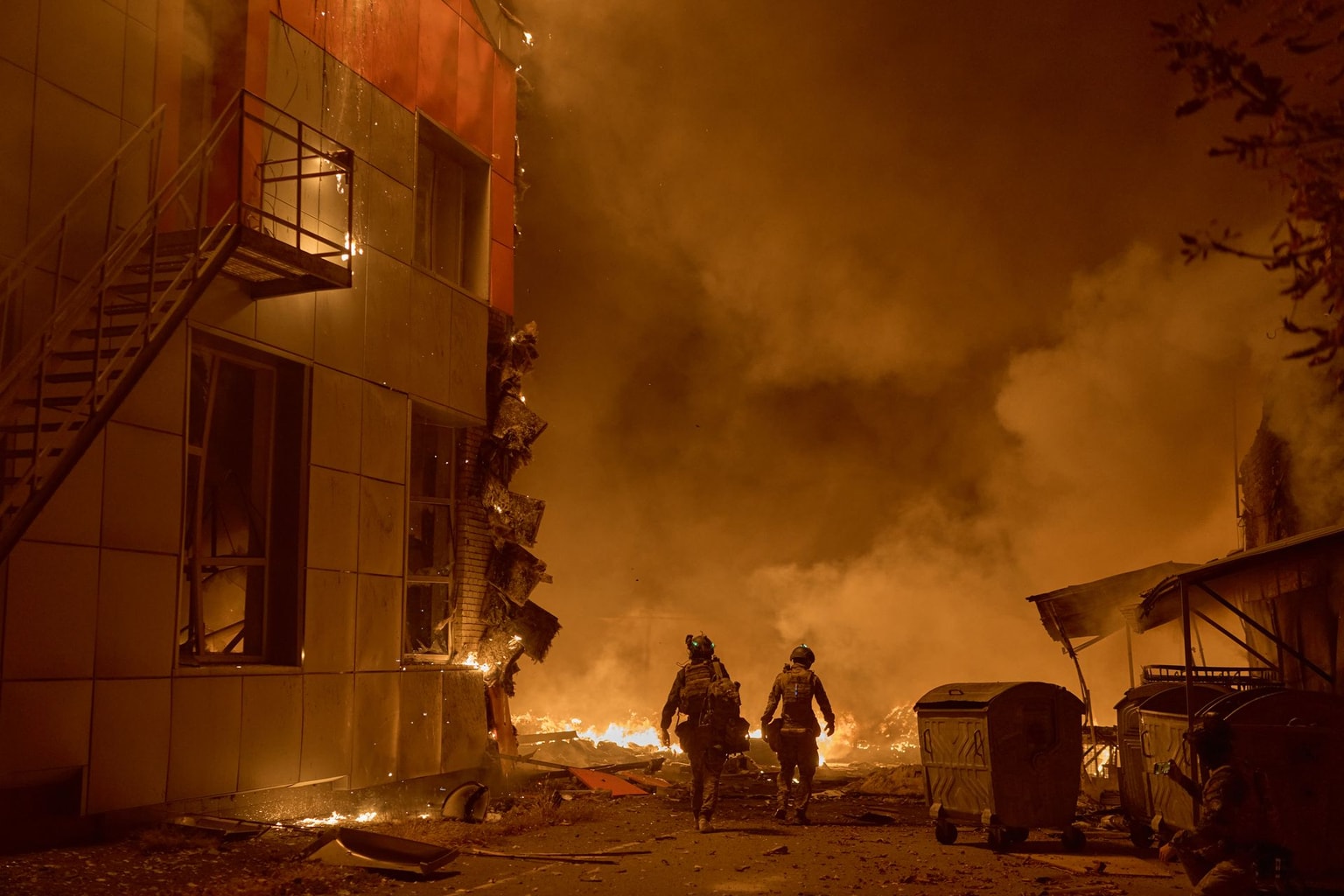
Ukraine's Air Force commander Mykola Oleshchuk commented on explosions in Russian-occupied Henichesk in Kherson Oblast, calling them "Ukrainian response to Russia's missile terror."
Oleshchuk published a video from unofficial sources showing pillars of black smoke rising above an alleged base of the Russian National Guard.
He didn't clarify if it was a strike carried out by the Ukrainian military. In Russian-occupied territories of Ukraine, local partisan groups are also involved in various acts of sabotage, targeting Russian military facilities.
Earlier on June 23, Russian state-owned media outlets and Moscow-installed proxy in Kherson Oblast Vladimir Saldo reported attacks on Henichesk and Skadovsk, another regional settlement occupied by Russian troops.
Saldo claimed that the strikes targeted "residential quarters" and were conducted by four U.K.-provided Storm Shadow long-range missiles. The Kyiv Independent is unable to verify his claims.
Officials in Russia and Russian-occupied territories often accuse the Ukrainian military of alleged attacks on civilians, failing to provide evidence.
According to the UN Human Rights Office, Russia's war caused 24, 862 civilian casualties in Ukraine from Feb. 24, 2022, to June 18, 2023. However, the actual number of casualties is likely considerably higher since the information from places with ongoing hostilities is delayed.