News Feed

Zakarpattia Oblast votes to ban Moscow Patriarchate church in region

1 min read

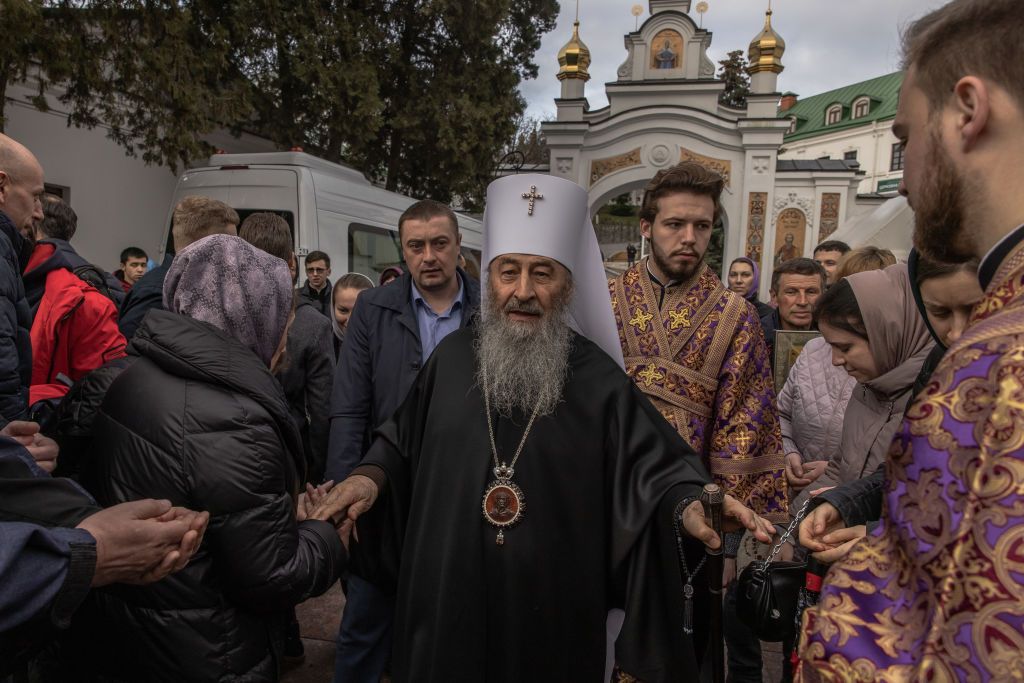
Zakarpattia Oblast Council voted on June 1 to prohibit all activities of religious organizations connected to Russia, citing national security needs.

This decision effectively translates into a ban on the Russian-controlled Ukrainian Orthodox Church of Moscow Patriarchate (UOC-MP) in the western Ukrainian region.

The council cited the "strengthening of national security in the public and religious spheres" as the grounds for the decision.

The deputies will also provide recommendations to law enforcement on countering anti-Ukrainian propaganda coming from religious, civic, and other organizations.

On April 11, Volyn Oblast Council issued a similar ban on the activities of UOC-MP.

Kamianets-Podilskyi City Council banned the church from holding services on April 4, followed by Lviv Mayor Andrii Sadovyi claiming the UOC-MP had ceased its existence in his city.

The Ukrainian Orthodox Church of the Moscow Patriarchate is not to be confused with the Orthodox Church of Ukraine, which was granted autocephaly (ecclesiastical independence) by the Ecumenical Patriarchate in Constantinople in January 2019.

Taras Tarasiuk: How the Russian Orthodox Church’s covert actions against Ukraine have failed
Avatar
Martin Fornusek

Reporter

Martin Fornusek is a reporter for the Kyiv Independent, specializing in international and regional politics, history, and disinformation. Based in Lviv, Martin often reports on international politics, with a focus on analyzing developments related to Ukraine and Russia. His career in journalism began in 2021 after graduating from Masaryk University in Brno, Czechia, earning a Master's degree in Conflict and Democracy Studies. Martin has been invited to speak on Times Radio, France 24, Czech Television, and Radio Free Europe. He speaks English, Czech, and Ukrainian.

Read more
News Feed

The list includes Denys Shmyhal, Ukraine's defense minister and previously the longest-serving prime minister, Digital Transformation Minister Mykhailo Fedorov, military intelligence chief Kyrylo Budanov, Deputy Presidential Office head and ex-commander Pavlo Palisa, and Sergiy Kyslytsya, the first deputy foreign minister and one of Ukraine's key negotiators.

Show More