Why Russia can’t protect its oil refineries from Ukrainian strikes
If Russia maintains one of the largest air defense networks in the world, how are Ukrainian drones continuing to reach the same facilities time and time again?
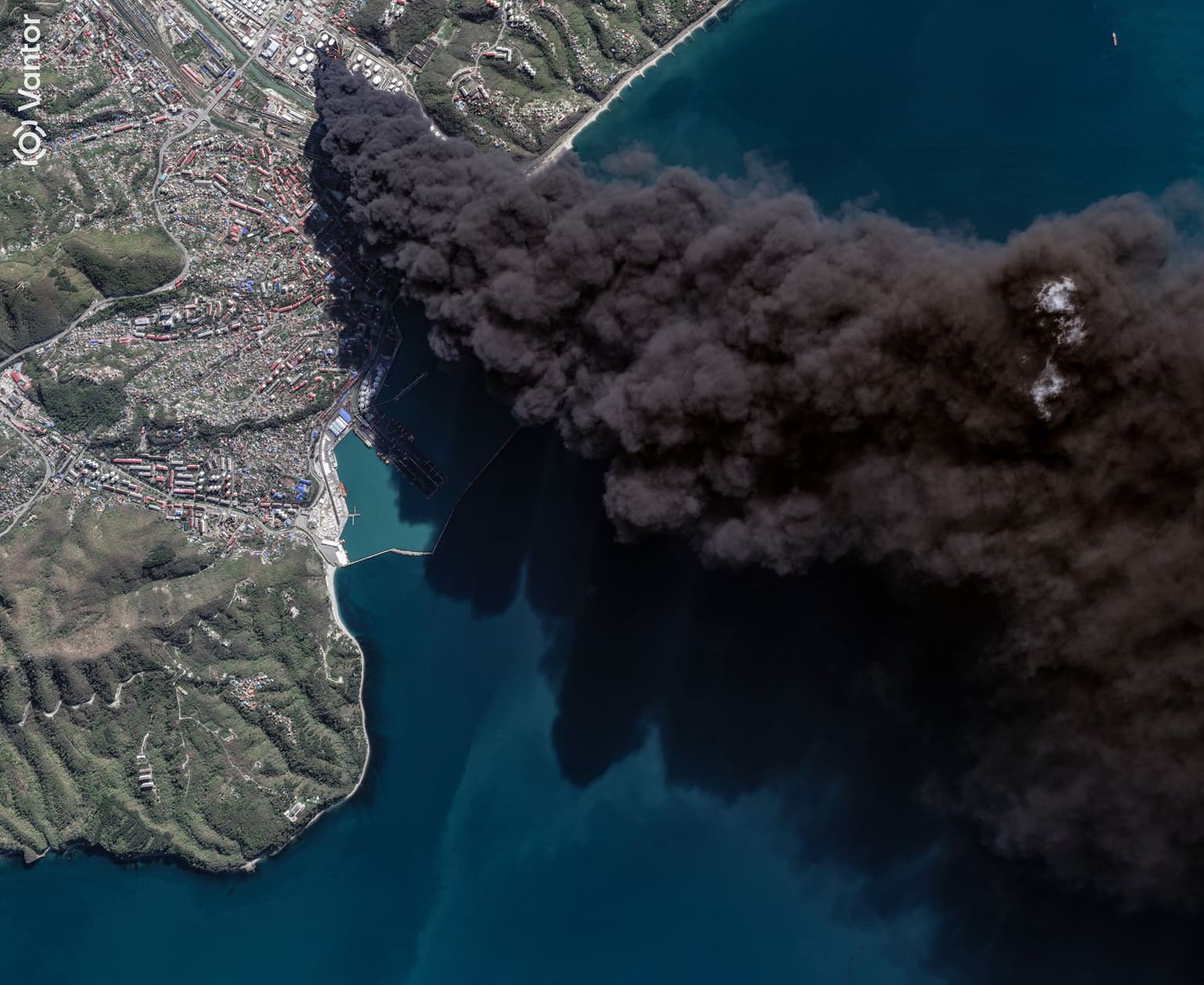
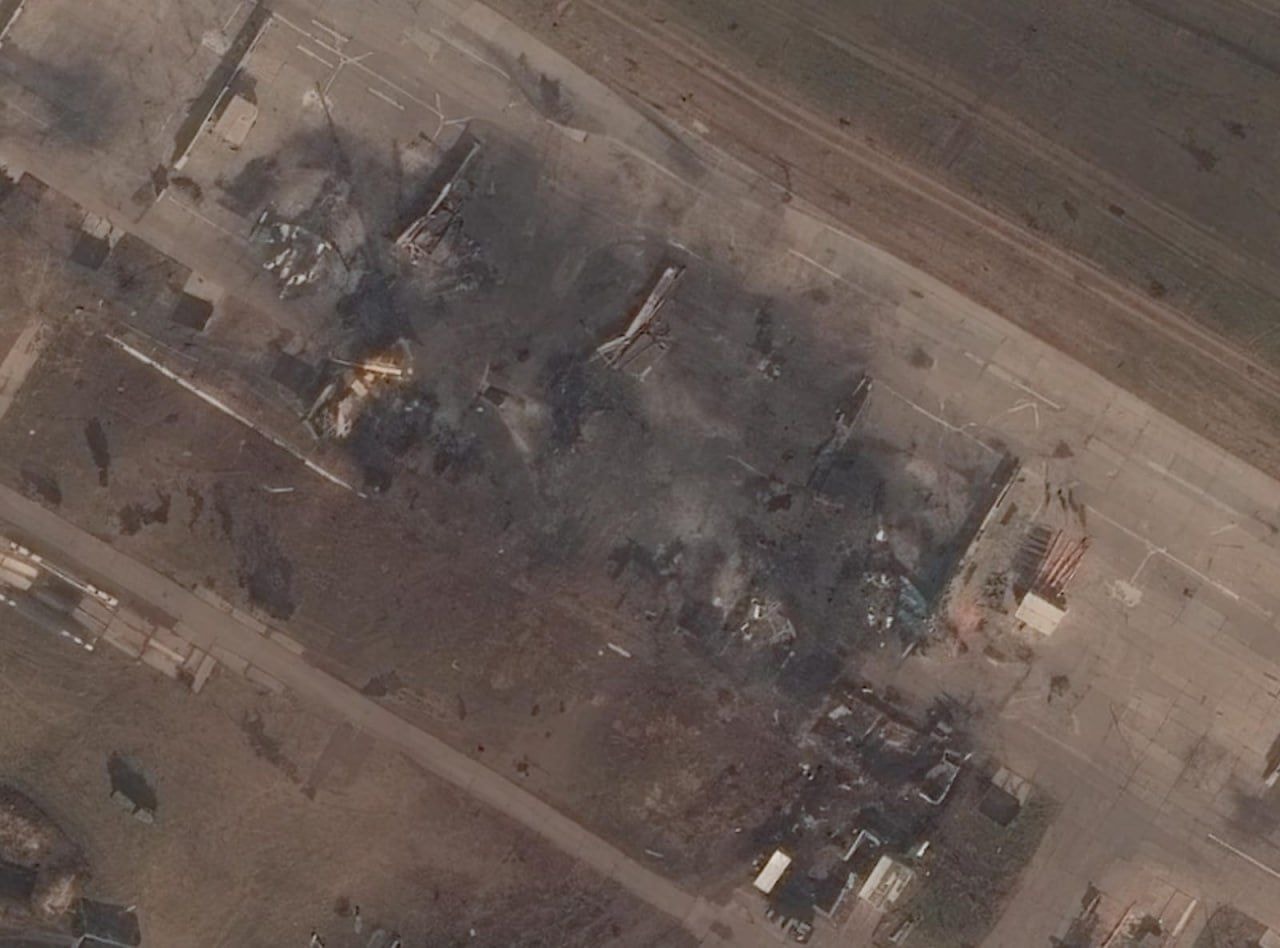
A satellite image shows smoke plumes rising from oil storage tanks in the Tuapse oil refinery in Tuapse, Krasnodar Krai, Russia, on April 16, 2026. (Satellite image / 2026 Vantor / Getty Images)
 on Google
Since mid-April, Ukraine has struck the Tuapse oil terminal on Russia's Black Sea coast four times, triggering major fires at one of the country's key oil export hubs despite active air defenses and repeated Russian claims of intercepted drones.
The attacks have caused days-long fires, halted refinery operations, polluted parts of the coastline, and forced authorities into prolonged emergency response efforts.
This raises a question: If Russia maintains one of the largest air defense networks in the world, how are Ukrainian drones continuing to reach the same facility time and time again?
The attacks on Tuapse expose the difficulty of defending oil infrastructure against sustained long-range drone campaigns. Ukraine's strategy relies on attritional, sustained pressure, where even a handful of drones that penetrate defenses can cause major disruption at large, highly flammable facilities.
Russia's air defense dilemma
Russia's oil infrastructure is spread across the largest country on earth, with refineries, storage depots, pumping stations, and export terminals dispersed across millions of square kilometers.
Protecting such a network forces Russian air defenses to be distributed far more widely than earlier in the war, when coverage was concentrated primarily around Moscow, front line regions, and major military facilities.
Justin Bronk, a senior research fellow at the Royal United Services Institute, said the scale of Russia's energy infrastructure creates a structural challenge for its air defenses.
"There are so many potential targets that Russia needs to try and defend," says Bronk.
That dispersion weakens one of the key advantages of Russia's air defense architecture: layered coverage.
Russian air defenses are designed to operate as overlapping networks of long-, medium-, and short-range systems concentrated in the same area, creating dense layers of detection and interception. Spread across a much wider territory, that overlap becomes harder to maintain.

"There is a disproportionate efficiency gain from having air defenses layered in the same location," Bronk explains. "As Ukraine forces Russia to disperse its air defenses over a much wider area, there is a disproportionate loss of effectiveness."
Even when Russian defenses intercept most incoming drones, oil infrastructure remains particularly vulnerable to cascading damage from relatively small strikes.
"We don't know how many (drones) Ukraine had to launch in order to get a few through," Bronk also notes.
But unlike more conventional industrial or military facilities, even a small number of successful hits on oil infrastructure can have outsized effects. Petroleum products are highly flammable, while storage tanks and piping networks are generally not armored or hardened.
"Russia's weak point is its oil refining complex."
"If you get several drones through defenses around a factory with small warheads, you might just damage the roof," Bronk explains. "Whereas if you get those same few drones through to an oil and gas refinery, there's a decent chance you cause a large fire or explosion."
According to Bronk, Russia's short-range Pantsir systems, which form the backbone of drone defense at many critical sites, may be under increasing strain, particularly due to ammunition shortages.

Russia is increasingly relying on medium- and long-range surface-to-air missile systems, as well as helicopters, to intercept Ukrainian drones instead of primarily using Pantsir systems, Bronk says.
"That may help explain why Ukraine continues to penetrate defenses around facilities like Tuapse," he adds.
The logic behind Ukraine's campaign against Russian oil
Ukrainian deep strikes are central to Kyiv's broader effort to impose higher military and economic costs on Russia's war effort.
Tuapse, located on Russia's Black Sea coast in Krasnodar Krai, is one of the country's key oil export hubs, processing about 12 million tons of oil annually through its refinery and terminal infrastructure.
According to Dmytro Zhmailo, an executive director of the Ukrainian Center for Security and Cooperation, the port and nearby Novorossiysk also serve as major gateways for Russia's shadow tanker fleet operating through the Black Sea.
That strategic role has made Tuapse a recurring target in Ukraine's long-range strike campaign.
"Why was it hit again? Because it was not fully destroyed," Zhmailo says.
Rather than attempting to destroy heavily protected facilities in a single strike, Ukraine appears to be pursuing a campaign aimed at gradually degrading Russia's oil infrastructure over time.
Ukraine has targeted multiple parts of Russia's oil supply chain, including refineries, pumping stations, storage facilities, and infrastructure linked to the country's shadow tanker fleet. Zhmailo points to recent strikes on facilities such as the Gorky refinery and Lukoil-Nefteorgsintez as part of the same effort.
"We often say Ukraine's weakest point in this war is protection against Russian ballistic and aeroballistic missiles," Zhmailo says. "Russia's weak point is its oil refining complex."

According to Zhmailo, Ukrainian strikes have caused short-term disruptions to roughly 10% of Russia's oil export infrastructure.
Data compiled by Bloomberg shows that Ukrainian attacks on Russian oil infrastructure reached a four-month peak in April, with at least 21 strikes recorded against refineries, pipelines, and maritime oil assets.
The attacks pushed Russia's average refinery capacity down to 4.69 million barrels per day, its lowest level since December 2009, according to the report.
Zhmailo acknowledges that many Ukrainian drones are still intercepted before reaching their targets.
"When we see a successful Ukrainian drone strike, maybe nine other drones in that wave were shot down by Russian air defenses," he says.
But Ukraine does not need most of the drones to reach their targets for the deep-strike campaign to remain effective. Even a limited number of successful strikes can force refinery shutdowns, trigger costly repairs, disrupt export logistics, and compel Moscow to keep redistributing air defense assets across a vast territory.
According to Zhmailo, the effectiveness of Ukraine's long-range strike campaign is partly the result of years of systematic attacks on Russian air defense systems, particularly in occupied Crimea.
"We are in a much better position now than we were a year ago," he says.
The gradual erosion of Russia's air defenses since 2022 is now producing visible results. Ukrainian forces have systematically targeted radar systems, launchers, and other air defense assets deep behind the front line, increasing the likelihood that long-range strikes can penetrate Russian defenses.
Importantly, Ukraine's deep-strike campaign may now be having a greater impact, as the broader battlefield situation has shifted compared to a year ago.
According to Bronk, Ukraine has improved recruitment and training pipelines in recent months, helping stabilize manpower pressures along parts of the front. At the same time, Russia is increasingly struggling to replace battlefield losses at the same rate.
Against that backdrop, the economic and logistical damage caused by Ukrainian attacks on Russian infrastructure is becoming more consequential.
"The Russian continued losses in terms of economic and material losses from Ukraine's long-range strike campaign are more important than perhaps they were last year," Bronk says, because they now compound "a battlefield situation that is not going nearly as well for them."
Author's note:
Hi, this is Polina Moroziuk, the author of this article, thanks for reading!
As Ukraine brings the war back to Russia, we believe it's important to cover how these strikes are reshaping the battlefield far beyond the front line and affecting Russia's military and industrial capacity.
At the Kyiv Independent, we keep our reporting free and accessible to everyone. If you value this kind of coverage, please consider supporting our work by becoming a member.