‘We created a unique system for the defense sector:’ Full interview with Ukraine's central bank governor
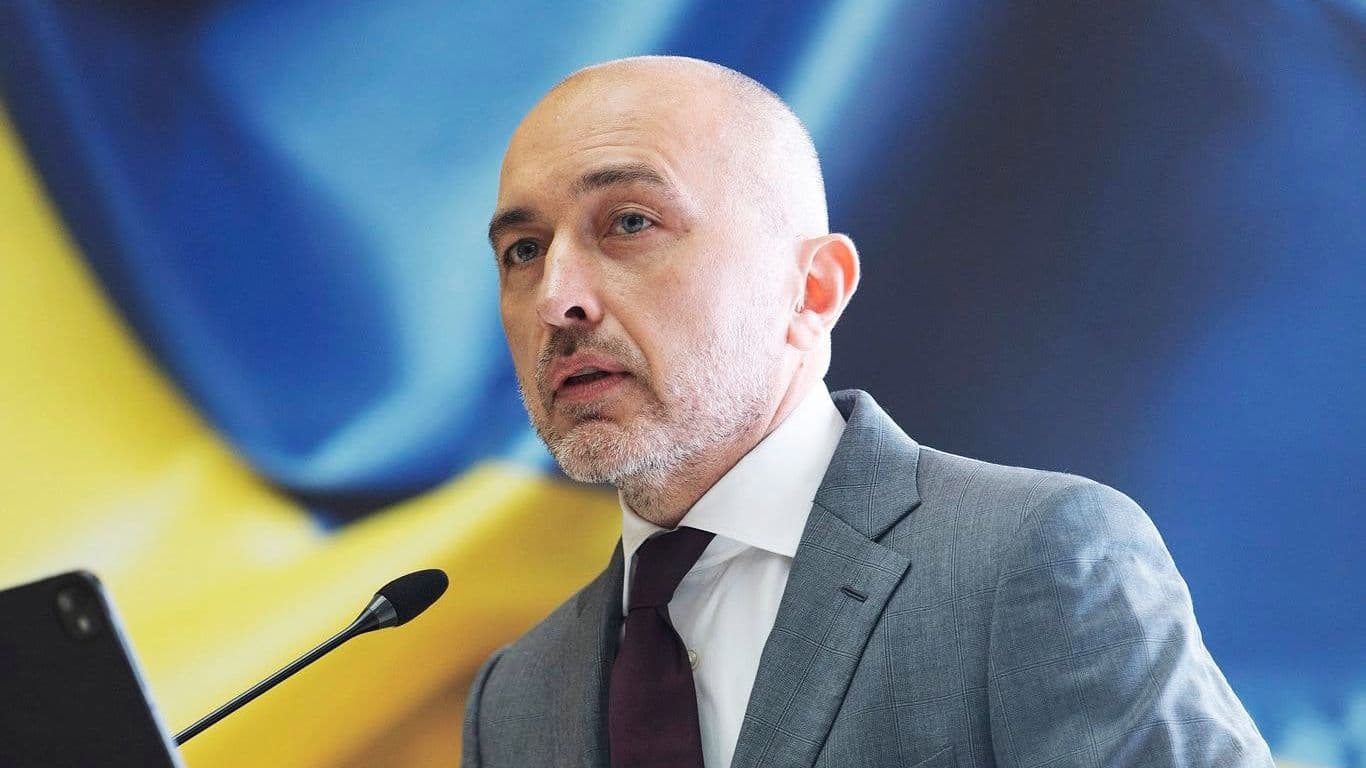
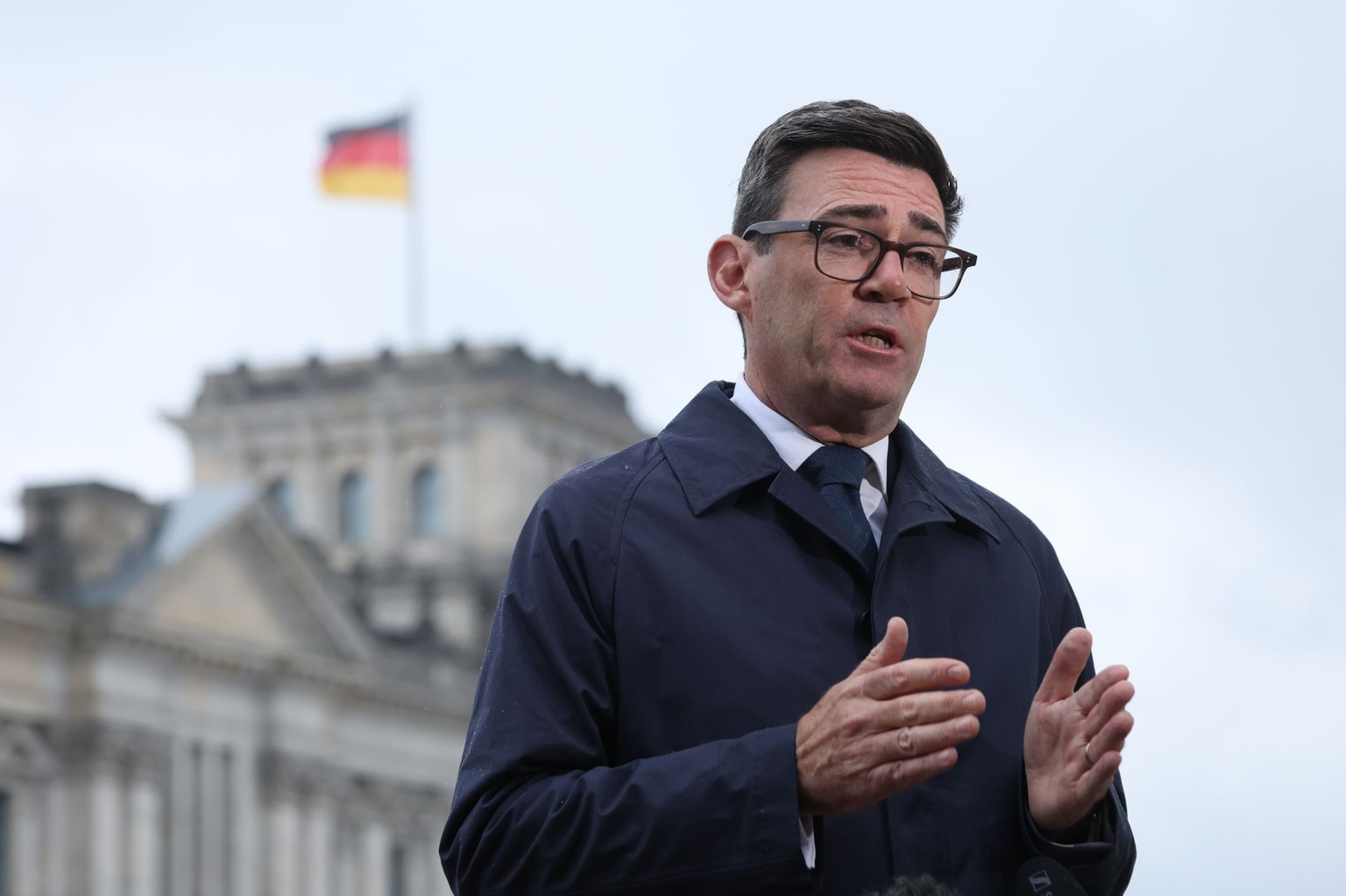
Andriy Pyshnyi, Ukraine Central Bank Governor in Kyiv, Ukraine, in a photograph posted on 4 June 4, 2026. (Andriy Pyshnyi / Facebook)
 on Google
For four years, Ukraine’s central bank has faced full scale-invasion, bouts of inflation, and the relentless task of keeping Ukraine’s financial system afloat through it all.
But under Governor Andrii Pyshnyi’s tenure, which started in late 2022, the bank has also overseen the monumental rise of Ukraine’s mil-tech sector, progress towards privatization Ukraine’s massive state-owned banks, and — slowly but surely — alignment with EU regulation, which the bank aims to complete by the end of 2027.
The Kyiv Independent sat down with Governor Pyshnyi on the sidelines of the Ukraine Recovery Conference in Gdansk, Poland at the end of June, to discuss these deeper trends.
Among the bank's top priorities for the near future is what Pyshnyi called an "ambitious plan" to launch the privatization of state-owned banks, saying that he expects Sense Bank and Ukrgazbank to be privatized by the end of the year.
On the state-owned giants Oshchadbank and PrivatBank — Ukraine's largest bank that was nationalized in 2015 — interested investors will have to wait, according to Pyshnyi.
This interview has been edited for length and clarity.
The Kyiv Independent: What is the plan for privatizing Ukraine's state-owned banks this year? Which banks do you expect to be privatized?
Governor Pyshnyi: The privatization of state-owned banks mainly falls in the scope of responsibility of the government, but the National Bank is also interested that this process of privatization is completed this year, and we want it to generate sufficient amounts for the state budget. We also want it to bring us new investors that will fuel the healthy competition in the market.
By the end of June, the Ukrainian government should adopt the Strategy on the State-Owned Banking Sector, where we expect to see the answers to all these questions!
The state-owned banking sector is very large — it covers 52% of net assets, 61% of private individual deposits, and over 70% of ATMs, and a major part of loans to the defense sector. Therefore, the privatization of state-owned banks should be very clear and very transparent for potential investors.
We believe that there is a good chance that both Sense Bank and Ukrgazbank are privatized by the end of the year. Successful privatization for me means that the budget gets a decent check, and that the banks get a good investor. Both banks are systemically important banks.
I also want to add that the privatization of Sense Bank and Ukrgazbank will be done with the engagement of an external adviser. This shall have a strong signal effect that the Ukrainian banking system is prepared for privatization.

We also see a high level of interest not only in state-owned banks but also in commercial banks, who are looking for potential partners. Pay attention to the recent developments: RVS and PINbank both got investors from Lithuania and Estonia. And not a single international financial group exited the Ukrainian market during the war. In fact, it's the other way around — France-based Crédit Agricole recently announced the acquisition of Lviv Bank.
Ukraine's banking sector needs investments, and an increase in its capital. Ukraine's banking system is profitable, it's well capitalized, it is liquid — but it is rather small. It's just one tenth of the Polish banking system by the amount of capital. If we wish it to develop it, we need to increase capital.
I also know about the interest of large and reputable investors, including international financial institutions, to take part in the privatization of PrivatBank and OschadBank. It is unlikely to happen this year though.
Let me remind you that in the previous strategy of the state banking sector, developed in 2020 before Russia's full-scale invasion, it assumed that the share of the state in the banking sector should be reduced to 25%. Of course, the war changed things, but we now need a clear and well-thought strategy for the sector at least in the medium-term.
The Kyiv Independent: Ukraine still has a problem with corporate governance reform. In the recent "Mindich Tapes," it appears that there was influence over the appointment of independent members of Sense Bank's supervisory board. With Ukraine embarking on this path of privatization, do you worry about the ability for private individuals to hijack this process, and what would you say to individuals to reassure them that this won't happen?
Governor Pyshnyi: We want the corporate governance system to enjoy trust and translate into confidence amongst foreign investors. The corporate governance system requires ongoing improvement, and it requires the constant presence of high quality and reputable staff, both in state-owned and commercial banking sectors.
A culture of corporate governance is taking shape right now. It requires shareholders, the government, regulators, and supervisory boards to respond to challenges by applying best practices. This experience should lay the foundation for maturity.
Recently, the National Bank of Ukraine loosened the restrictions on Ukraine’s businesses, including state-owned banks and state-owned enterprises, to enable them to engage foreigners to supervisory board positions and management bodies, to cover the deficit in staff and expertise.
But we need to develop corporate governance capabilities, to cover the needs of financial sector, of state-owned and commercial sectors.
The Kyiv Independent: So, you're not worried about the ability for private individuals to hijack the process of privatization?
Governor Pyshnyi: Well, I believe that we should make the privatization process as open and transparent as possible to address these concerns from the very beginning. And I believe the government is interested to do so, and therefore the engagement of an international advisor will facilitate the process.
Of course, when we observe any challenges in corporate governance in some banks, the National Bank responds. We initiate administrative proceedings and take respective measures.
But we have to clearly distinguish the areas of responsibility of the shareholder, the government, as the NBU as a regulator. The NBU does not actually create the supervisory boards, it does not have a single representative on a single supervisory board. Not on a single one.
Of course, when we detect any cases that require our response, we do respond when it is in the scope of our responsibility — the supervision of the NBU. In terms of the supervisory board of Sense Bank, as soon as the National Bank of Ukraine received some information, we started administrative proceedings to actually define, to clarify whether (Mykola) Hladyshenko meets the requirements of independence.
The Kyiv Independent: We've talked about attracting foreign investors into Ukraine's banking sector, so I want to ask about Revolut. The NBU made it clear that their first attempt to enter the Ukrainian market was not legally perfect. But did the NBU then try to facilitate access the right way, via a merger or acquisition, or by setting up a legal entity, for example? It feels a bit like the NBU is happy for Revolut not to come back.
Governor Pyshnyi: It's not an objective per se to attract foreigners. Our objective is to engage the best expertise and attract private capital into Ukraine's financial, insurance, and banking sector. We also aim, with the help of international partners, to develop an ecosystem in Ukraine that will raise high quality staff for supervisory boards. We also try to eliminate or remove any obstacles to the engagement of the best experts, including from abroad.
Concerning the investors, you mentioned Revolut. Our position was very clear. You don't have to look for shortcuts. There is a very direct and very straightforward way to understand all the regulatory processes provided by the NBU, and you have to follow the available regulatory and licensing procedures.
Let me remind you that the company started providing services without receiving a license. However, any financial payment services provided to Ukrainian citizens on the territory of Ukraine are subject to licensing and regulatory procedures of the National Bank of Ukraine. This is what we explained every time to Revolut, when they made occasional requests. As soon as they make a decision and prepare a set of documents required by the National Bank of Ukraine, they are very welcome.
I will give an example. I already mentioned the Polish startup ZEN, which is registered in Estonia. It took part in a competition organized by the State Deposit Guarantee Fund for the privatization of PINbank, and it won this competition. And now they are developing their business in Ukraine. And you know that a member of the board of this fintech project is a former president of Poland, Andrzej Duda.
So, we open the front door to high-quality private investors. There is no need to look for ways around the existing regulation.
The Kyiv Independent: But did the NBU try to help Revolut into Ukraine? Or were you just waiting for Revolut to fill in the right documents? It would have been great to have such a big investor come to Ukraine.
Governor Pyshnyi: Well, we never restricted the possibility of Revolut to follow our licensing and registration procedures. We gave them answers to all their questions. Now it's up to them. We can't decide for them, you know. Our registration procedures do not limit investors, but the other way around.
At the same time, we can't allow operations without understanding how the consumer's right will be protected, how the financial monitoring will be operated, how we protect the rights of lenders and depositors. We are waiting for investors in Ukraine, not only Revolut. And I see that the Ukrainian market is interesting today.
The Kyiv Independent: I want to ask about Oleh Horohovsky, the Commercial Director at Monobank. He has not yet been recognized as a key management person at Universal Bank. Yet, it seems that Horokhovsky is responsible for business development at Universal. Should something go wrong at Universal, Horohovsky will not be held accountable. Has the NBU looked into this at all?
Governor Pyshnyi: I know that this issue was examined. This is a matter of third-party risk, and it is on the agenda. The company represented by Oleh Horohovsky is not subject to supervision by the NBU. Furthermore, Oleh Horohovsky is not among the managers of Universal Bank who is subject to our supervisory procedures.
As part of its cooperation with the International Monetary Fund, the NBU recently adopted requirements for banks and banking groups regarding third-party risk management. These requirements include additional requirements for providers of critical services.

The Kyiv Independent: But why is he not considered a manager at Universal?
Governor Pyshnyi: Once the EU regulation on third-party risk management is fully implemented, this issue will be relevant for many banks. However, the draft law to expand the criteria for determining whether counterparties are affiliated with banks has been temporarily shelved by parliament. We are currently discussing with lawmakers how to resolve this issue.
At the same time, we also can't boil down the issue of third-party risk management to a particular personality. It would be wrong, as this risk is comprehensive. It's a more complex issue. And in one way or another, we will have to resolve this issue, because we have committed to implement the key EU directives and regulations.
The Kyiv Independent: So, the status quo situation with Universal Bank and Monobank will have to change in order for Ukraine to comply with European legislation on third party risk?
Governor Pyshnyi: Not only Universal Bank. It's true that in the case of Universal Bank, their business model is based on third-party risk. But there are other cases of other banks, and they also have to manage the risks of third parties.
The matter is more complex. And it shouldn't be boiled down to one person.
The Kyiv Independent: Defense companies say they are stretched for cash, but they also struggle to get access to bank financing. They don't believe that the banking system is able to provide them with enough cash. Do you think the NBU or the government or Ukraine can ever fix this? Or are banks destined to be too risk-averse to support Ukraine's burgeoning defence tech scene?
Governor Pyshnyi: Banks must be prudent and effectively assess and manage risks. Every project is a unique case, and when deciding whether to grant a loan, banks analyze many factors. But let’s look at the numbers.
An indisputable fact: according to a survey of banks, the loan rejection rate is at its lowest level in the past 10 years. The defense sector is one of the priority areas for lending. According to the survey, the increase in loans and guarantees provided to the defense industry in 2025 exceeded Hr 60 billion ($1.3 billion).
Not so long ago, it was concentrated in state-owned banks — more than 90%. In May this year, 23 Ukrainian banks of various ownership structures signed an important memorandum, at the initiative of the NBU, on lending support to the defense sector. And these 23 banks actually cover 75% of assets in the Ukrainian banking system. It is important to note that among them are banks belonging to international financial groups.
I signed a letter addressed to the prime minister in support of this memorandum and finance to the defense sector that actually provides for the establishment of an inter-institutional working group, that would include the Economy Ministry, Defense Ministry, and agencies responsible for defense procurement, as well as banks and the National Bank of Ukraine, so that we can begin our joint, coordinated efforts as soon as possible.
For start-ups, it's important to remember that it always means risky lending. So, it's important to find the right balance between banking lending and state support. Over past several years, we worked hard to increase banks' appetite to lend to the defense sector. We did our best so that banks adapt their policies to the needs of the defense sector. Believe it or not, even PrivatBank did not lend to the defense sector until recently. The situation has changed.
The Kyiv Independent: That sounds like a very positive change. But what progress could still be made? If you could snap your fingers and solve something for the defense start-ups or big companies now who want to access more finance, what would that be? Or has this memorandum solved everything?
Governor Pyshnyi: There is no magic pill. However, a lot has been done to finance the defense sector. There are taxation clusters with beneficial terms and conditions, there is state support — for example, 148 loans were issued in the amount of above Hr 9 billion ($202 million) in total as of beginning of May. And, frankly speaking, I don't know any other country where there would be such a comfortable environment for defense industry companies.
If we are talking about start-ups, of course, additionally to beneficial taxation environment and support, they should have a product that will be in demand. And the support is already there: Hr 9 billion ($202 million) and 148 loans. Could it be more? Probably, yes. But, you know, banking lending always means fulfilling obligations, so banks must ensure that a project is viable and that potential risks are covered.
"My conviction is that we created a unique and very favorable system for development of defense sector."

But, at the same time, my conviction is that we created a unique and very favorable system for development of defense sector. Its rapid development is proof of that. Of course, there will always be a project that was declined, but that doesn't undermine the fact that the lending is growing. Not only in defense sector, by the way — we have the longest credit expansion in the last 15 years.
Lending has been growing at a rate of over 30% for the second year in a row. The number of individual corporate clients who have received loans has risen to 17,000 — 30% more than before the war. When I tell our international partners, they are really surprised.
The Kyiv Independent: I have spoken to mil-tech companies who tell me the banking system is too cumbersome, too risk-averse. What would you tell those companies? Is there still scope to improve the situation? What work do you still think needs to be done?
Governor Pyshnyi: Can it be better? It can and it should. And this is why I mentioned the memorandum side by the banking system. You know, the banking system is very competitive. When competitive banks come together and they start discussing joint ventures, such as lending, it means they are highly interested in achieving the success.
The first time such an approach was applied was in June 2024, when different banks actually joined their efforts to lend into the recovery of the energy generating capacity. More than 30 banks at that time agreed to sign. The result is, in two years, within the framework of this memorandum, the banking system financed projects for generation of 1.8 gigawatts of energy and 800 megawatts of storage capacity. More than Hr 50 billion ($1.1 billion) worth of funding was secured for the projects.
The Kyiv Independent: Was that the inspiration for this latest memorandum in the defense sector?
Governor Pyshnyi: Yes, because when we saw the success of the banks in the energy sector, I said, let's do something similar in the defense sector. The banks actually came together, they worked together on this memorandum, and they outlined their requests to the government to the Defense Ministry, to enable further finance of these start-ups among other companies.
Start-ups that complain that banks demand too much, but banks cannot demand less. The bank must make sure that it understands the risks and has coverage mechanisms. Product is not enough.
And in this case, it is very important to find the best possible balance between what the borrower has, government financial support, and of course financial support from the bank.
The Kyiv Independent: Do you think that Ukraine's defense sector could pose a risk to financial stability if there is some kind of ceasefire or settlement? The sector — for good reason — is very secretive, which makes it difficult to estimate its contribution to employment and output.
As of now, I see no critical risks of the defense sector to financial stability. Of course, when the active phase of the war is over, I believe that the defense sector will still be very promising for the export potential of Ukraine. But of course, it will have to adapt. Each product, in addition to its tangible value, has the added value of its experience on the battlefield. What is being manufactured already means the requirements of the front line.
So, it's rather the other way around — I see a great potential of this sector. It will have to undergo structural changes, and we must focus on development and the support of the defense sector.
And let me assure you, if we see that this growth imposes risks or adverse factors, then we will be very firm and very determined. But now the defense sector is the area that requires maximum support.
Editor's note: As of the date of this interview’s publication, the NBU has comprehensively updated its regulatory framework for risk management, introducing requirements regarding third-party risk management for banks and banking groups, financial payment service providers, and insurers.