US lifts sanctions on 3 Russian-flagged cargo ships
 on Google
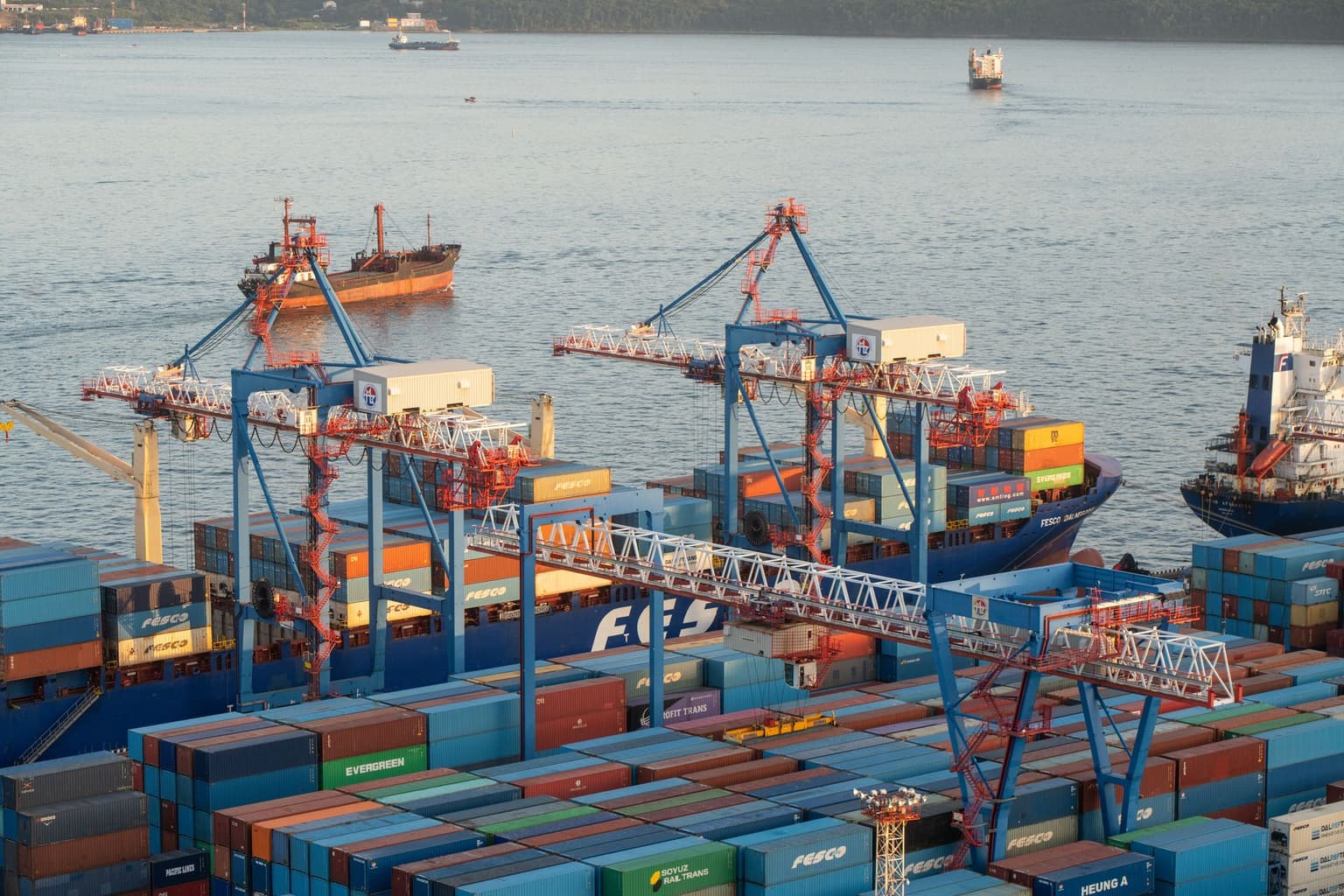
The U.S. Treasury on March 31 removed three Russian-flagged cargo ships from its sanctions list, but denied that the step would be part of a broader policy shift.
Container vessels Fesco Moneron and Fesco Magadan, as well as the cargo ship Sv Nikolay, were removed from the Office of Foreign Assets Control's (OFAC) Specially Designated Nationals (SDN) list, according to a press release.
Such actions are "not indicative of a broader shift in the U.S. Russia policy," a U.S. Treasury spokesperson told the Kyiv Independent, adding that OFAC regularly updates its sanctions list by adding or removing individuals and entities.
Fesco Moneron and Fesco Magadan are linked to Fesco, the leading container shipping operator in Russia's Far East, sanctioned by Ukraine, the U.K., the EU, and others.
The U.S. sanctioned the vessels in 2022 as part of measures against Promsvyazbank Public Joint Stock Company (PSB), a Russian state-owned financial institution and the ships' previous owner.
Sv Nikolay, sanctioned by the U.S. the same year as part of measures against Russia's Alfa-Bank, has been involved in transporting stolen grain from Russian-occupied Ukrainian territories to Turkey, according to Kyiv.
The lifting of sanctions allows the vessel to once again access ports and maritime services previously restricted under U.S. measures.
"The removals implemented today were done in the ordinary course of business as part of OFAC's investigations and based on a thorough review," the Treasury spokesperson said.
The spokesperson added that such investigations may be triggered by requests from sanctioned individuals, internal considerations by OFAC, or "in response to other national security and foreign policy priorities consistent with the law."
"The ultimate goal of sanctions is not to punish but to change behavior and to promote accountability."
While Ukraine is urging the international community to ramp up sanctions against Russia to undermine its ability to wage war, these efforts have faltered in recent weeks.
The EU's upcoming 20th sanctions package has been blocked by Hungary in retaliation for the suspension of oil transit via the Druzhba pipeline.
The Trump administration recently eased some sanctions on Russian oil to stabilize global energy markets disrupted by the war in Iran and the closure of the Strait of Hormuz.
On March 31, a Russian oil tanker docked in Cuba after the U.S. allowed passage despite its energy blockade of the island.