Ukraine war latest: US source says allies will be equipped as Pentagon reportedly weighs shifting Ukraine aid to Middle East
 on Google
Key developments on March 26:
- US source says allies will be equipped as Pentagon reportedly weighs shifting Ukraine aid to Middle East
- Russian shadow fleet tanker carrying 140,000 tons of oil hit by drone in Black Sea
- 'Putin's messages inspire us in this war' — Iranian president hails Russian 'support' amid US-Israeli strikes on Iran
- Ukrainian forces regain Ukrainian forces regain ground in Oleksandrivka sector of front line, kill over 2,600 Russian troops in 2 months
US source says allies will be equipped as Pentagon reportedly weighs shifting Ukraine aid to Middle East
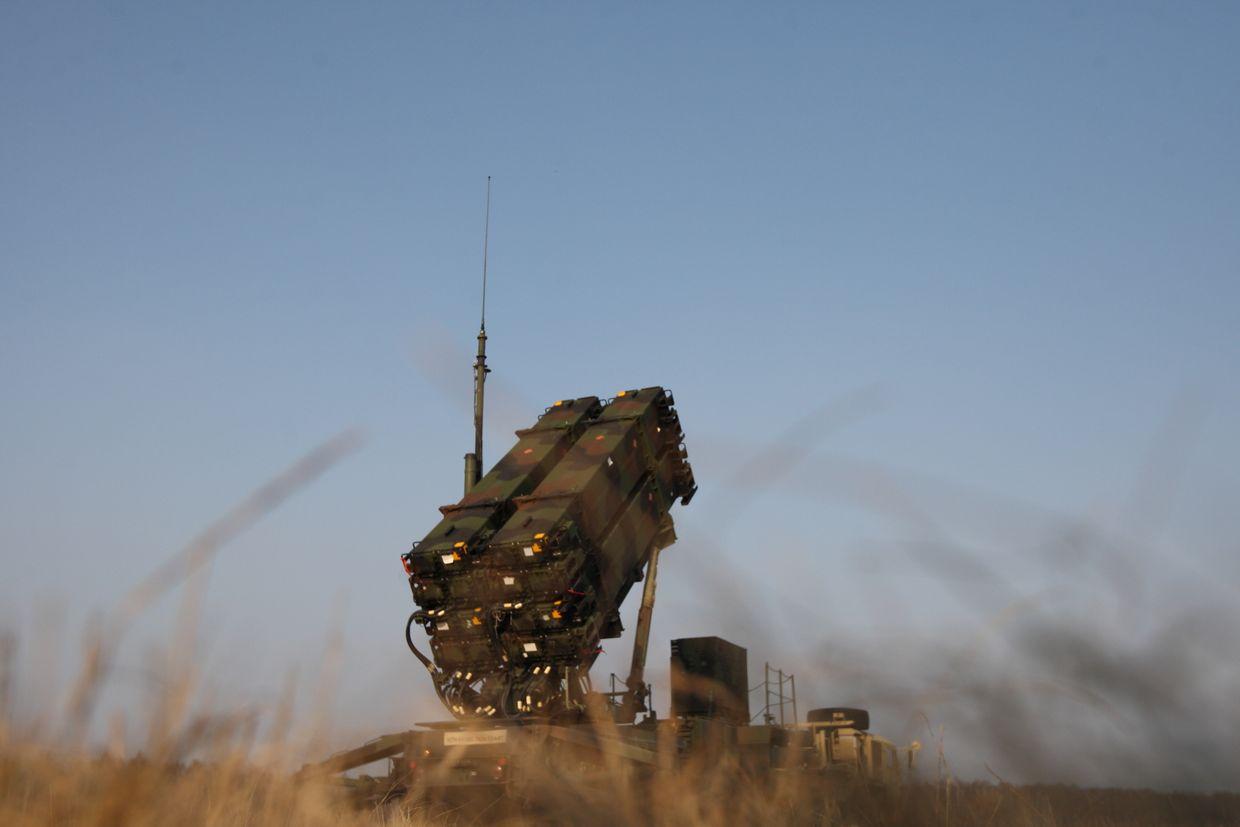
The Pentagon is considering redirecting military aid intended for Ukraine to the Middle East, the Washington Post reported on March 26, citing unnamed sources familiar with the matter.
The potential move comes as the U.S. expands operations against Iran, raising concerns in Kyiv about possible delays in urgently needed air defense supplies amid intensifying Russian attacks.
According to the reporting, the weapons under consideration include air defense interceptor missiles ordered through the Prioritized Ukraine Requirements List (PURL) program, which allows other NATO members to fund the procurement of U.S. weapons for Ukraine.
A Ukrainian official told the Kyiv Independent that Kyiv is concerned about such a possibility.
In response to the reports, NATO Spokesperson Alison Hart told EuropeanPravda that "everything that NATO allies and partners paid for through PURL has been delivered or continues to be delivered to Ukraine."
The possible shift comes as Russia intensifies aerial strikes. Moscow launched nearly 1,000 attack drones against Ukraine over a 24-hour period between March 23 and March 24, in what appeared to be one of the largest aerial assaults of the full-scale war.
A Department of War official said the U.S. military remains committed to ensuring both American forces and their allies are equipped to succeed, while declining to discuss specifics.
"America's military is the most powerful in the world, and we will ensure that U.S. forces and those of our allies and partners have what they need to fight and win," the official told the Kyiv Independent.
"For operational security reasons, we will not comment on any specific allied or partner requirements or ongoing efforts to support them."

When asked by reporters about the potential changes to weapons shipments, U.S. President Donald Trump appeared to brush off speculation about potential redirections.
"We do that all the time. We have tremendous amounts of ammunition... and sometimes we take from one (country) and use for another," Trump told reporters following a cabinet meeting on March 26.
The Trump administration has largely refrained from providing Ukraine with direct military aid, unlike the previous Biden administration. Instead, assistance has taken the form of weapons sales.
European capitals have expressed concern that Washington is rapidly depleting its ammunition stockpiles during operations in the Middle East. Officials fear the pace of use could delay their own orders and disrupt deliveries.

Russian shadow fleet tanker carrying 140,000 tons of oil hit by drone in Black Sea
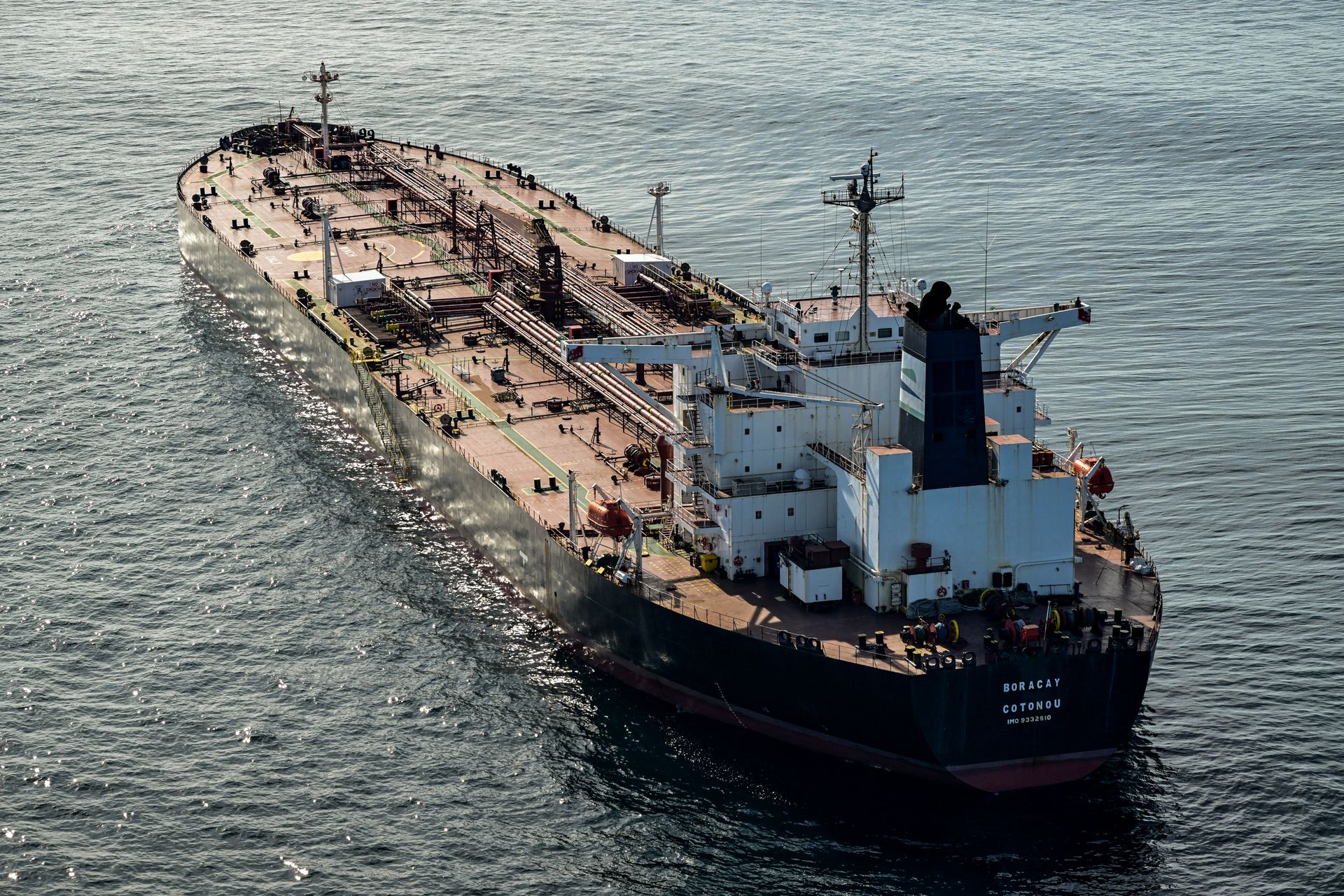
The oil tanker Altura, part of Russia's shadow fleet, came under a drone attack in the Black Sea, Turkish broadcaster NTV reported on March 26.
The news comes as European countries step up efforts to curb Russia's so-called shadow fleet — a network of tankers used to bypass sanctions imposed over Moscow's war against Ukraine, allowing the Kremlin to continue exporting oil despite restrictions.
Ukrainian forces have carried out multiple attacks on Russia's Black Sea Fleet, but Kyiv has not commented on this most recent incident yet.
The drone attack damaged the vessel's deck, bridge, and engine room, causing it to take on water. All 27 crew members on board were unharmed, NTV reported.
The tanker was en route to Istanbul under the Sierra Leone flag, carrying 140,000 tons of oil from Novorossiysk in Russia's Krasnodar Krai.
The Altura regularly transports Russian oil to India and Georgia, according to Ukraine's military intelligence (HUR).
The tanker has been under sanctions by Ukraine and Switzerland since 2025, and by the United Kingdom since 2026.
Since the start of Russia's full-scale invasion, Ukraine has repeatedly urged partners to modernize legislation so vessels operating under Russia's shadow fleet can be seized and their oil redirected to support European security.
France has actively targeted the shadow fleet in its waters, intercepting vessels in late September 2025, at the end of January, and again in late March as part of wider efforts to disrupt the network.
In early March, Belgium conducted a joint operation with France to seize a sanctioned Russian oil tanker operating under the Guinean flag.
On March 25, the U.K. announced that its armed forces and law enforcement personnel will be authorized to board Russian shadow fleet vessels in British waters.
'Putin's messages inspire us in this war' — Iranian president hails Russian 'support' amid US-Israeli strikes on Iran
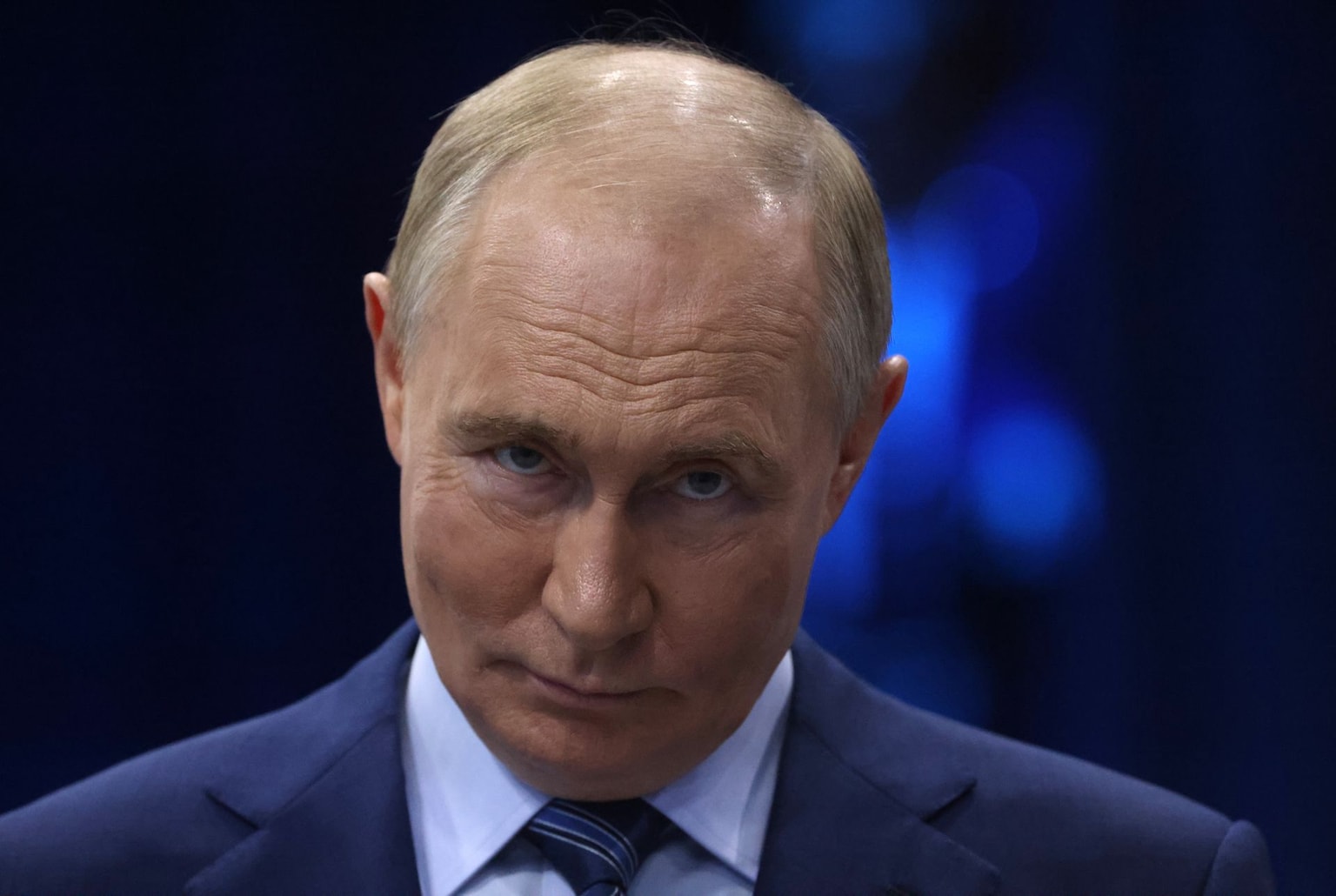
Iranian President Masoud Pezeshkian hailed Russian President Vladimir Putin's "messages" in support of the Iranian regime on March 26, amid deepening relations between Moscow and Tehran as the war in Iran continues into its fourth week.
"Messages from President Putin and the support of the Russian people inspire us in this war," Pezeshkian wrote in a post on X in Russian.
"The resistance and courage of the Iranian people promise new bonds that will ensure the security of East Asia through the countries of the region. On behalf of the people of Iran, I thank the government and the people of Russia," he added.
The report comes as Moscow has been accused of providing intelligence support to Tehran, with President Volodymyr Zelensky claiming on March 24 that Kyiv has "irrefutable evidence" that Russia is helping Iran target U.S. assets in the Middle East.
The Financial Times (FT) also reported on March 25 that Russia has been shipping drones to Iran since early March to aid its ally in the war.
Senior Iranian and Russian officials began secretly discussing deliveries of drones, medicine, and food shortly after the U.S. and Israel launched coordinated attacks on Feb. 28, according to FT.
It was not immediately clear what Pezeshkian was referring to when he mentioned receiving "messages" from Putin.
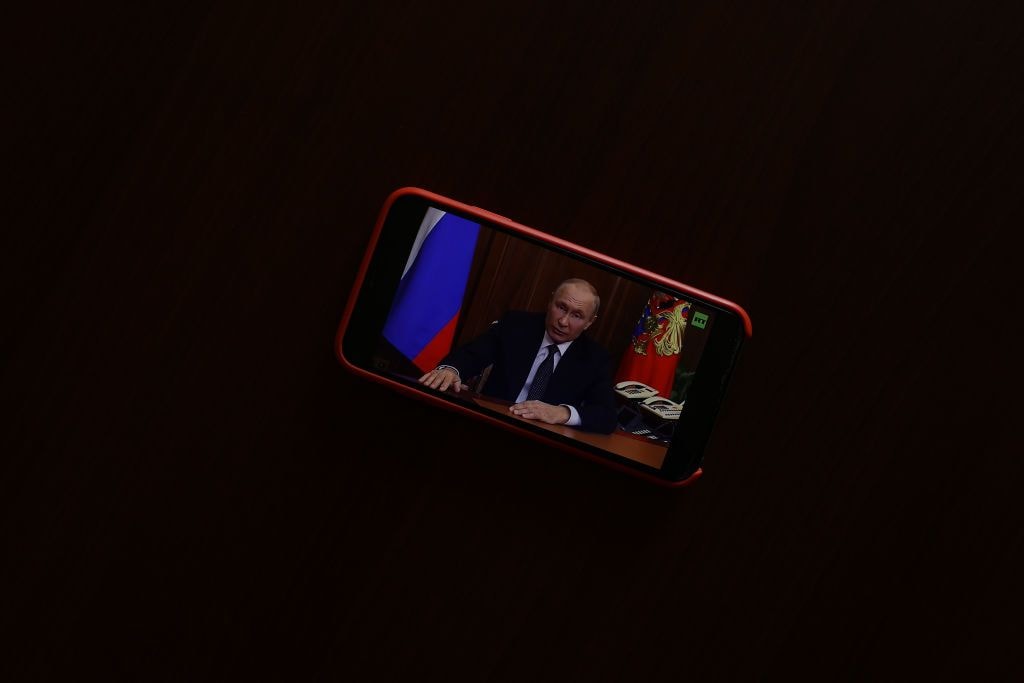
On March 21, Putin congratulated Iranian leaders on Nowruz and "stressed that in this difficult time Moscow remains a loyal friend and reliable partner of Tehran," according to the Kremlin.
Russia has portrayed the U.S. and Israeli strikes in Iran as an unprovoked act of aggression. Its Foreign Ministry condemned the operation even as Russia continues its own war against Ukraine.
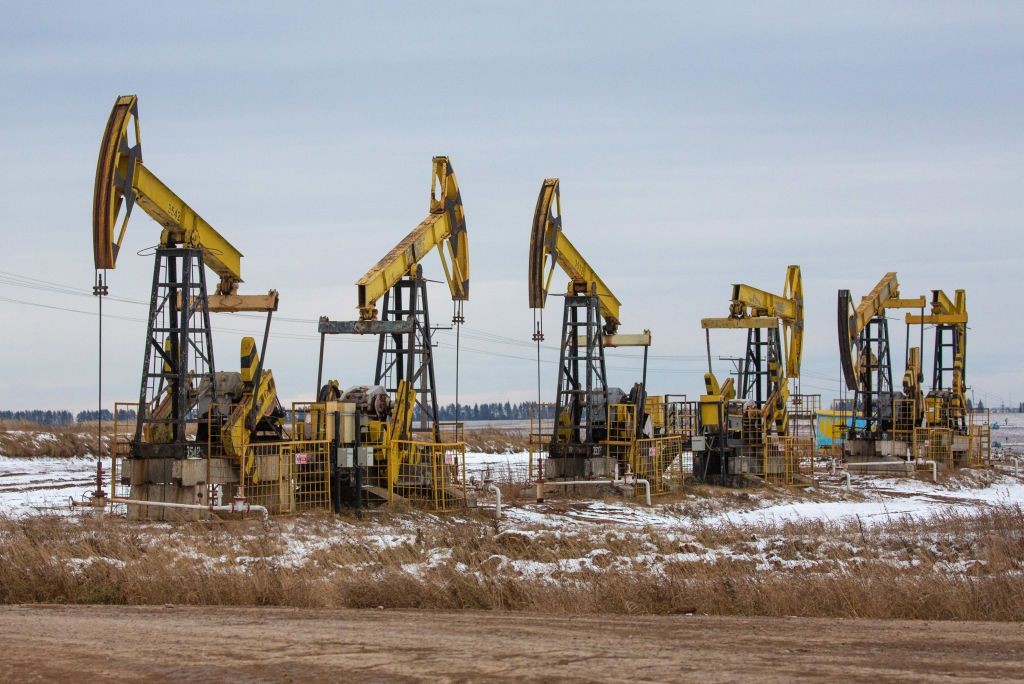
Moscow has stood to benefit economically with recent oil constraint, as the Trump administration temporarily lifts sanctions on Russian oil exports. The Center for Research on Energy and Clean Air (CREA) also found that Russian oil revenues soared in the first two weeks of fighting, providing Moscow with an additional 6 billion euros ($6.9 billion) in revenue.
CIA Director John Ratcliffe confirmed on March 18 that Iran has sought intelligence from its allies, including Russia, but would not say publicly whether the U.S. had evidence that Russia provided any such intelligence.
Trump has also been dismissive of the claims, saying that intelligence sharing would make no difference in Iran's ability to strike back at the U.S.
Russia and Iran have deepened cooperation in recent years, particularly during Moscow's war against Ukraine, with Tehran supplying drones and other military equipment used by Russian forces.
Ukrainian forces regain ground in Oleksandrivka sector of front line, kill over 2,600 Russian troops in 2 months
Ukrainian forces have liberated nine settlements in the Oleksandrivka front-line sector and killed 2,653 Russian troops during an operation that lasted roughly two months, Ukraine's Air Assault Forces Command said on March 26.
Ukraine launched a counteroffensive in late January in the Oleksandrivka sector, in the southeast where Dnipropetrovsk, Zaporizhzhia, and Donetsk oblasts converge.
During the operation, Ukrainian forces regained about 440 square kilometers (170 square miles) of territory, liberating seven settlements in Dnipropetrovsk Oblast and two in Zaporizhzhia Oblast, the report read.
Three additional settlements have been cleared of Russian troops, though their locations were not disclosed.
Later in the day, the Air Assault Forces added that "full control" had been restored to the village of Berezove in Dnipropetrovsk Oblast. The distinction between liberating, clearing, and establishing full control was not explained.
Since the counteroffensive began on Jan. 29, Russian forces have lost 3,676 personnel in the sector, including 2,653 killed, 1,023 wounded and 11 captured, the command said.
But Emil Kastehelmi, a military analyst with the Finland-based Black Bird Group:, expressed caution at the announcement, saying the "roughly 400 square kilometres claim has been repeated many times already in the last few weeks."
"But generally, it seems that the momentum is gone. And it doesn't really seem that the Ukrainians have made much progress beyond what they achieved in February and early March," he added.
Kastehelmi added that determining the situation in the gray zone on the front lines is difficult, and determining who is actually in control of these areas is murky.
"It could be safer to say that the Russians don't exactly control that area now either, even though it was already at least partially in their rear just like over two months ago," he said.
The news comes as Ukraine reportedly strengthens its battlefield position. Kyiv claimed that in February, Ukrainian forces liberated more territory than they lost for the first time in years, disrupting Russia's planned March offensive.
At the same time, Russian forces continue trying to advance along multiple sections of the Ukrainian front.
Ukraine's Commander-in-Chief, Oleksandr Syrskyi, said that between March 17 and 20, Russia launched an offensive involving "tens of thousands of soldiers," with more than 6,000 killed.
Most assaults occurred in eastern Ukraine, particularly in the Pokrovsk sector of Donetsk Oblast and the Oleksandrivka area, Syrskyi added.
Syrskyi also said Moscow is attempting to deploy fresh units and is counting on worsening weather to limit the effectiveness of Ukrainian aerial reconnaissance, drones, and artillery.