The international community should provide more support for Ukraine's cultural sector
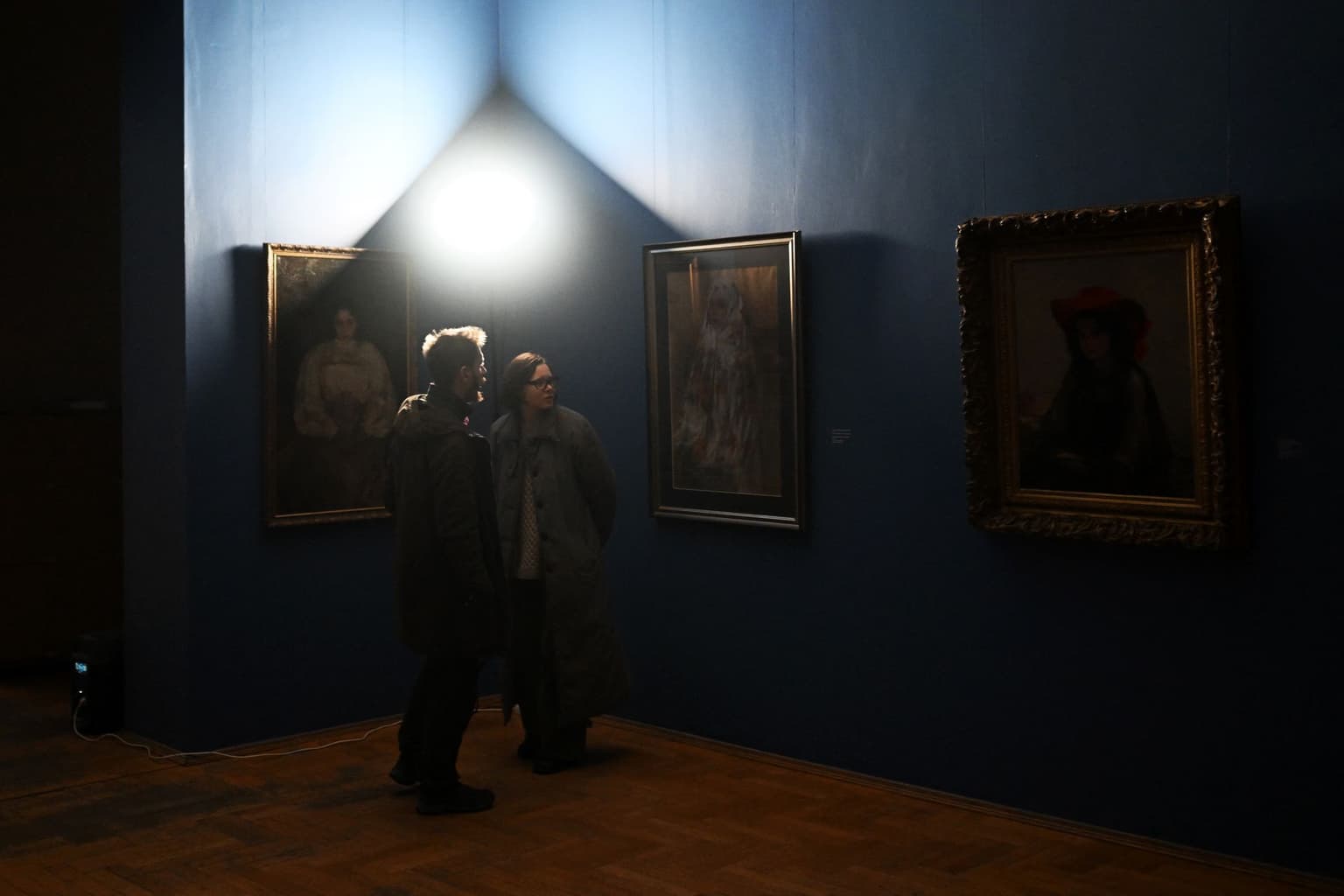
People visit an exhibition during a power outage at the National Art Museum in Kyiv, Ukraine, on Jan. 30, 2026. (Sergei Gapon / AFP / Getty Images)
 on Google
Johannes Nathan
Co-Founder and President of the Ukraine Art Aid Center
As a rule, Ukraine's cultural sector makes the headlines only when sites of exceptional significance are damaged or destroyed. This was the case not so long ago, when a Russian drone hit the cathedral of Kyiv's Pechersk Lavra.
The attack was internationally condemned, and similar condemnations followed earlier attacks, such as the destruction of the Hryhorii Skovoroda Museum near Kharkiv in 2022 or the attack on Odesa Cathedral in 2023. Worldwide outrage over such crimes rarely lasts long, however, as the course of war inevitably directs attention to seemingly more important issues.
And yet, there are many good reasons to be more attentive to Ukraine's cultural sector, as it is an essential pillar of the country's resilience.
In our almost daily contacts with Ukrainian cultural organizations — museums, libraries, archives, theatres, archaeological sites — we can only just grasp the staggering tasks they face and the accomplishments they achieve despite dire shortages of staff and funding.

Not only are they doing all they can to safeguard their holdings and buildings, but they also keep the sites open for access to their collections, exhibitions, guided tours, lectures, and countless related activities.
In doing so, many cultural institutions have become community centers, providing points of contact and emotional relief amid constant worry and anxiety.
The same is true of Ukraine's creative sector — literature, theatre, music, film, and contemporary art — which supplies essential intellectual and emotional sustenance in times of seemingly never-ending crises.
Indeed, while it is evident that the Russian attacks on the cultural sector are meant to erase Ukraine's distinct cultural identities, they may also be spurred by Russia's realization that cultural institutions and the creative industry are vital for Ukraine's resilience.
Possibly, the international community is slowly coming round to the same conclusion – but there is still so much more it could do to support Ukraine's cultural sector.
To be sure, donors and dedicated organizations, including ALIPH, the Goethe-Institut, the Ukraine Art Aid Center, Cultural Emergency Response, the World Monuments Fund, the Erste Foundation, and several others, have together provided tens of millions of euros in assistance, and much of this funding stems from governments and the EU.
They work alongside remarkable Ukrainian initiatives such as Museum for Change, ACURE, HEMO, and Skeiron, organizations specializing in effective emergency response, safeguarding initiatives, or digitization projects.
In addition, Ukraine's Culture Ministry has recently launched the Culture Resilience Alliance to unite and coordinate these and other initiatives, and it has also successfully established the Ukraine Cultural Heritage Fund as a vehicle for channeling more international support into outstanding projects and emergency relief.
The truth is, however, that all these efforts are hardly more than the proverbial drop in the ocean, for the resources available to the cultural sector are a trickle compared with the billions that are, rightly, poured into Ukraine's defense and its economy.
Lately, given the evident difficulty in mobilizing additional funding for the cultural sector, international partners have increasingly focused on capacity-building, an area where smaller sums can achieve high visibility.
The idea is attractive as there is a large appetite for dialogue with international partners in Ukraine's cultural sector. In fact, small initiatives, from workshops on curatorial practice to translating specialist conservation literature, can have an outsized impact in this context.
In one remarkable grass-roots project, for instance, two Ukrainian-born conservators in the U.K. have recently completed an English-Ukrainian dictionary of conservation terminology, opening access to a body of literature whose technical vocabulary usually eludes AI translation.
As international partners increasingly focus on capacity building, this commendable impetus should be tempered by two caveats, however.

First, capacity building is often seen as a one-way street that only benefits Ukrainians. However, expertise should and does flow in both directions. Thus, our Ukrainian colleagues are not only far better at responding to emergencies, but also know how to digitize collections at lightning speed, maintain public trust amid disinformation, and keep their institutions functioning despite power outages, air-raid alerts, and even direct hits.
They have also developed an acute sensibility for the changing needs and interests of their audiences. In their ingenuity and resilience, they have so much knowledge to share with the international community.
Second, although capacity building can help and is likely to strengthen ties with Europe and the rest of the world, it must not be forgotten that Ukraine's cultural sector lacks support on many other fronts.
Beyond the comparatively modest funding needed for capacity building, much more substantial financial aid is required to sustain Ukraine's cultural ecosystem effectively in its struggle to maintain its creative drive, restore damaged infrastructure, retain skilled staff, safeguard collections, and conduct research.
It is only with greater international generosity that Ukrainians can continue to have access to a vibrant cultural life that strengthens their hope in these times of war.
Russia targets Ukraine's cultural sector because it understands that it is central to Ukraine's ability to resist. Conversely, international support of Ukraine's cultural sector should be much more substantial than it currently is.
Editor's note: The opinions expressed in the op-ed section are those of the authors and do not purport to reflect the views of the Kyiv Independent.