Stoltenberg joins growing calls to lift restrictions on Ukraine's ability to use Western weapons to strike Russia
 on Google

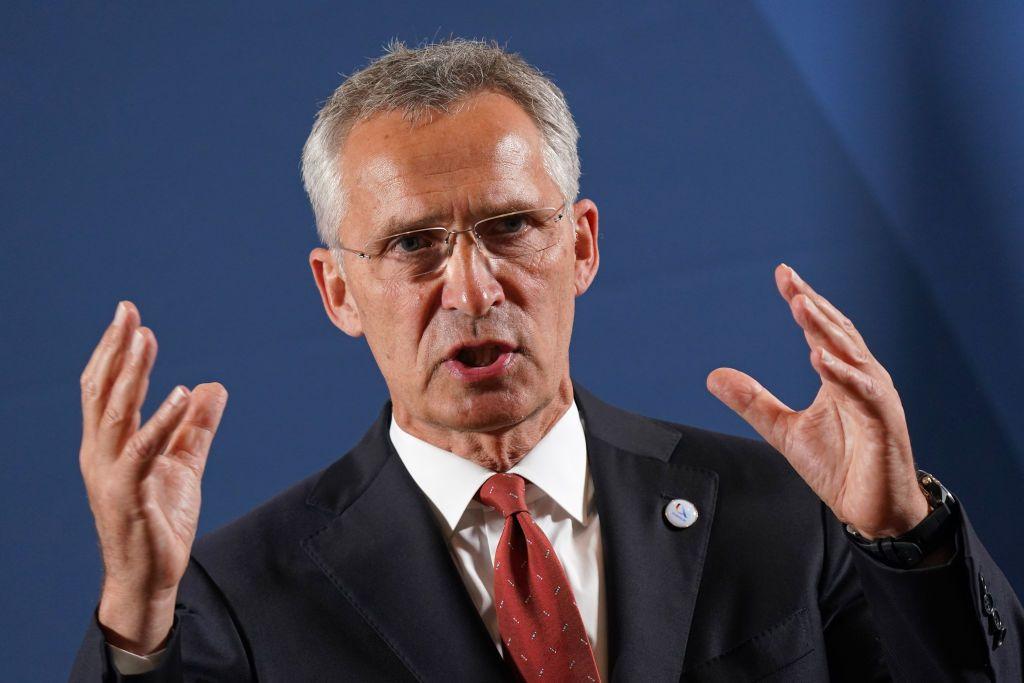
NATO Secretary General Jens Stoltenberg was the latest high-profile Western leader to call for an end to the ban on Ukraine's use of Western-supplied weapons to strike targets in Russia in an interview with the Economist published on May 24.
German lawmaker Anton Hofreiter echoed the sentiment the following day in an interview with Spiegel.
U.S. officials have repeatedly said that they do not support or encourage Kyiv's strikes with American weapons deep inside Russia.
The tide nonetheless appears to be shifting amid arguments that Washington's ban meant Ukraine was unable to attack Russian forces as they were building up before crossing the border into Kharkiv Oblast in the renewed Russian offensive that began earlier in May.
"The time has come for allies to consider whether they should lift some of the restrictions they have put on the use of weapons they have donated to Ukraine," said Stoltenberg.
"Especially now when a lot of the fighting is going on in Kharkiv, close to the border, to deny Ukraine the possibility of using these weapons against legitimate military targets on Russian territory makes it very hard for them to defend themselves."
Hofreiter said that lifting the restrictions would be in accordance with international law, which "allows a (state under attack) to attack military targets in the aggressor's country."
Leading U.S. lawmakers, such as House Speaker Mike Johnson and Congressman Michael McCaul, chair of the House Foreign Affairs Committee, have also criticized the current U.S. policy in recent days, arguing that micromanaging Ukraine's war effort has hindered its ability to effectively defend itself.
McCaul claimed that there is support for ending the policy in Congress but that it is primarily National Security Advisor Jake Sullivan and President Joe Biden who still oppose any changes.
After a "sobering visit" to Kyiv earlier in May, U.S. Secretary of State Antony Blinken also has reportedly sought to end Washington's ban.
Stoltenberg said he was aware of the possible chance for escalation and emphasized that the goal is to "prevent this war (from) becoming a full-fledged war between Russia and NATO in Europe."
On those grounds, Stoltenberg again repeated earlier statements that there is no "intention to send NATO ground troops into Ukraine."
The notion of sending NATO troops to Ukraine has been hotly debated since French President Emmanuel Macron said in February that he would not "rule out" the possibility of deploying Western troops there.
The suggestion has been largely rejected by many Western leaders, but there has been increasing discussion about the potential of sending NATO troops to train Ukrainian soldiers inside Ukrainian territory.