Russia obstructed evacuations after Kakhovka dam destruction leading to civilian casualties, report says
 on Google
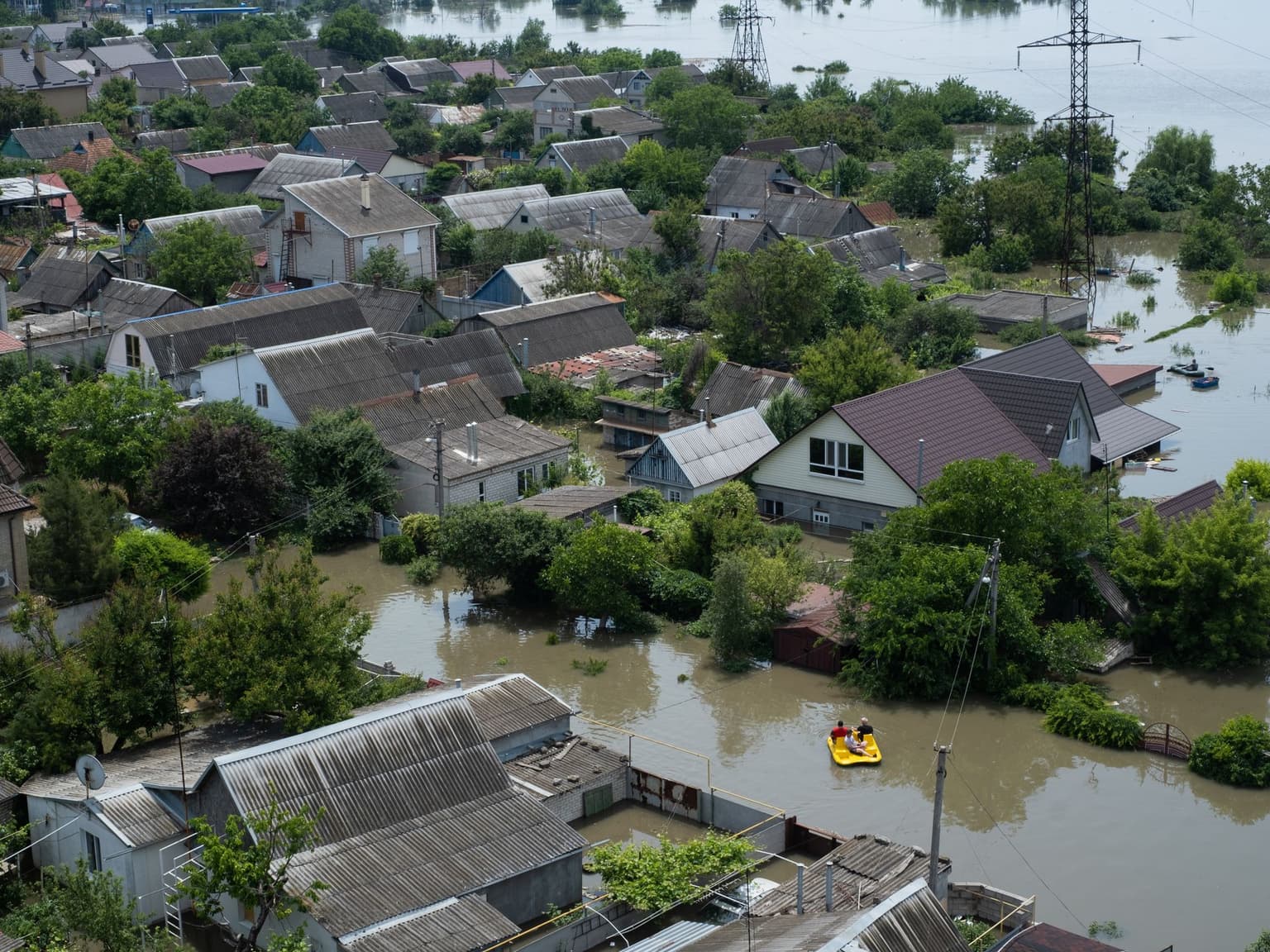
After the destruction of the Kakhovka dam, Russia hindered rescue operations in Kherson Oblast, making it harder to evacuate civilians and deliver aid, according to a report published by the Ukrainian human rights organization Truth Hounds on June 6.
Russian troops blew up the Kakhovka Hydroelectric Power Plant and the adjacent dam in Kherson Oblast on June 6, 2023, causing a large-scale humanitarian and environmental disaster across southern Ukraine.
The floods caused by the breach killed over 30 people in Ukrainian-held territories and anywhere between dozens and hundreds more in the Russian-occupied areas.
According to the report, on the Ukrainian-controlled western bank of the Dnipro River, volunteers from the Red Cross, local NGOs, and residents using private boats began evacuating people within hours of the dam's collapse.
Amid ongoing efforts, Russian soldiers shelled evacuation points and rescue boats, the report read. It says that volunteers said humanitarian markings and uniforms didn't provide protection, and in some cases may have made them more visible targets.
More than 10 volunteers were injured as a result of Russian attacks during rescue operations on the Ukrainian-controlled territory, the study says. A mortar attack on an evacuation point in Kherson reportedly injured nine people, including two rescuers and a police officer.
Five of the seven volunteers from the western bank interviewed by Truth Hounds said they had witnessed or come under fire during rescue operations.
The situation on the Russian-occupied eastern bank in Kherson Oblast was far more difficult.
Instead of organizing evacuations, Russian forces reportedly confiscated civilian boats for military use and blocked residents from leaving.
Witnesses told Truth Hounds that evacuations were selective, with priority given to people holding Russian passports. Some also reported demands for payment. Communication disruptions further complicated evacuation efforts, the report read.
"The Kakhovka case shows that the use of water as a weapon can be compounded through attacks on emergency response," said Roman Koval, head of research at Truth Hounds.
"Russian forces and occupation authorities made effective use of the response window — the period during which an emergency has not yet reached the peak of its destructive impact — significantly more difficult."