Moldova, EU sign pact on security, defense
 on Google

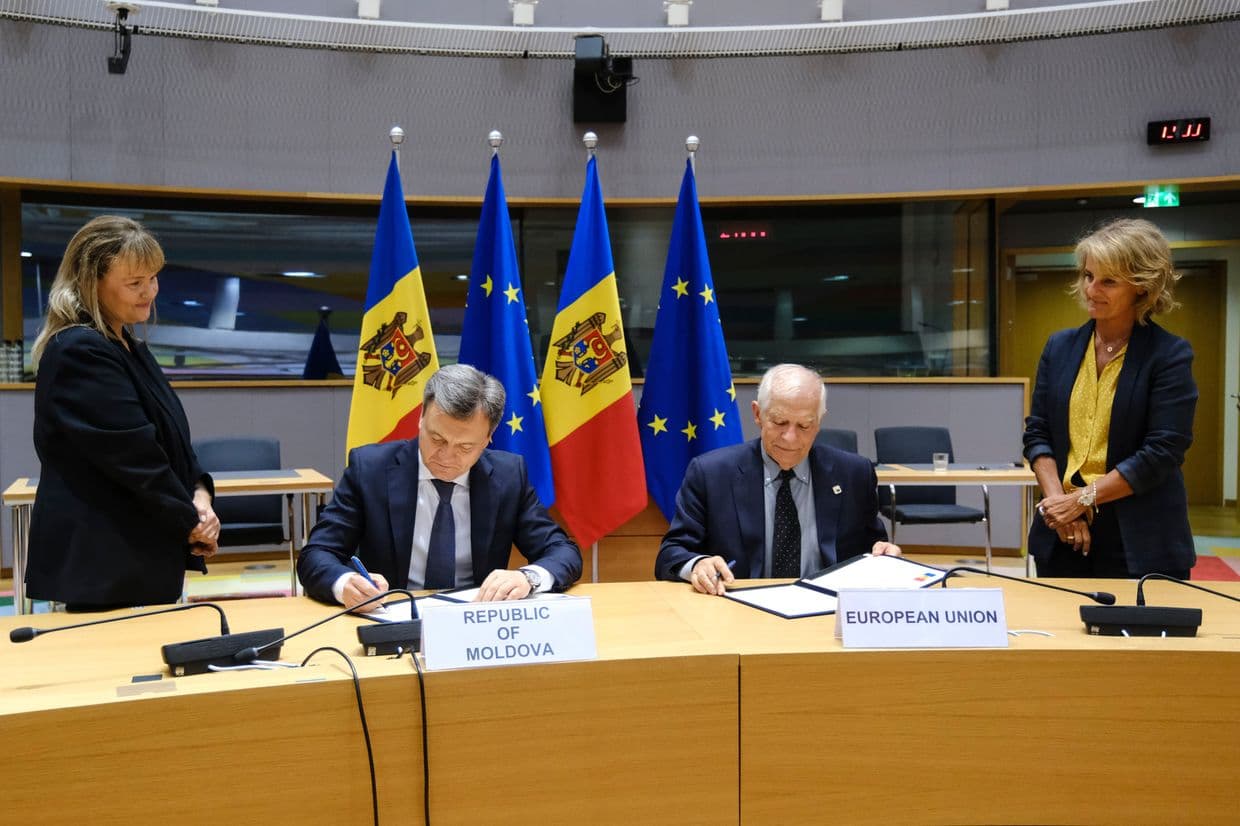
Moldovan Prime Minister Dorin Recean and the European Union's top diplomat, Josep Borrell, signed a Security and Defense Partnership on May 21, Borrell said on X.
Moldova became the first country to sign such a document with the EU, which is designed to "enhance the country's resilience."
Chisinau has moved closer to Europe amid worries that the Kremlin is attempting to carry out a destabilization campaign in the country.
Russo-Moldovan relations have soured since the start of the full-scale invasion of Ukraine, with fears that Russia's aggression may spill over via Transnistria, a Moldovan territory where Russian troops have been stationed since the early 1990s.
"It (partnership) will allow to jointly address common security challenges, make our engagement more effective, and explore new areas of cooperation," Borrell said.
The partnership will function as an umbrella mechanism for all interactions between Moldova and the EU, including the spheres of cybersecurity, countering disinformation, and defense, the Moldovan Foreign Ministry said.
The document does not have the status of an international treaty and is based on political commitments.
Moldova and France signed a bilateral defense deal in March, days after Moldova's intelligence agency warned that Russia would seek to destabilize the country as it prepares for a presidential election and a referendum on EU membership.
President Maia Sandu will run for re-election in October. Sandu has put the country on a decisively pro-EU course, helping to secure Chisinau's membership candidacy and accession talks.