Russia causes 'significant damage' to thermal plants, nuclear facilities in mass attack on Ukraine power grid
 on Google

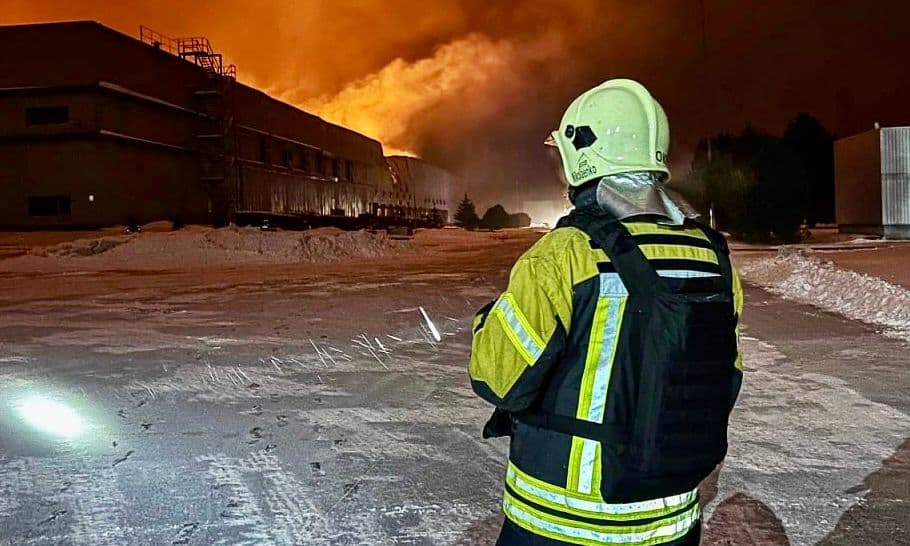
Editor's note: This story has been updated with additional details.
Russia carried out a mass attack on Ukraine's energy infrastructure on Feb. 7, triggering emergency power outages across most regions and damaging nuclear facilities, government officials said.
The strike hit key elements of Ukraine's power grid as freezing temperatures returned, with Kyiv forecast to see temperatures drop to –19 degrees Celsius (–2 degrees Fahrenheit) in the coming days, compounding pressure on the energy system.
President Volodymyr Zelensky said in his evening address that Russia struck "facilities crucial to the operation of Ukraine's nuclear power plants."
Power generation was reduced at the country's nuclear plants after the attack, while one unit was automatically shut down, he said.
"This is a level of attack that no terrorist in the world has ever dared, and Russia must feel the response of the entire world — all those who truly care about security," Zelensky said.
Energy Minister Denys Shmyhal said Russian forces targeted high-voltage substations and 750-kilovolt and 330-kilovolt overhead transmission lines that form the backbone of Ukraine's electricity network.
Power generation facilities were also struck, including the Burshtyn and Dobrotvir thermal power plants in western Ukraine.
DTEK, Ukraine's largest private energy company, said equipment at its thermal power plants suffered "significant damage," calling the strike Moscow's 220th attack on thermal generation facilities since the start of the full-scale invasion.
The company said the attack cost the country a "significant portion" of electricity, further straining Ukraine's battered energy system.
"Due to the damage to the high-voltage substations, nuclear power plants were forced to discharge. Ukraine lost a significant portion of available electricity. ... There are difficult days ahead," DTEK said.
In Kyiv, where the situation is hardest, residents can expect a maximum of one-and-a-half to two hours of light per day, the company said.
Attacks were reported across the country, including in western regions. The Khmelnytskyi, Rivne, Ternopil, Ivano-Frankivsk, and Lviv oblasts all came under fire, according to Ukrainian officials.
Ukraine's Air Force said 13 Russian missiles and 21 Shahed-type attack drones targeted 19 sites across the country, with debris from the strikes falling on three additional locations.
As of Feb. 7, emergency power outage schedules of up to 4.5–5 stages were in effect nationwide, with additional emergency measures imposed in eastern and northern regions, Shmyhal said.
Ukraine's grid operator Ukrenergo also requested emergency electricity assistance from Poland, though no further details were provided.
"Energy workers are ready to begin restoration as soon as the situation allows," Shmyhal said.
Zelensky urged Ukraine's allies to respond to the attack, stressing the need to prevent Russia from using winter as a weapon.
"Moscow must be deprived of the ability to pressure Ukraine with cold weather. This requires missiles for Patriot, NASAMS, and other (air defense) systems," he said.
Since launching its full-scale invasion in 2022, Russia has systematically targeted Ukraine's power plants, substations, and transmission lines, causing repeated blackouts across the country.
The latest strike comes as diplomatic efforts to end the war continue, with Moscow intensifying attacks on civilian energy infrastructure in what Ukrainian officials describe as an attempt to pressure Kyiv into accepting Russia's maximalist demands in peace talks.
Ukrainian authorities have warned the energy situation remains "extremely serious," while the Security Service of Ukraine has said the continued targeting of civilian power facilities amounts to crimes against humanity.