Keep up the pace of Ukraine's EU accession
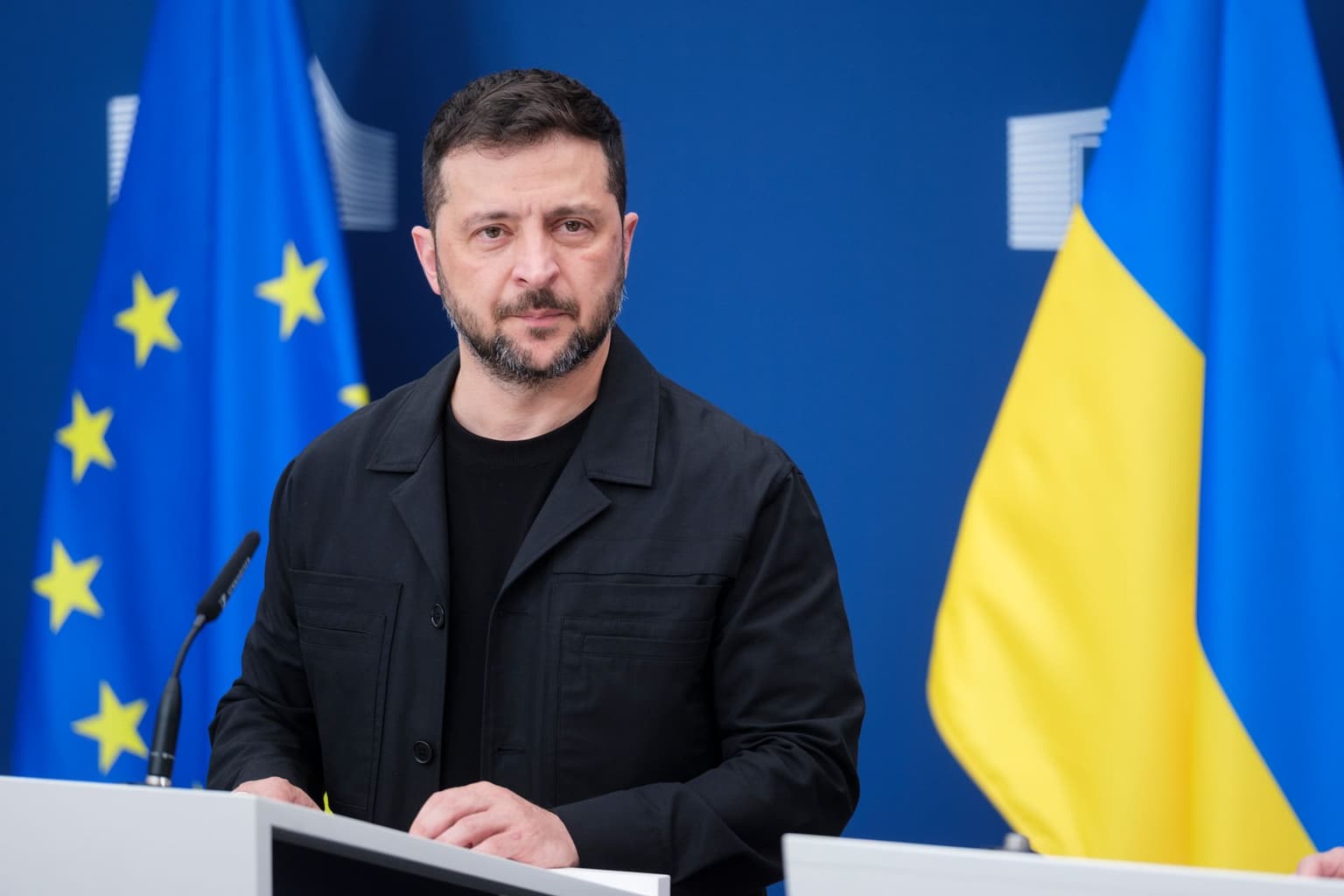
President Volodymyr Zelensky at the Berlaymont, the European Commission headquarters, in Brussels, Belgium, on Aug. 17, 2025. (Thierry Monasse / Getty Images)
 on Google
Ivan Nagornyak
Policy Fellow at European Policy Institute in Kyiv
The European Union and Ukraine held their second intergovernmental conference and opened the first cluster of accession talks, known as "Fundamentals", in Luxembourg on June 15.
The name seems mundane, but the substance is anything but. This cluster is the spine of the whole process. It covers the rule of law, democratic institutions, public administration, and economic criteria, and contains five negotiation chapters: judiciary and fundamental rights; justice, freedom, and security; public procurement; statistics; and financial control.
It is the first cluster to open and will be the last to close.
From this moment, Ukraine's membership has ceased to be a geopolitical promise and has become a structured negotiation with benchmarks, roadmaps, deadlines, and the discomfort of being judged.
The first such conference, two years ago, launched the talks and fixed the EU's negotiating framework. Little has moved on since, and the usual explanation, which is Hungarian obstruction, is largely correct.
The blockage is over, Viktor Orban's government having been swept from office in April. Yet the underlying problem remains untouched: the unanimity rule remains in place, open to anyone willing to exploit it.
The moment, then, demands urgency. With the window open, the only responsible course is to make up for lost time, and that means opening the five remaining clusters in July. A normal rhythm would have reached the same point in the same time; moving swiftly now simply proves that political blockages can delay enlargement, but they cannot hold it hostage — not when both sides are prepared to move.
The opening also changes who carries the most weight.
Until now, Ukraine could blame Hungary or the EU's slow decision-making process for the delays. That excuse has now gone. Kyiv has pushed hard for a 2027 target, and now that the clusters are open, the EU can pass the ball back.
Got an opinion on anything you've read in the Kyiv Independent so far?
and it may appear in our Letters section.
With the ball being in Kyiv's court, the question is whether it is ready to deliver at the agreed pace.
The scale of the task is easy to underestimate. The Association Agreement contained a little over 600 EU legal acts and, after more than a decade, Ukraine has implemented about 84% of them.
Accession is a different order of magnitude. It requires adopting several thousand acts, not just on paper. Brussels will ask not whether a law has been passed, but whether it is working in practice.
Ukraine must move from the logic of approximation to that of full membership, which is harder in both quality and quantity.
The first real test will come in late October, when the European Commission's Enlargement 2026 Report shows whether the Fundamentals cluster is being implemented or merely opened. Doing all this while fighting a full-scale war of Russian aggression, with a strained budget, weak public administration, and occupied territory, is harder still – a difficulty the optimists tend to ignore.
Some of the groundwork has been laid. In April, Ukraine adopted a National Program to align its laws with those of the EU. It has also prepared negotiating positions for all six clusters, but the documents do not implement themselves.
Ukraine's institutions for European integration now need more weight. Taras Kachka, Deputy Prime Minister for European and Euro-Atlantic integration since July 2025, and the government's coordination body should do more than monitor and coordinate progress; they need to be politically empowered to sanction ministries that stall or draft weak laws.

Parliament has spent four years failing to create a fast track for EU-related bills. A recent resolution moves in the wrong direction, demanding more reporting and a bigger parliamentary role in the talks. Oversight is healthy, but a candidate does not debate whether to adopt EU law, as that argument belongs to members. Its task is to apply the rules rapidly, where no transition period exists.
The burden is not Kyiv's alone, however, and here Brussels too often escapes scrutiny.
Benchmarks without incentives are just wishes. The EU should link the payments from its next long-term budget, the 2028–34 financial framework, to the closing of negotiating chapters, and give priority to the benchmarks that bring Ukraine into the Single Market.
That would turn money into an engine of reform, give Ukrainians a genuine prize well before full membership, and force the EU to put in place long-needed pre-enlargement reforms. Because an enlargement the EU cannot afford or absorb is no more credible than reforms Ukraine cannot deliver.
The door has opened wider, and that is good news. A door is only useful, however, if both sides keep moving through it at the same pace.
Kyiv must build a state that is fit for membership, not just a foreign policy that wants it. That means increasing the authority of the Chief Negotiator and the coordinating bodies, and putting politics aside, where Ukraine has no transition periods to gain. Brussels, for its part, must prove that it is ready to admit Ukraine and willing to pay for the journey.
The next six months will not settle accession, but it is Ukraine's best chance to prove by its actions that it is serious.
Editor's note: The opinions expressed in the op-ed section are those of the authors and do not purport to reflect the views of the Kyiv Independent.