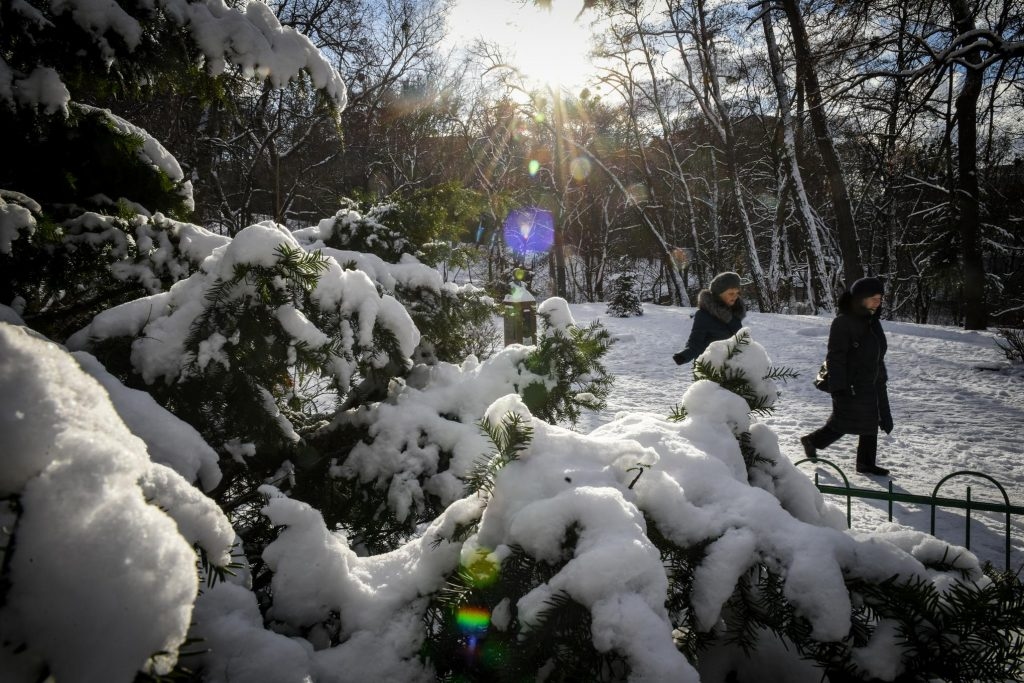
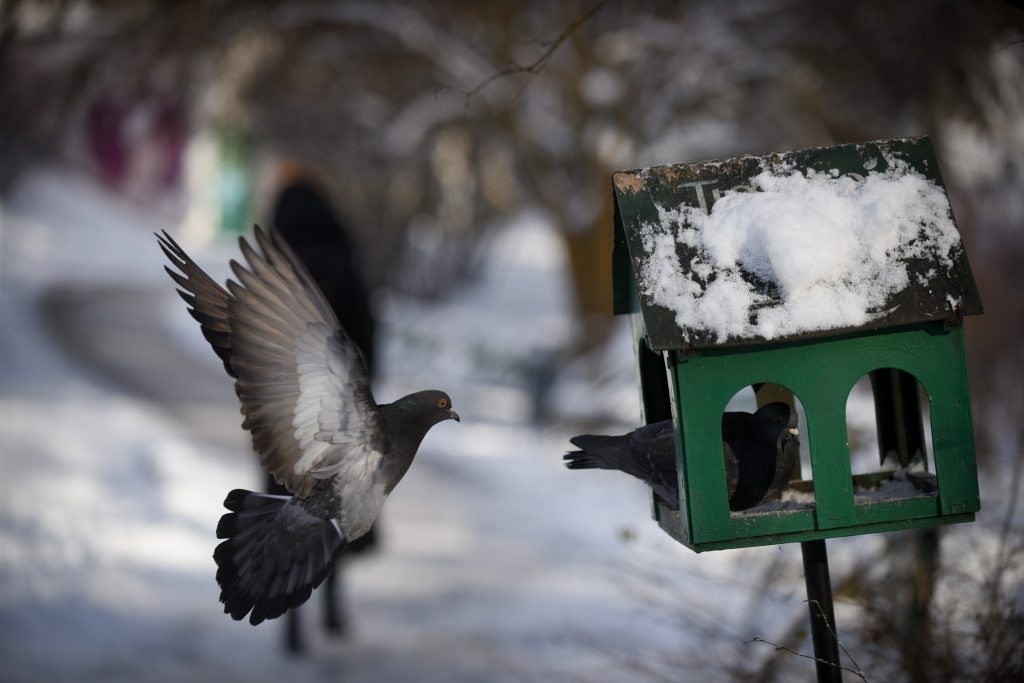
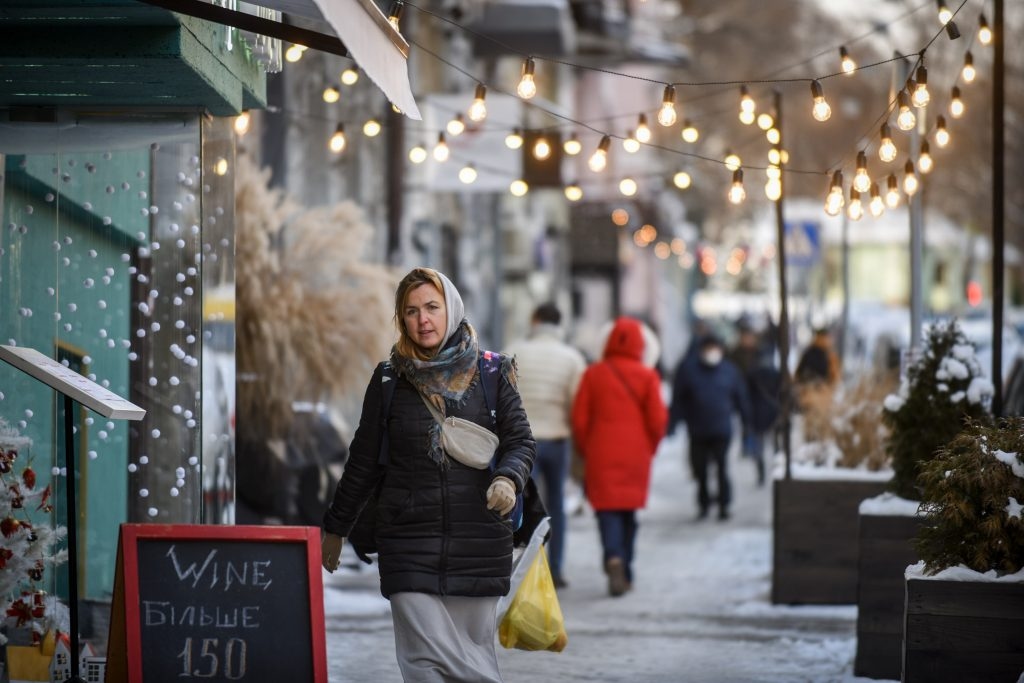
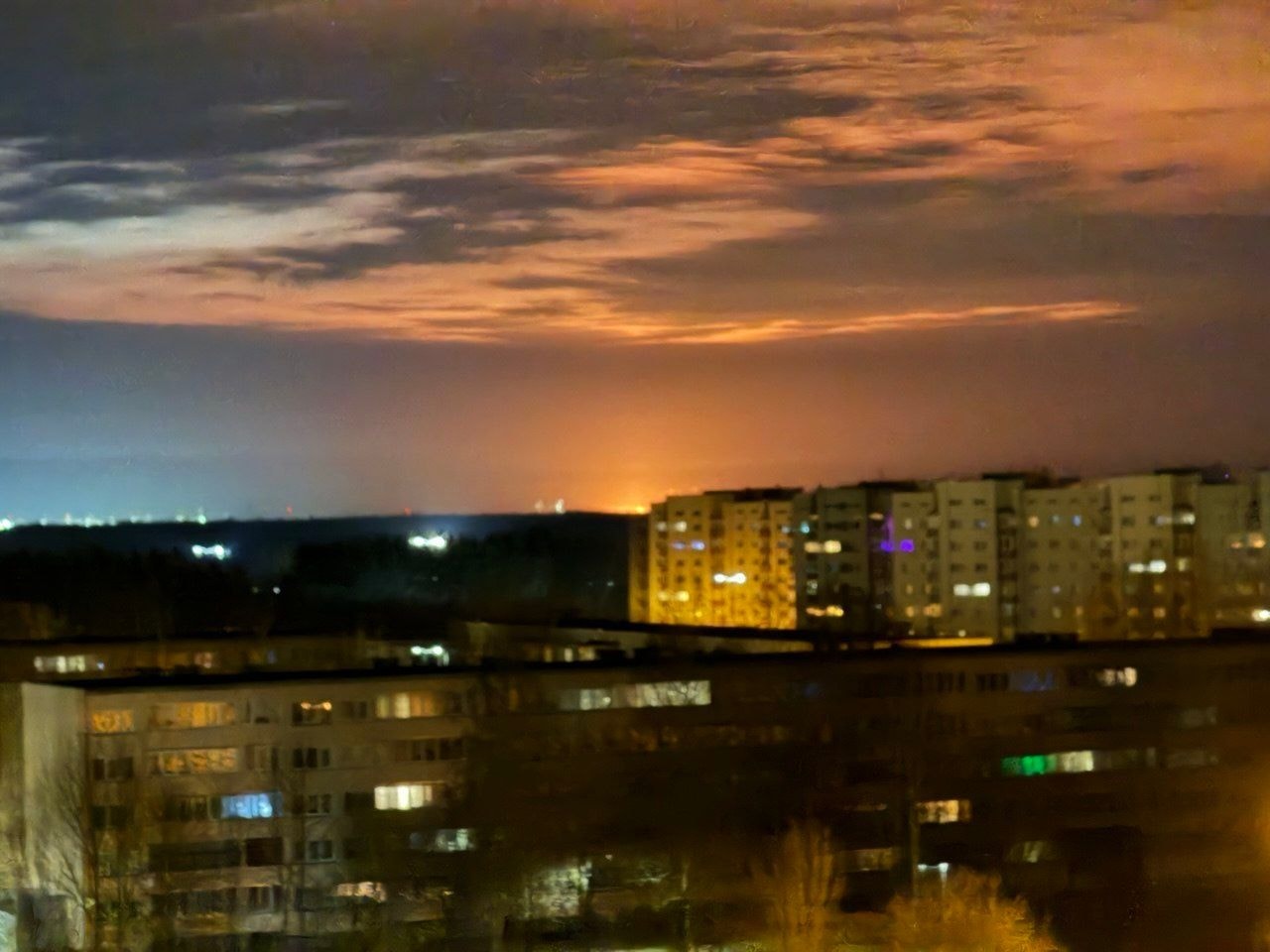
People walk through the Fomin Botanical Garden in Kyiv on Dec. 21. Kyiv saw its first heavy snowfall of the season on the evening of Dec. 20. (Oleg Petrasiuk)
Kyiv had its first heavy snowfall of the season on the evening of Dec. 20, with 13 centimeters of snow rapidly covering the capital.
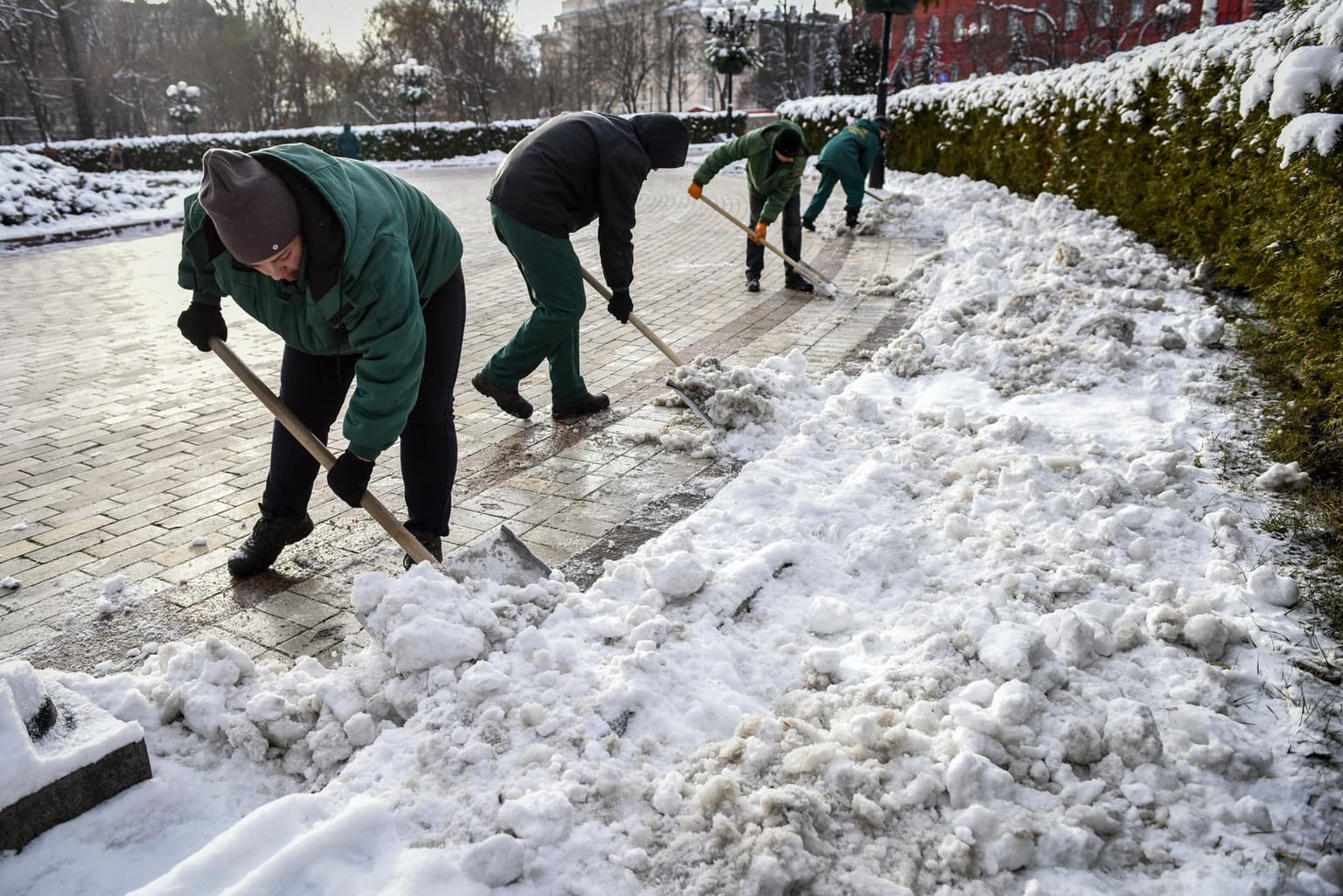
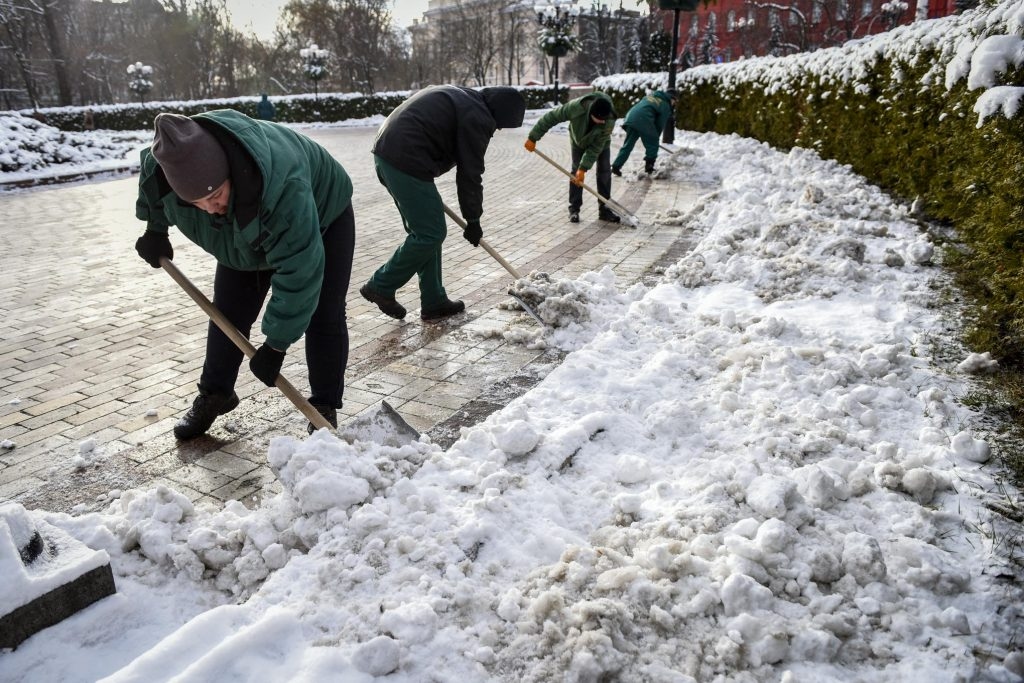
Municipal workers clean the snow in the Taras Shevchenko Park in central Kyiv on Dec. 21. Kyiv saw its first heavy snowfall of the season on the evening of Dec. 20. (Oleg Petrasiuk)
Traffic ground to a halt across the city while the number of road accidents surged. For example, a tram derailed on Kyrylivska Street in the Podil neighborhood.
Traffic remained slow on Dec. 21 as Kyiv was dealing with the consequences of the season's first heavy snowfall. Mask wearing is mandatory on public transport in Kyiv, but passengers often pull their masks down during the ride. (Oleg Petrasiuk)
The city authorities reported that they deployed 287 snow plows and 354 municipal workers to clean the snow off the streets.
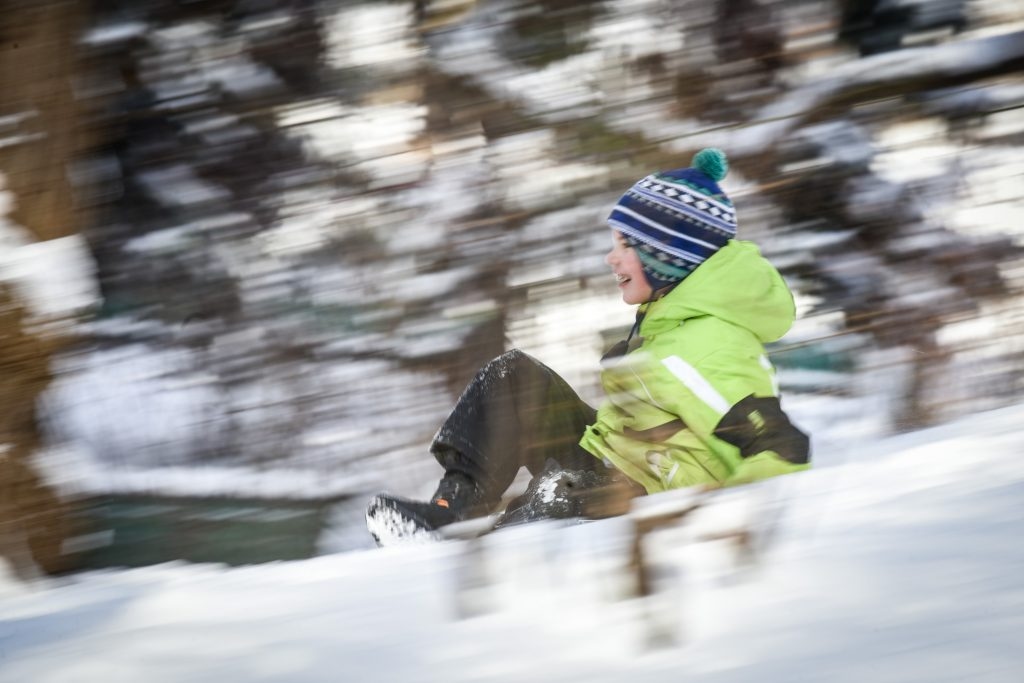
A boy sleds down a hill in central Kyiv on Dec. 21. Kyiv saw its first heavy snowfall of the winter on Dec. 20. (Oleg Petrasiuk)
The snowfall was accompanied by a cold snap: Temperature fell to -9 degrees Celsius on Dec. 21 and is expected to stay below zero for most of the week. Due to the cold weather, heating points have opened in Kyiv.
Kyiv saw its first heavy snowfall of the season on the evening of Dec. 20. (Oleg Petrasiuk)
On the bright side, Kyiv saw its first glimpse of sunlight in several weeks the day after the snowfall. Daily snowfalls are forecasted to begin again on Dec. 24.
Real winter came to Kyiv on Dec. 20-21, with the season's first heavy snowfall and the temperatures sliding to minus 9 Celsius. (Oleg Petrasiuk)
Leningrad Oblast Governor Aleksandr Drozdenko said rescuers were working at the port to extinguish the fire at around 7 a.m. local time, but reported no casualties.
Russian troops launched a Kinzhal aeroballistic missile and 442 drones against Ukraine overnight, of which around 300 were Shahed-type, the Air Force reported on March 29.
The acts of sabotage limited anti-drone interference, "allowing Ukrainian drones to pass... and strike an aircraft repair plant in Staraya Russa," on March 17, the group claimed.
Russian independent media outlet Mediazona, in collaboration with the BBC Russian service, has confirmed the identities of 206,202 Russian military personnel killed in Ukraine.
Russia took satellite photographs of the Prince Sultan Air Base in Saudi Arabia the day before Iran launched an attack on the facility that injured 12 U.S. troops, Zelensky said.
The Flamingo missile, built by controversial defense manufacturer Fire Point, has only been used by Kyiv on a handful of occasions since being first unveiled last summer, with its reported use increasing since November 2025.
Ukraine's Foreign Ministry on March 28 denied a report that an Iranian missile strike destroyed a facility containing Ukrainian weapons and military personnel in Dubai.
President Volodymyr Zelensky on March 28 clarified his understanding of Washington's position on security guarantees for Ukraine, in response to U.S. Secretary of State Marco Rubio calling his previous statement on the issue "a lie."
Naftogaz’s gas production sites in Poltava Oblast have been under attack for three days in a row, killing Romam Chmykhun, a 55-year-old process operator.
It only takes $5 to support independent journalism.
As global attention shifts to the Middle East, Russia’s war against Ukraine hasn’t stopped — and the Kremlin benefits from the world looking elsewhere. Our newsroom reports from Kyiv to help you understand what’s happening and why it matters. Support our work by becoming a member.

 on Google