EU gives final approval to ban on Russian gas by 2027
 on Google
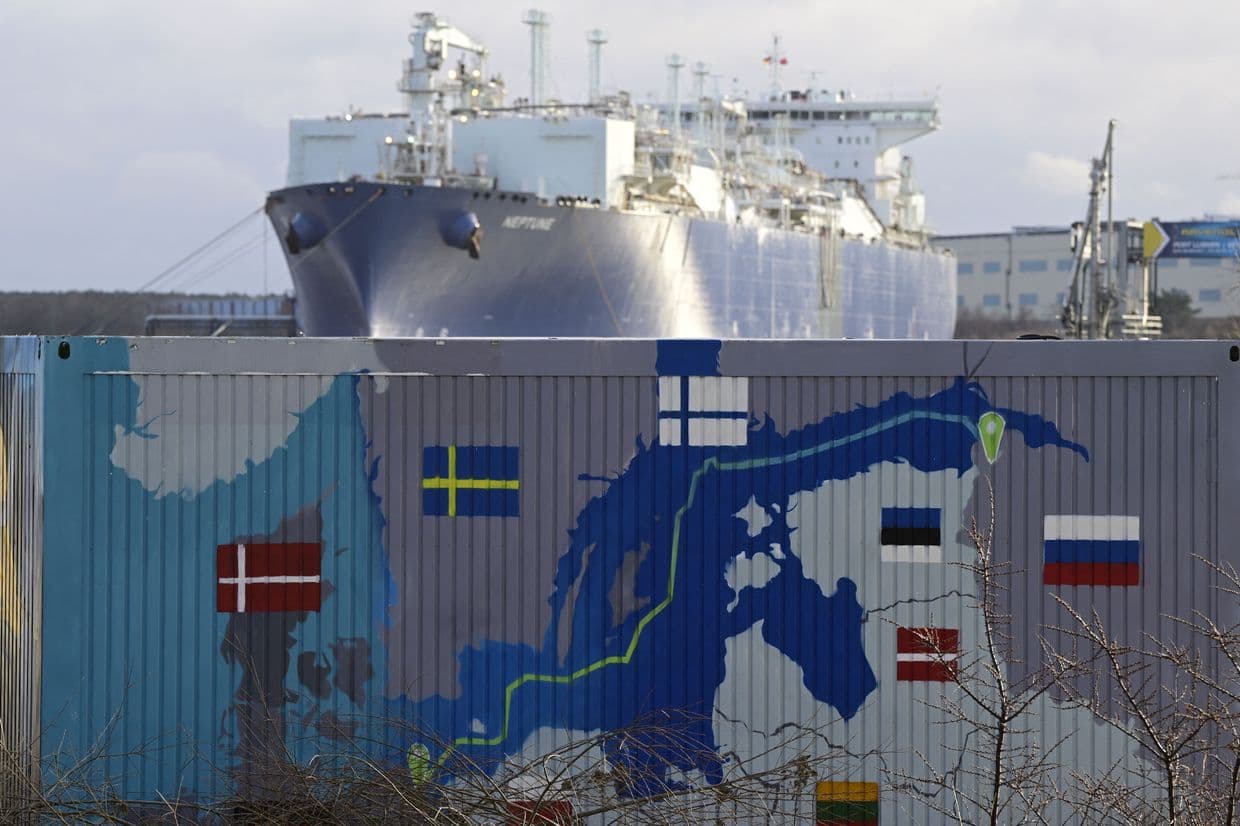
The Council of the EU gave a green light to a phased ban on Russian liquefied natural gas (LNG) and pipeline gas by next year, the Council's press service reported on Jan. 26.
The move is part of the EU's efforts to end reliance on Russian fossil fuels in response to an all-out invasion of Ukraine, ongoing since 2022.
The measures will begin to apply six weeks after the regulation enters into force, with a full ban on LNG imports taking effect in early 2027, followed by pipeline gas in the autumn of that year.
The bloc-wide move will mandate member states to verify the origin of imported gas and prepare national diversification plans by March 1, 2026.
Violators will face penalties: fines of at least 2.5 million euros ($3 million) for individuals; at least 40 million euros ($47 million) for companies; or up to 3.5% of a company's total worldwide annual turnover, or 300% of the estimated transaction value.
The announcement follows an October 2025 decision by the EU to phase out all Russian fossil fuels by the end of 2027, with the ban on LNG to take place even before that deadline.
Alexander Kirk, a sanctions campaigner at the NGO Urgewald, welcomed the move but said it was "shameful" to continue buying Russian gas into 2026.
"It will be a bitter pill to swallow for freezing families in Kyiv who will watch European allies heat their homes with Russian gas this winter," Kirk told the Kyiv Independent.
"Every shipment helps bankroll the missiles tearing apart Ukraine's power grid and leaving families without heat. Bring the ban forward."
While the European bloc decreased imports of Russian gas by 75% between 2021 and 2025, it remains Moscow's leading buyer of both pipeline gas and LNG.
In particular, purchases of seaborne LNG from Russia have surged during the full-scale war as pipeline supplies dropped.
U.S. President Donald Trump has backed calls to reduce Europe's reliance on Russian LNG, urging countries to switch to U.S. supplies.
"As of today, the EU energy market will be stronger, more resilient and more diversified," Cypriot Energy and Commerce Minister Michael Damianos said.
"We are breaking away from detrimental reliance on Russian gas and taking a major step, in a spirit of solidarity and cooperation, towards an autonomous Energy Union."