Croatia rejects transporting Russian oil to Hungary, Slovakia as flows via Ukraine halted
 on Google
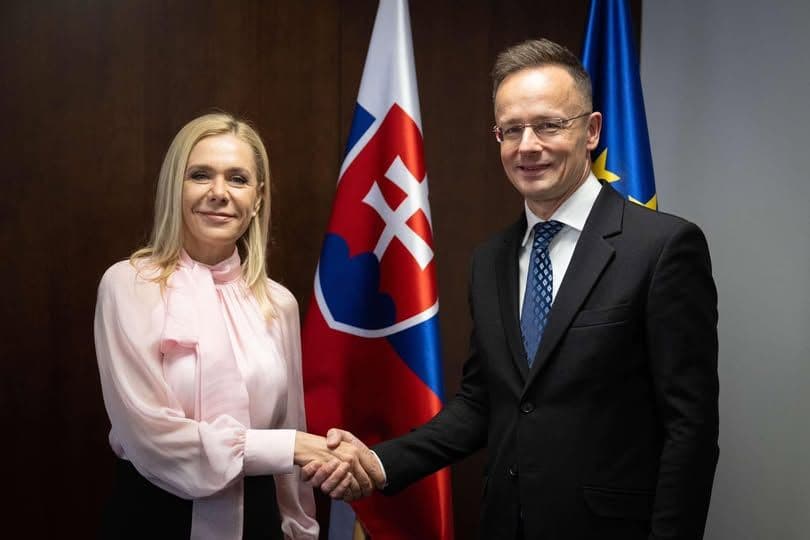
Croatia refused to transport Russian oil to Hungary and Slovakia following a request from the two countries, Croatian Economy Minister Ante Susnjar said on Feb. 16.
According to Ante, Zagreb "will not allow" Central Europe's fuel supply "to be endangered" and is ready to help resolve the disruption in compliance with EU law and the U.S. Treasury Department's Office of Foreign Assets Control (OFAC) regulations.
Earlier in the day, Hungarian Foreign Minister Peter Szijjarto said that Budapest and Bratislava had asked Croatia for help in securing Russian oil through the Adria pipeline following disruptions in supply via Ukraine.
The transport of Russian oil through the Druzhba pipeline via Ukraine has been halted since late January due to relentless Russian attacks on Ukraine's energy infrastructure, according to Ukrainian officials. In the meantime, Szijjarto accused Kyiv of stopping oil flows for "political reasons."
Ante said that no EU country has any "technical excuses" left for remaining dependent on Russian oil.
"A barrel bought from Russia may appear cheaper to some countries, but helps fund war and attacks on Ukrainian people. It’s time to stop that war profiteering," Ante said.
Along with Slovak Economy Minister Denisa Sakova, Szijjarto earlier sent a letter to Ante, saying that their countries' sanctions exemption "provides the possibility to import Russian oil by sea if pipeline deliveries are disrupted."
"The security of a country's energy supply must never be an ideological issue," the Hungarian minister said. "We therefore expect Croatia, unlike Ukraine, not to endanger the oil supply security of Hungary and Slovakia for political reasons."
The Druzhba pipeline, one of the world's largest with a capacity of 2 million barrels per day, is a critical conduit for oil from Russian fields to European refineries. It remains a lifeline for Hungary and Slovakia, the only EU countries still importing Russian crude through the system.
As tensions between Kyiv and Budapest grew, Foreign Minister Andrii Sybiha posted a photo last week showing the burning Druzhba after a rare Russian strike on the pipeline on Ukrainian territory. Ukrainian forces have attacked the pipeline multiple times on Russian soil.
"Hungary made no protest to Russia about it. They could not even pronounce the word 'Russia,'" Sybiha wrote on X.
"The truth is that Moscow stopped being a reliable supplier the moment it launched its aggression against Ukraine. And this aggression is the cause of all problems."