Chornobyl plant restores external power after temporary outage caused by Russian attack, according to Energy Ministry
 on Google

Ukraine's Chornobyl Nuclear Power Plant has restored external power supply after a temporary outage caused by Russia's latest mass attack on energy infrastructure, Ukraine's Energy Ministry said on Jan. 20.
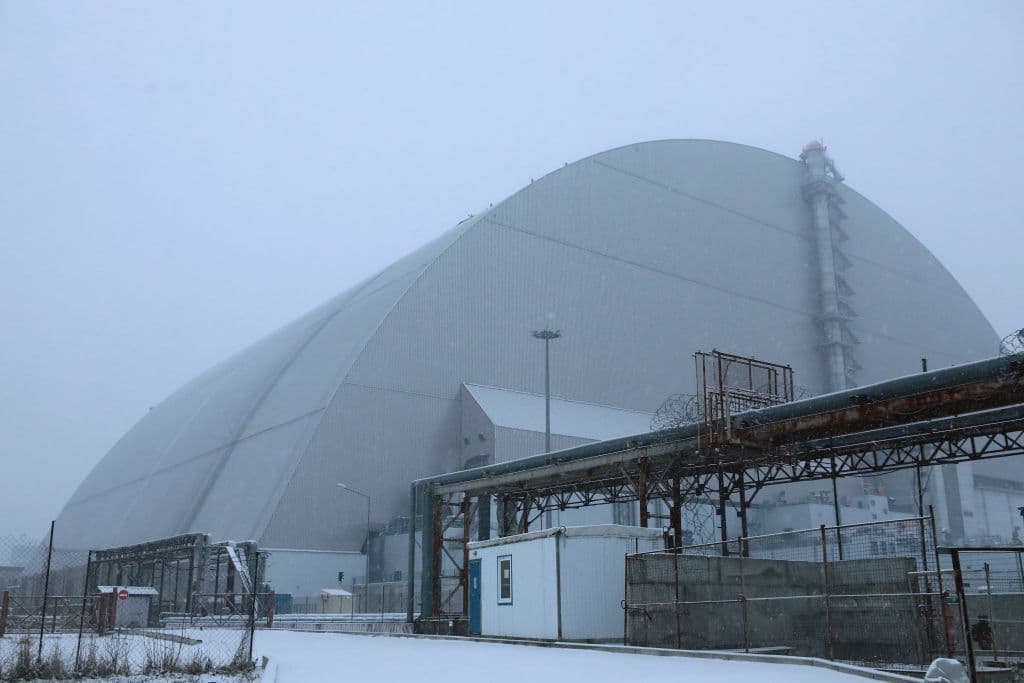
The ministry said that despite overnight missile and drone strikes targeting key energy hubs supplying the Chornobyl Exclusion Zone, all facilities at the plant — including the New Safe Confinement and spent nuclear fuel storage sites — are now receiving power from Ukraine's unified energy system and are operating as required.
"Radiation levels at the site and across the exclusion zone remain within permitted limits," the ministry added.
Earlier on Jan. 20, the International Atomic Energy Agency (IAEA) said Russia's latest mass attack against Ukraine temporarily impacted several Ukrainian electrical substations "vital for nuclear safety," including the Chornobyl Nuclear Power Plant.
"The (Chornobyl Nuclear Power Plant) lost all off-site power and power lines to other (nuclear power plants) were also impacted. The IAEA is actively following developments in order to assess impact on nuclear safety," IAEA Director General Rafael Grossi said, without mentioning Russia.
Ukraine's Energy Ministry warned that Russian attacks risking power outages at the Chornobyl Nuclear Power Plant constitute a serious violation of nuclear safety principles and pose a threat beyond Ukraine's borders.
This is not the first time the Chornobyl Nuclear Power Plant has been at risk due to mass Russian attacks.
In October 2025, a Russian attack on energy infrastructure in Slavutych, a town in Kyiv Oblast built after the 1986 disaster to house evacuated Chornobyl plant workers, caused a several-hour blackout at the Chornobyl Nuclear Power Plant.
At the time, power surges left the New Safe Confinement, the massive structure enclosing the destroyed fourth reactor, without electricity. President Volodymyr Zelensky later said the blackout lasted more than three hours, accusing Russia of carrying out a deliberate strike using over 20 drones.
In February 2025, a Russian Shahed-type drone struck the New Safe Confinement over Chornobyl's destroyed fourth reactor, damaging the structure designed to prevent the release of radioactive materials. Ukrainian authorities said no significant radiation leak occurred.
"This is a terrorist threat to the entire world," Zelensky said, commenting on the attack in February.
Plant director Serhii Tarakanov raised alarm at the end of December about the protective structure built around part of the plant risking collapse due to Russian attacks on Kyiv Oblast.
Chornobyl was once the site of the worst nuclear disaster in history. The fourth reactor at the Chornobyl Nuclear Power Plant near Pripyat in the Ukrainian SSR exploded in 1986 due to the neglect of Soviet authorities.
The blast released massive amounts of radioactive material across the Soviet Union and Europe, forcing the evacuation of tens of thousands and leaving a legacy of environmental contamination, health crises, and political scrutiny that continues to shape global perceptions of nuclear energy.
The plant sits roughly 130 kilometers (80 miles) north of the city of Kyiv, a mere 15 kilometers (9 miles) from the Belarusian border. In the early days of Russia’s full-scale invasion, the nuclear facility was briefly occupied by Russian forces.
The latest mass Russian attack that impacted the Chornobyl Nuclear Power Plant came as part of another mass overnight Russian strike on Jan. 20, which targeted Kyiv, Zaporizhzhia, Rivne, Odesa, Kharkiv, Poltava, and Dnipropetrovsk oblasts with drones and missiles.
Ukraine is currently facing one of its harshest winters since the start of the full-scale war and due to ongoing mass attacks, the majority of the country is dealing with severe power outages.