As Ukrainian drone strikes cripple Russia’s fuel supply, Moscow faces 'one crisis after another'
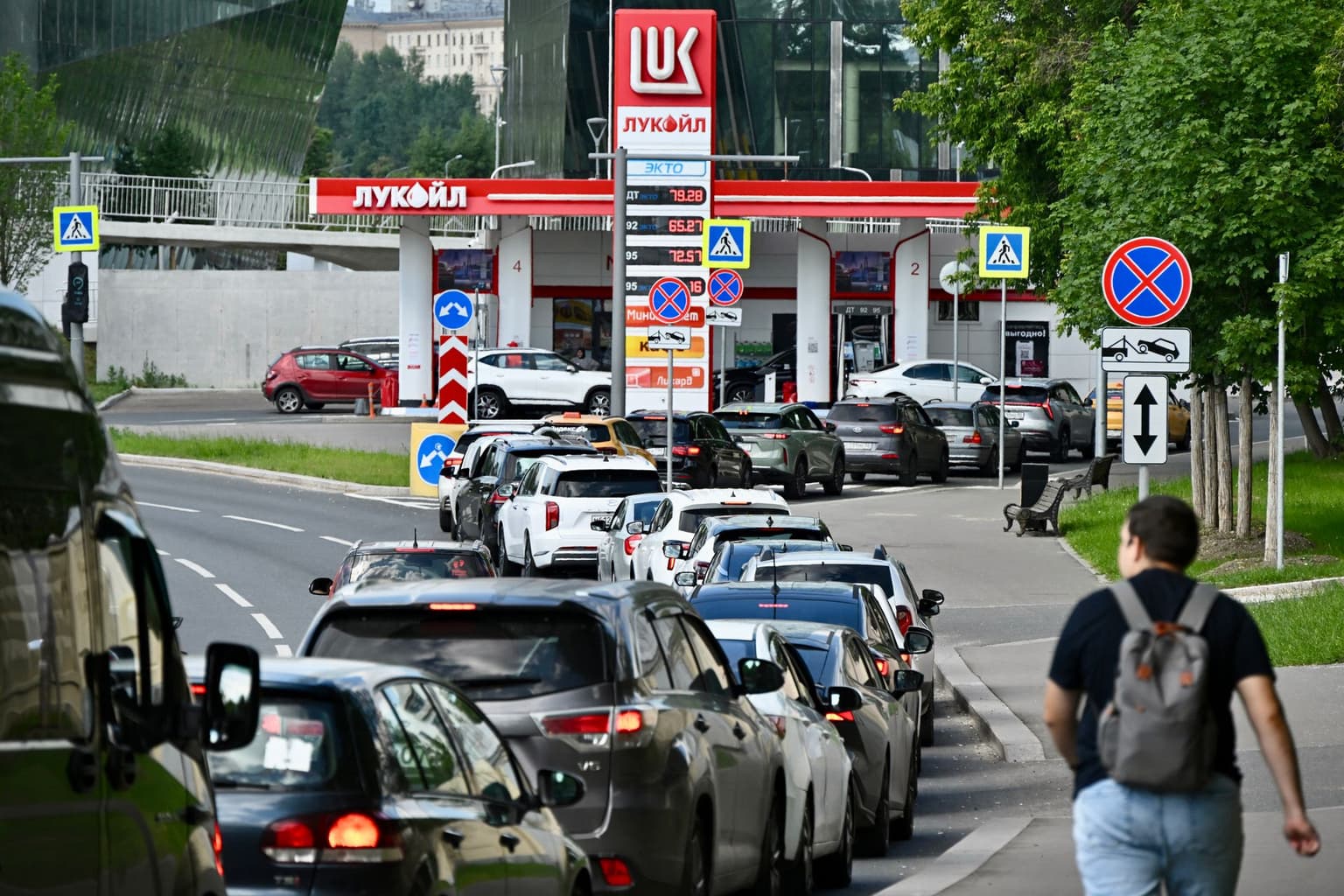
People queue to refuel their cars at a Lukoil petrol station in Moscow, Russia, on June 30, 2026. (Igor Ivanko / AFP / Getty Images)
 on Google
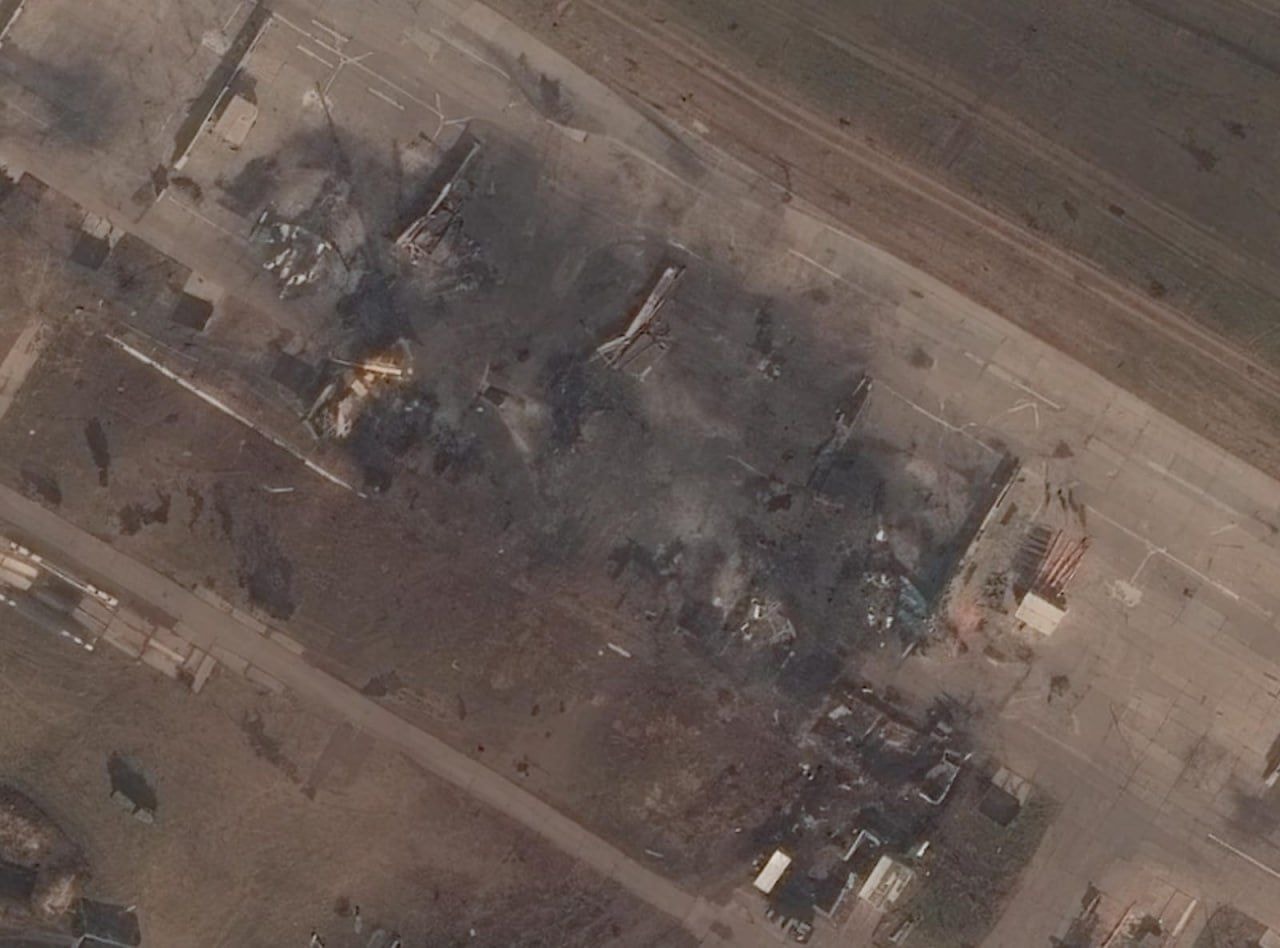
Russia's Lukoil-Nizhegorodnefteorgsintez refinery had just restarted operations when Ukrainian drones hit it again. The facility — the fourth-largest oil refinery and the second-largest producer of gasoline in the country — had been struck by Ukraine on June 24, forcing operations to shut down. On July 2, Ukrainian drones paid another visit, forcing the facility to shut down once again.
Gazprom's Omsk Oil Refinery, in Omsk, approximately 2,445 kilometers (1,519 miles) from Ukrainian-controlled territory, and the largest such facility in the country, was struck by Ukrainian drones four days later, on July 6. Critical parts of the refinery, such as the primary oil refining unit, took direct hits, causing a halt in production.

It was the sixth major Russian oil refinery to partially or fully shut down since the start of June alone, as Ukraine's campaign against the Russian oil industry — described euphemistically by President Volodymyr Zelensky as "Ukrainian long-range sanctions" — has seen almost every major oil refinery across the country targeted by Ukraine's long-range drones. The campaign has led to a major fuel crisis in Russia, which has seen Russian motorists facing daylong queues for fuel and the suspension of exports of gasoline and jet fuel.
Only one of Russia's major refineries has not suffered some degree of damage from Ukraine's long-range drones in 2026: Rosneft's Angarsk Refinery in Irkutsk Oblast. It is largely protected by geography — the facility sits approximately 4,450 kilometers (around 2,700 miles) away from Ukrainian-controlled territory just outside of Irkutsk, in Eastern Siberia.
Even the Moscow Oil Refinery, one of the most heavily defended and important pieces of oil infrastructure in Russia, couldn't escape. Hundreds of Ukrainian drones penetrated the airspace around the Russian capital on June 16 and June 18 and attacked the facility twice, causing severe damage and knocking the facility out of action until 2027.
Fuel shortages bring war home for Russians
The thick, choking clouds that blanketed the Russian capital after the Ukrainian strikes were a clear signal that the unspoken bargain Putin made with the Russian people at the start of his "special military operation" in February 2022 — that Russians could ignore his war, as long as they didn't oppose it — had been decisively broken. For Russians who weren't able to discern the meaning of the smoke signals over Moscow, the huge, sometimes daylong queues for gasoline and diesel were another unavoidable sign.
"For four years Russians in major cities have been able to treat this war as something that happens to other people, somewhere else, paid for with other people’s sons," Jade McGlynn, head of the Ukraine and Russia Programme at King's College London, told the Kyiv Independent, explaining that fuel shortages are finally bringing the reality of war to Russians in a very tangible way. "Fuel rationing across Russia ends that: when you are sitting in a petrol queue for the better part of a day, the war stops being an abstraction on the evening news," McGlynn said.
According to Ukraine's General Staff, 42.74% of Russian refining capacity had been disabled as of July 4. Independent analysts are slightly more conservative, with the International Energy Agency (IEA) assessing that "more than 20%" of Russia’s total refining capacity has been knocked offline.
Even if the exact level of damage to Russia's refining capacity is disputed, everyone — including the Russian government — agrees it is severe. "This level of disruption is unprecedented in the history of the Russia-Ukraine conflict," the IEA said in a report published mid-June. Even Russian President Vladimir Putin was forced to acknowledge the difficulties. "Unfortunately, there are still lines at gas stations, and the right grade of gasoline isn't always available. And, of course, we understand the challenges faced by agricultural producers and farms during the summer," the Russian dictator told a meeting of oil industry executives on June 28.
The 'gas station masquerading as a country' runs out of fuel
"Lines at gas stations" significantly undersells the problems Russians across the country face when trying to purchase fuel. Queues to buy fuel, often measured by the day, are common across Russia. The majority of Russian regions have now implemented some form of fuel rationing; either mandated by the local authorities or implemented by private fuel companies. Critical state services have been disrupted or suspended because of lack of fuel.
As the queues lengthen, tempers shorten. Fights have become common in the kilometer-long lines as queue jumpers attempt to push to the front of the line, and as always been the case during previous Russian crises — particularly during the chaotic 90s — some enterprising Russians have taken advantage of the chaos to make a quick buck at the expense of their fellow citizens.

Scalpers have taken to filling up huge numbers of jerry cans or makeshift tankers, and then selling them at a significant markup to those unwilling to wait in line. Others have begun selling places at the front of days-long queues, or the special codes that are supposed to be reserved for employees of critical state services.
Fuel shortages are also affecting Russian troops on the front line. As Dmytro Putiata, a former Ukrainian drone operator and drone warfare specialist, told the Kyiv Independent in June, Ukrainian "middle-strikes" were already forcing some Russian units to reduce diesel use by up to 20% and move supply and command depots farther behind the lines. The situation has likely deteriorated further since then.
"We also see that they continue to face a crisis with critical infrastructure and an ongoing fuel crisis," Ukrainian Defense Minister Mykhailo Fedorov told journalists in Kyiv on July 1. "A large number of crises are beginning to pile up, and it’s becoming increasingly difficult for the Russians to resolve one crisis after another," he said.
Economic strain adds to war weariness
The fuel crisis is adding to a general malaise in Russia, as significant war fatigue sets in. Even before the fuel crisis began, Russians were extremely pessimistic about the economy, according to Gallup polling conducted between March and May this year. Sixty percent of Russians viewed the economy as getting worse in their area, the highest such figure in 20 years, compared with only 27% who viewed it as improving.
Worries about the economy and weariness with the war are not limited to ordinary Russians. "I don't believe there is anyone in this country whose primary concern is anything other than an end to military hostilities as soon as possible," Herman Gref, CEO of Russian state-owned banking giant Sberbank, told shareholders at a meeting on June 30.

Gref has every reason to be concerned: the Ukrainian attacks have a dual impact on the Russian economy. "The attacks on the export infrastructure for crude are hitting their revenue, and the attacks on the refinery are hitting the ability to both run their economy and wage war," Alan Riley, a nonresident senior fellow with the Atlantic Council Global Energy Center, told the Kyiv Independent.
Riley believes Russia will be able to repair its oil export capability relatively quickly, but that it will take a significantly longer period to repair more complicated refineries. The most complex components in an oil refinery "can take a long time, perhaps a couple of years to replace," Riley believes, adding that the Ukrainian drone strikes have been striking the most difficult parts of the refineries for the Russians to repair, and that making such complicated repairs under continuing Ukrainian attacks makes the process significantly more difficult.
Moscow scrambles for workarounds
In the face of the shortages and sullen grumblings from ordinary Russians, the Kremlin is taking a number of measures to try to mitigate the shortages: imports of gasoline from India via ship, and from Belarus and Kazakhstan via pipeline, as well as limited shipments via rail from China.
Imports are just one way the Russian government is attempting to address the fuel shortages. Russian daily newspaper Kommersant — which now has a special section dedicated to the "fuel crisis" in Russia — reported on June 29 that the Kremlin may authorize the production of Euro-2 grade fuels. While easier and cheaper to refine, such cruder grades of fuel damage the engines in modern cars.

Like the repercussions of using poor-quality fuel, the impact on Russia will be "corrosive" rather than "explosive," McGlynn believes. "It wears people down, it hands the Kremlin one more fire to fight, and it widens the space in which something unexpected might eventually happen. A Russian society organizing to stop the war is a different proposition, and I see little sign it is capable of it."
As if to prove her point, one Russian man, after sitting in a queue outside of Chita for 39 hours, blamed Russian authorities for being "far too soft" on Ukraine, in an interview with Meduza. "I hope they'll reconsider their position and realize it's time to stop playing games and start acting seriously," the man said, apparently without irony.
Note from the author:
This is Jimmy Rushton, the author of this piece. Ukraine's systematic campaign of drone strikes against the Russian oil industry has been one of the most significant developments of the war in 2026 so far. To help us continue such coverage, please consider supporting the Kyiv Independent by becoming a member.