Anti-graft agency detective, investigating Ukraine's largest corruption scandal, released from custody
 on Google
Editor's note: The story was updated to include a statement from the Prosecutor General's Office.
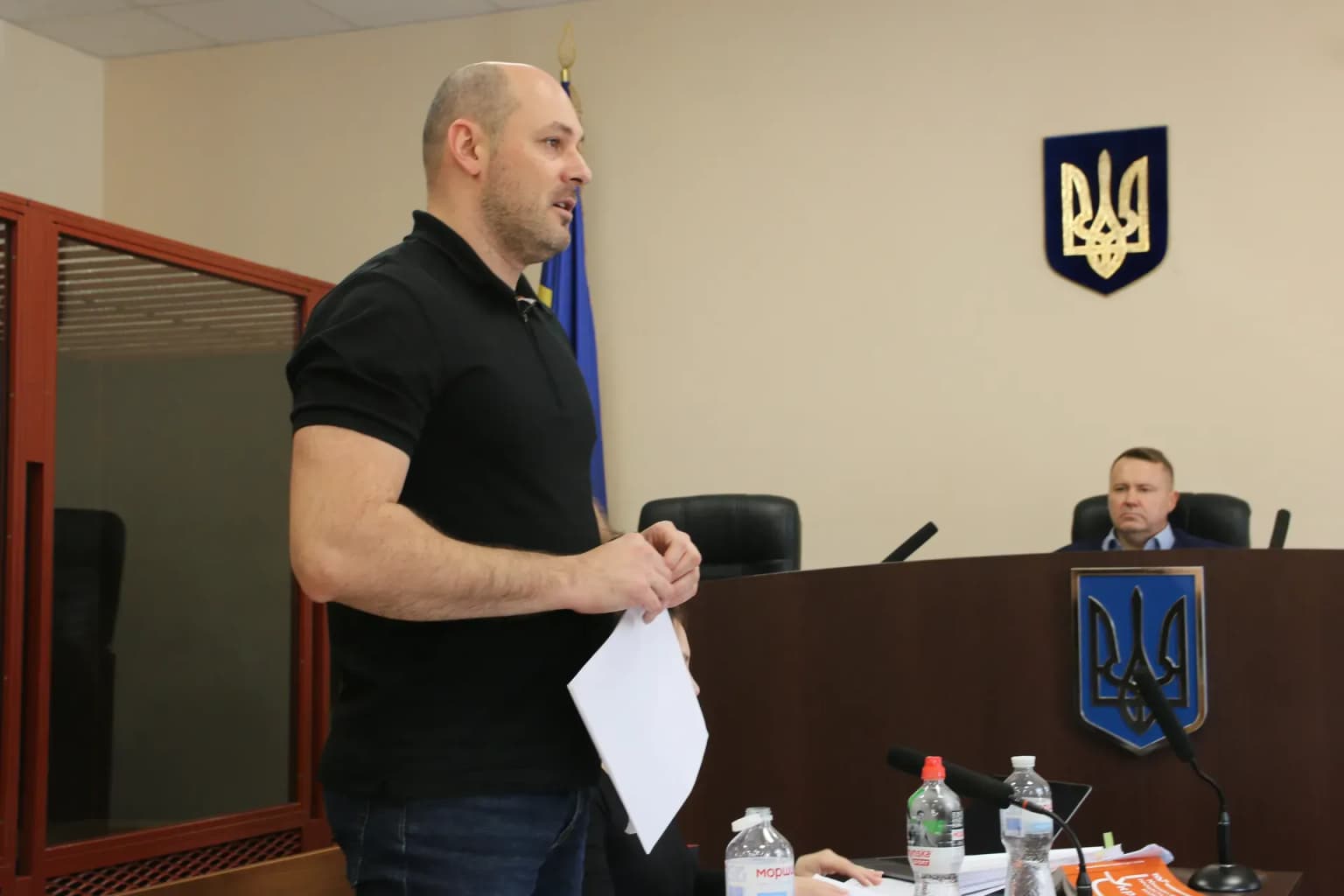
The Kyiv Appeals Court ordered on Dec. 3 the release of Ruslan Mahamedrasulov, a detective with Ukraine's National Anti-Corruption Bureau (NABU), who had been investigating the country's largest corruption case involving the state-run nuclear power monopoly Energoatom.
Critics argued that the arrest of Mahamedrasulov was a part of a crackdown on Ukraine's anti-corruption institutions, describing it as a political move.
Mahamedrasulov, the head of a NABU detective unit, and his 65-year-old father, Sentyabr, were arrested by Ukraine’s Security Service (SBU) in July, a day before President Volodymyr Zelensky signed a law that that took away the independence of NABU and Specialized Anti-Corruption Prosecutor's Office (SAPO).
After protests in Kyiv and pressure from Western partners, the president signed a new bill on July 31, restoring the independence of these anti-corruption institutions.
Mahamedrasulov and his father were charged with collaborating with Russia for allegedly maintaining contacts with Moscow and serving as an intermediary in cannabis sales to the Russian republic of Dagestan.
Sentyabr Mahamedrasulov was released from custody and placed under nighttime house arrest on Dec. 2.
His son believed that the case was a political vendetta by the authorities for his role in Ukraine's biggest corruption case, investigating Zelensky's associate and former business partner Timur Mindich.
The key controversy was that the audio recording at the center of the case is of poor quality. The critics of SBU, which is seen as loyal to the President's Office, and Mahamedrasulov's interlocutor in the recording argue that Uzbekistan, not Dagestan, is mentioned in the tape.
"I want to thank everyone for their support. I felt it throughout the past five months," the NABU detective said after the court hearing.
Viktor Husarov, another NABU detective arrested in July, was charged with treason and remains in custody.
Mahamedrasulov's release comes just days after Andriy Yermak, also reportedly being implicated in a corruption scandal, was dismissed from his position as head of the President's Office.
Yermak's far-reaching powers and desire for control have been widely discussed among Ukrainian and foreign officials. Those who spoke with the Kyiv Independent have said that it was Yermak who pulled the trigger on the July attack against the country's anti-corruption institutions.
"Undoubtedly, (the release of Mahamedrasulov) is good news. The bad non-news, however, is that the case of detective Mahamedrasulov is a diagnosis for (Ukraine's) law enforcement system," Anastasia Radina, head of the parliament's anti-corruption committee, said on Facebook.
"The entire system is deeply flawed and requires urgent intervention, primarily through legislative changes."
Prosecutor General Ruslan Kravchenko responded to public criticism on Dec. 4, describing the reaction to the case as "emotional" and "manipulative." He said that Mahamedrasulov and his father had been charged due to the "sufficient" evidence presented by investigators. They were freed from custody as the risk of obstructing the investigation decreased, the Prosecutor General added.
"This decision was made not on social media, but within the framework of the criminal process," he said.
Kravchenko, who is seen as Zelensky's loyalist, said that easing the preventive measure "is not a justification for the suspects," and the investigation continues.
Law enforcement officials are being investigated for allegedly aiding suspects in the Energoatom corruption scheme.
Several law enforcement agencies are mentioned in tapes released by the Anti-Corruption Bureau as part of the case. These include the Prosecutor General's Office, the SBU and the State Investigation Bureau.