What we know about Russia’s offensive in Siversk, key Donbas outpost
 on Google
Russia’s renewed offensive on the front-line city of Siversk in Donetsk Oblast has sparked weeks of heavy fighting even as Moscow has claimed that the city has already fallen.
The push has brought fresh attention to Siversk, a small but important outpost that Russian forces have sought to capture since late 2022.
First, on Sept. 1, Dmytro Zaporozhets, a spokesman for the 11th Army Corps told Ukrainian broadcaster Suspilne that Russia was expected to launch an offensive in the area to establish a foothold.
The expected escalation became evident several weeks later on Nov. 25, when Ukraine’s open-source intelligence group DeepState reported a sharp increase in Russian attacks and incursions into the city's urban area.
Then, in a Dec. 10 YouTube video, DeepState co-founder Roman Pohorilyi said that the situation had deteriorated when Russian forces began infiltrating Siversk from multiple directions.
"Everything began with enemy units seeping into the city from the flanks, particularly from the south. Later, they also pushed from the east, near Verkhniokamianske. Although Ukraine’s 54th Brigade managed to hold the line there for a long time, the enemy eventually started entering the city itself," he said.
The next day, on Dec. 11, the Kremlin announced that Russian troops had seized full control of Siversk. Ukrainian officials and military analysts denied the claim. As of mid-December, the situation remains fluid and tense.

Situation on the ground
Three days later, on Dec. 13, Ukrainska Pravda reported that Russian forces had infiltrated much of Siversk, citing military sources who warned of a critical situation. They noted that the Bakhmutka River had become a natural barrier and would likely serve as the city’s final defensive line.
This echoed earlier remarks by Pohorilyi, who had already identified the river’s importance in his earlier YouTube video.
"The Bakhmutka River has become a major obstacle for the enemy. It currently marks the active line of engagement. Although there are attempts to cross it — even under the bridges — Ukrainian forces continue to strike enemy troops trying to fortify themselves beyond it," he explained.
Troops on the ground have said that fighting inside Siversk continues and acknowledge that the situation remains bleak for Ukrainian forces, even though the city has not fallen.

On Dec. 14, Maksym Butolin, chief sergeant of the 54th Separate Mechanized Brigade — the unit leading the defense of Siversk — said on national television that "talking about full control of the city is impossible."
Butolin and Pohorilyi both noted that Russian units often exploit fog, rain, and snowfall to move in small groups and entrench themselves in basements of residential buildings.
Two days later, on Dec. 16, the brigade reported that fighting was still ongoing inside the city.
"Siversk remains under constant enemy pressure: some attempt to infiltrate the city, while others move along its approaches hoping to gain a foothold. But for them, it ends the same way every time," the brigade said on Facebook.
Why Siversk matters
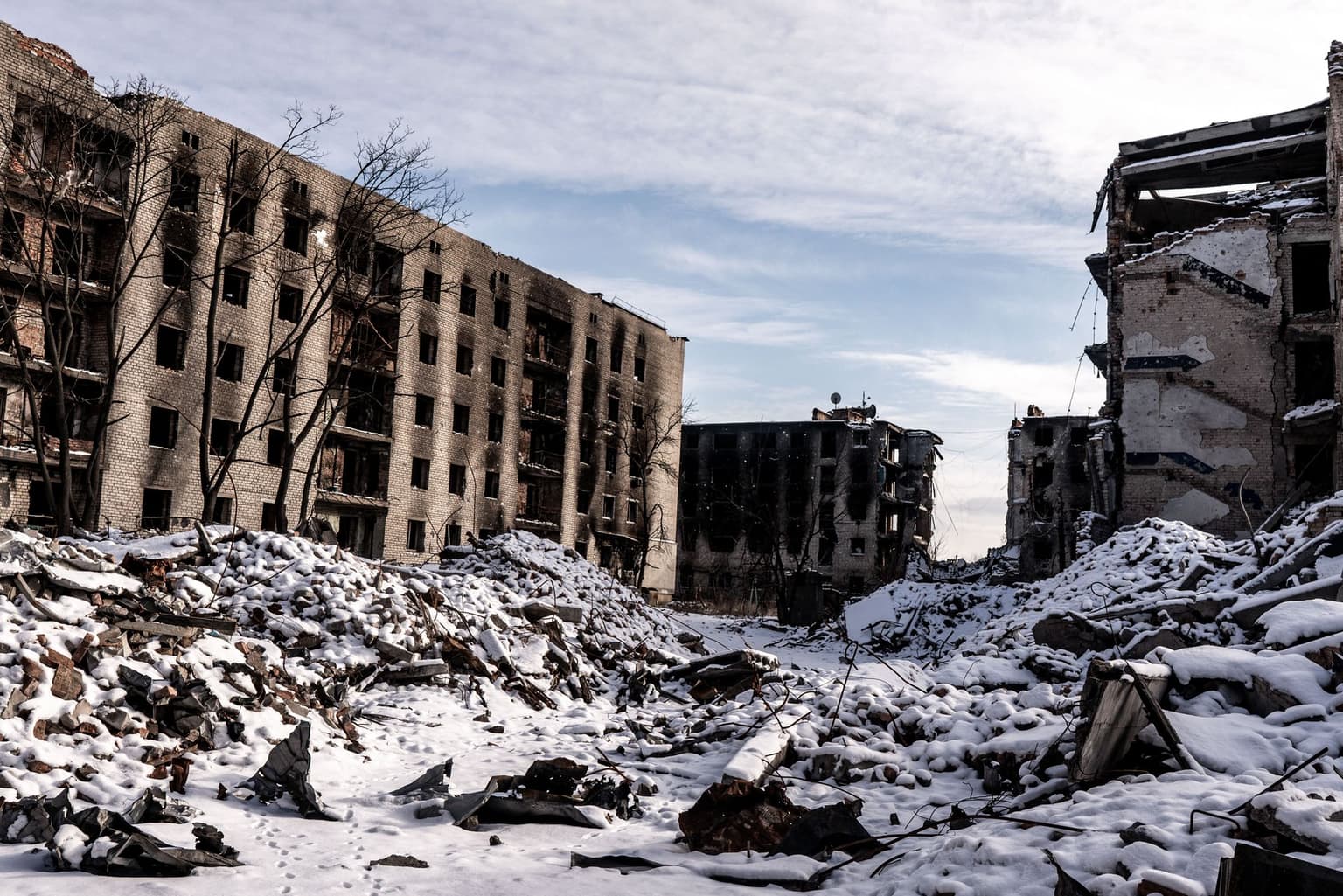
Before the full-scale invasion, Siversk was home to about 10,000 people. The city has since been largely depopulated, with local authorities estimating that only several hundred civilians remain.
Despite its modest size, Siversk plays a key role in Ukraine’s defense of northern Donetsk Oblast.
The city helps shield the larger urban centers of Sloviansk and Kramatorsk — the main bastions of Ukraine’s so-called "fortress belt," which Moscow has failed to capture in nearly four years of fighting, and which are now the focus of intensifying peace talks.
Russian forces have been attempting to advance on Siversk since July 2022, following the fall of Sievierodonetsk and Lysychansk.
In more than three years of fighting since, Siversk has been one of the most stable parts of the front line, despite the intensity of fighting in nearby areas, with Russian troops only managing to advance around 19 kilometers (12 miles).
Still, Pohorilyi warns that the fall of Siversk, while not yet complete, is a real risk.
"At some point, we may wake up and find the entire city in the red zone. This is why more attention and reinforcements are urgently needed. Even the 54th Brigade acknowledges that additional reserves and support are required to hold this sector, which they’ve defended for years," he said.