Why Trump's peace plan is unlikely to end Russia's war in Ukraine
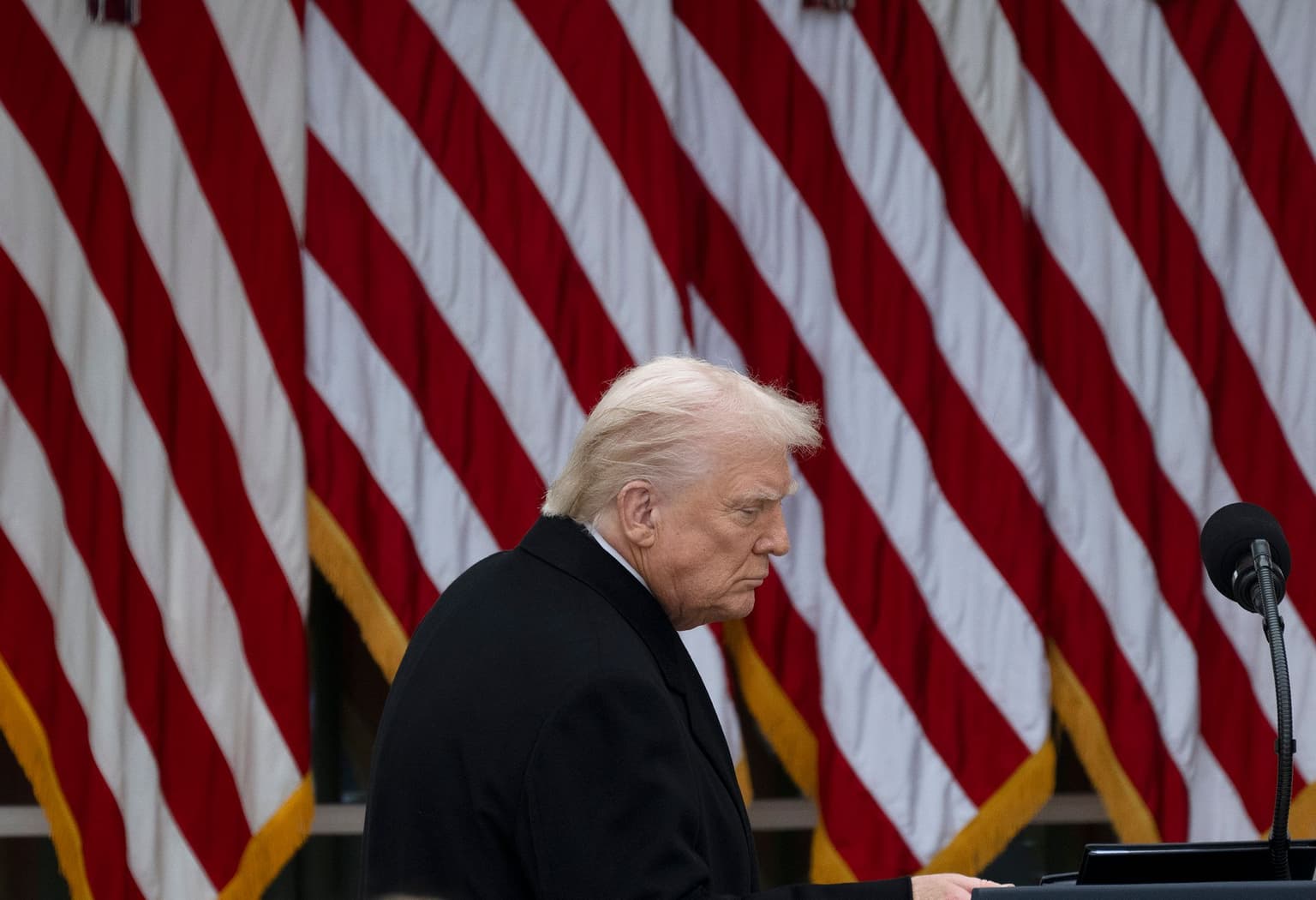
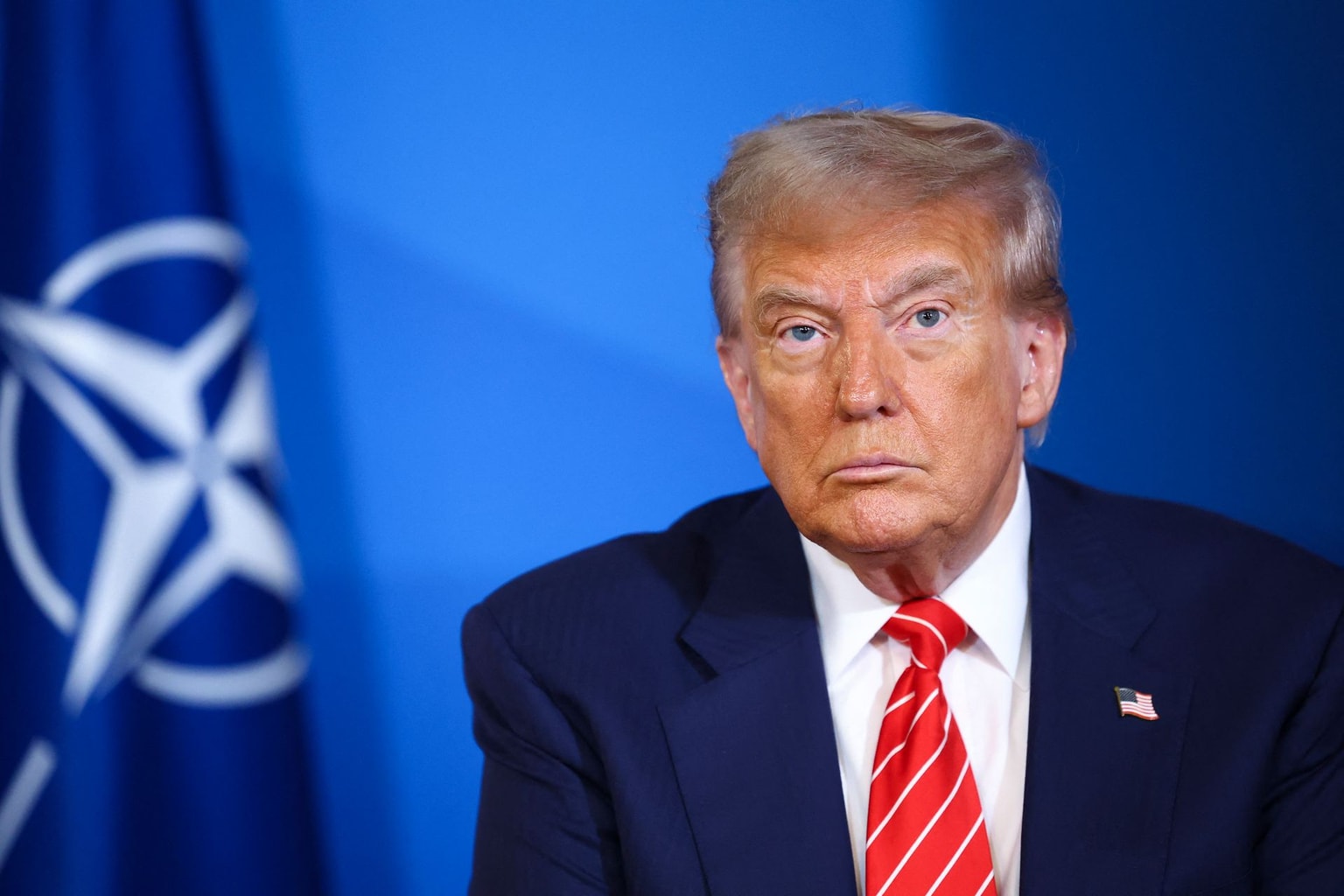
U.S. President Donald Trump in Washington, D.C., U.S., on Nov. 25, 2025. (Marvin Joseph / The Washington Post / Getty Images)
 on Google
As U.S. President Donald Trump intensifies his effort to force a negotiated end to Russia's full-scale invasion, a central question hangs over Washington, Kyiv, and Moscow: What happens next — and can this push yield anything at all?
The answer, according to analysts, is increasingly clear.
Despite weeks of frantic diplomacy and pressure from Washington, the signs emerging ahead of U.S. envoy Steve Witkoff’s trip to Moscow this week look bleak.
Just days before the U.S.-Ukraine consultations in Florida on Nov. 30, Russian President Vladimir Putin signaled that he sees no reason to make meaningful concessions. He brushed aside talk of progress, again linking a ceasefire to Ukraine withdrawing from unoccupied territory — a nonstarter for Kyiv.
Kyiv, meanwhile, is similarly unwilling to bend to the Kremlin's maximalist demands.
“Something significant needs to change on the ground for one side or indeed both sides to make them conclude that they have little or nothing to gain from continuing the war,” international politics expert Jenny Mathers said.
As Trump's team tries to revive stalled diplomacy, the Kyiv Independent explains why the plan is set to fail and what is next to expect.
Ukraine and Russia, poles apart
When the U.S. presented its 28-point peace proposal — which closely resembles a paper Russia submitted to Washington in October — it was met with shock and astonishment in Ukraine.
Its key points, including the recognition of Russian control over Crimea and Donbas, capping Ukraine's military, and a stop to Kyiv's NATO aspirations, reflected the Kremlin's long-standing demands.
According to Oleksiy Melnyk, the co-director of Foreign Relations and International Security Programs at the Razumkov Center in Kyiv, it "seems like the plan was designed to assist Ukraine's capitulation."

But there is no indication that Russia will accept any proposal that falls short of that.
As Kyiv reiterates its "red lines" in negotiations — no restrictions on alliances or military, and no recognition of Russian occupation — it is clear that these directly clash with Russia's goals: annexation of territories, barring Ukraine's path to NATO, and weakening its ability to defend itself.
A revised plan, drafted during talks between U.S. and Ukrainian officials during separate meetings in Geneva and Florida last month, has not been made public.
The most contentious issues, such as territory, have been "bracketed" for further discussion, Ukraine said — and it's these very topics over which Moscow could kill the new plan.
"Ukrainian troops will withdraw from the territories they occupy, and then the fighting will cease," Putin said on Nov. 27, apparently referring to Ukrainian regions Russia laid claim to in the 2022 sham referendum.
"The situation today is very difficult, but this is not a reason to stop the fight."
"To make Russia change its position, it needs to experience serious and prolonged setbacks, or perhaps lose the support of key allies," Mathers told the Kyiv Independent.
At the same time, the Trump administration has failed to produce a "coherent strategy" for pressuring Russia into a deal, says Mykola Bielieskov, researcher at the National Institute for Strategic Studies and senior analyst at the Come Back Alive project.
As long as Russia can sustain creeping battlefield advances, Putin has no incentive "to negotiate based on the idea of freezing the front line and putting aside political differences," Bielieskov adds.
The battlefield overview
Utilizing the cover of foggy autumn weather and its numerical advantage, Russia has been making slow but steady advances in the south and east, employing small infantry units.
Analysts say that Russian forces now control most of Pokrovsk, a key stronghold town in Donetsk Oblast. Defense expert Viktor Kevliuk warns that the situation in the Huliaipole sector in Zaporizhzhia Oblast has become "the most threatening and dynamic."
As Ukraine continues to struggle with manpower shortages, and foreign military assistance is dropping, the country faces a tough winter.
However, while U.S. Army Secretary Dan Driscoll reportedly told Ukrainian officials that they would be better off taking a quick peace deal rather than facing defeat, experts push back.
"The situation today is very difficult, but this is not a reason to stop the fight," Kevliuk said.

Melnyk notes that Russia is making only "small tactical gains at an extremely high price paid, about 100 dead or badly wounded per square kilometer."
According to the monitoring group DeepState, Russia captured approximately 267 square kilometers (103 square miles) in October, which is roughly the same as in September and represents about 0.04% of Ukrainian territory.
The advance picked up pace in November, however, when Moscow's troops reportedly took additional 505 square kilometers (194 square miles).
The Institute for the Study of War estimates that if Moscow's forces advance at the current pace, they would capture the rest of Donetsk Oblast by August 2027.
"In general, the strategic situation on the battlefield remains unchanged," Melnyk said. "It's a war of attrition with no prospects for either side to deliver a significant military defeat."
What could actually pressure Russia?
But just as the collapse of Ukraine's defenses is not imminent, Russia is not facing a defeat either.
Anton Barbashin, visiting researcher at the European Council on Foreign Relations, said nothing suggests Moscow is about to face a setback big enough to alter its strategy.
"The battlefield developments can affect decision-making," Barbashin said. "But as of now, it does not seem realistic that Russia will suffer military defeat anytime soon."
With both sides dug in, the obvious question emerges: What could force Russia to step back from its maximalist demands to Ukraine?
Economically, Russia is hurting — but far from broken.
"The Russian economy is suffering, but it is not yet a collapse," Barbashin added, saying that the system shows just enough resilience for Putin to stretch it another year without facing existential pressure.

Washington's strongest leverage would be sanctioning China or India, Russia's key oil buyers.
Earlier this year, Trump suggested imposing tariffs on states buying large volumes of Russian oil. But so far, he has only penalized India with a 25% tariff — a symbolic move.
Mikhail Polianskii, a postdoctoral researcher in PRIF's Research Department International Institutions, said the U.S. will not risk a blow to its own struggling economy, which the tariffs might bring.
In short, the Kremlin feels little external pressure.
"This type of warfare they can sustain for some time," Russian opposition politician Vladimir Milov previously told the Kyiv Independent.
According to Polianskii, "economic crisis, major battlefield defeats, elite fractures — none of it is showing up yet. Putin has no incentive to move."

What's next?
The next major step in Trump's peace process is the anticipated meeting between U.S. Special Envoy Steve Witkoff and Putin in Moscow on Dec. 2.
Witkoff is expected to present Putin with the revised version of the peace framework — one that is now far more acceptable to Ukraine.
But expectations are extremely low.
Alexandra Filippenko, a U.S.–Russia relations expert, told the Kyiv Independent the meeting will produce only formal statements and perhaps new communication channels with Trump's team.
"But certainly not a breakthrough or any real agreements," she said, adding that any meaningful decisions would be negotiated privately.
"Putin has no reason to stop now."
Filippenko said the process has resembled a Russian intelligence operation from the start.
A Ukrainian President's Office source previously told the Kyiv Independent that Witkoff shaped the initial plan directly in coordination with Kirill Dmitriev, Russia's top economic negotiator.
According to Filippenko, the purpose of the original plan was to force Ukraine to reject it — framing Kyiv as unreasonable and undermining its partnership with Washington.
Bloomberg's Nov. 25 leak supports this view. In a transcript of a recorded conversation, Kremlin aides discussed having Witkoff present a Russian proposal as a U.S. initiative.
Polianskii said that during the meeting, Putin will likely follow the strategy Witkoff outlined on the leaked calls: flattery toward Trump, presenting himself as a "man of peace," and pressing for maximum concessions.
"Putin has no reason to stop now," Polianskii added.
Without pressure, the Kremlin believes it can achieve its goals simply by waiting.
The endless cycle
Natia Seskuria, an associate fellow at the Royal United Services Institute, told the Kyiv Independent that if this dynamic continues, it will likely lead to multiple rounds of negotiations with little real progress.
"Putin wants to maintain the appearance of being open to diplomacy because he does not want to be seen as the party that walks away first," she added.
Russia views continued fighting as its strongest alternative to any deal, Emily Harding, vice president of the Defense and Security Department at CSIS, told the Kyiv Independent.
"Russia's best alternative to a negotiated agreement is to keep fighting, and it has been willing to grind on indefinitely," she said. "As long as Moscow believes it can win on the battlefield, it has little incentive to make concessions."
So the war is likely to grind on.