Uzbekistan refuses to join Eurasian Economic Union, which includes Russia
 on Google
Tashkent has no intention of joining the Eurasian Economic Union (EAEU), which includes Russia, Belarus, Armenia, Kazakhstan, and Kyrgyzstan, the Moscow Times reported on Oct. 24, citing Akmal Saidov, First Deputy Speaker of the Legislative Chamber of the Uzbek Parliament.
As the full-scale invasion began, several allies started to distance themselves from Moscow to avoid potential economic sanctions, among other reasons.
In mid-October, Kazakhstan announced it would not join the BRICS, where Russia is a founding member. While, in early September, Armenia announced that it had frozen its membership "at all levels" in another Russian-led alliance, the Collective Security Treaty Organization (CSTO).
Russian Prime Minister Mikhail Mishustin arrived in Tashkent in August to hold talks with Uzbek officials about potentially joining the EAEU, which Russian President Vladimir Putin has called the new "center of a multipolar world."
Following a meeting with Uzbek Prime Minister Abdulla Aripov, Mishustin promised Tashkent "business benefits," "new markets," and "fair competition."
Despite the Russian promises, a parliamentary commission that studied about a thousand of the EAEU's foundational documents "did not find any benefits for Uzbekistan," Saidov said.
Saidov added that Kazakhstan has not benefited much from its participation in the EAEU either, and thus, it will be "optimal" for Uzbekistan to remain in observer status and maintain its independence and sovereignty.
At the beginning of Russia's full-scale invasion of Ukraine, Uzbekistan declared that it did not recognize the proxy authorities in Donetsk and Luhansk oblasts and supported Ukraine's territorial integrity.
Tashkent continues to actively trade with Moscow, and the Uzbek government maintains close ties with the Russian leadership.
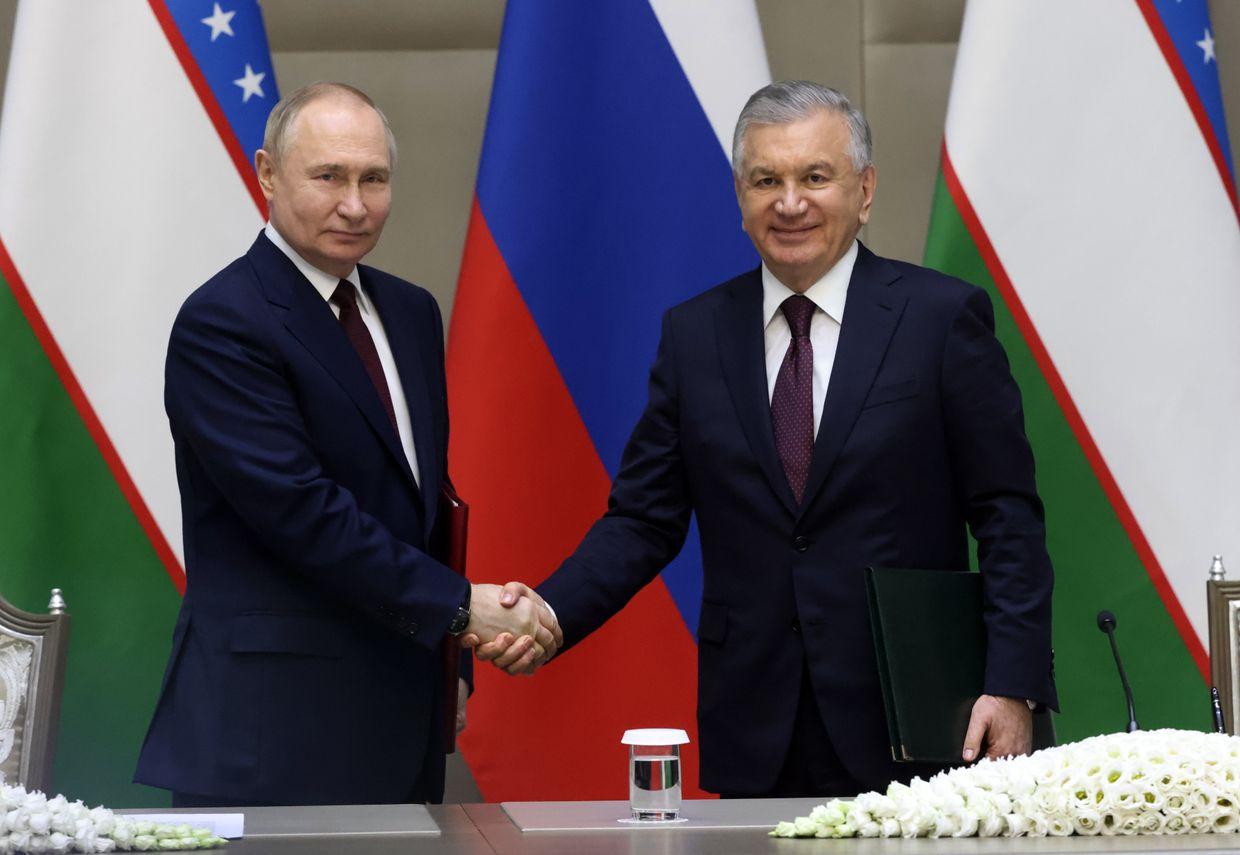
On May 26, Putin arrived in Uzbekistan's capital to discuss strengthening bilateral relations with President Shavkat Mirziyoyev. That visit marked Putin's third international trip since his inauguration for the fifth presidential term, secured in the March election broadly seen as rigged.