Ukraine's culture minister on why culture 'needs KPIs' to succeed
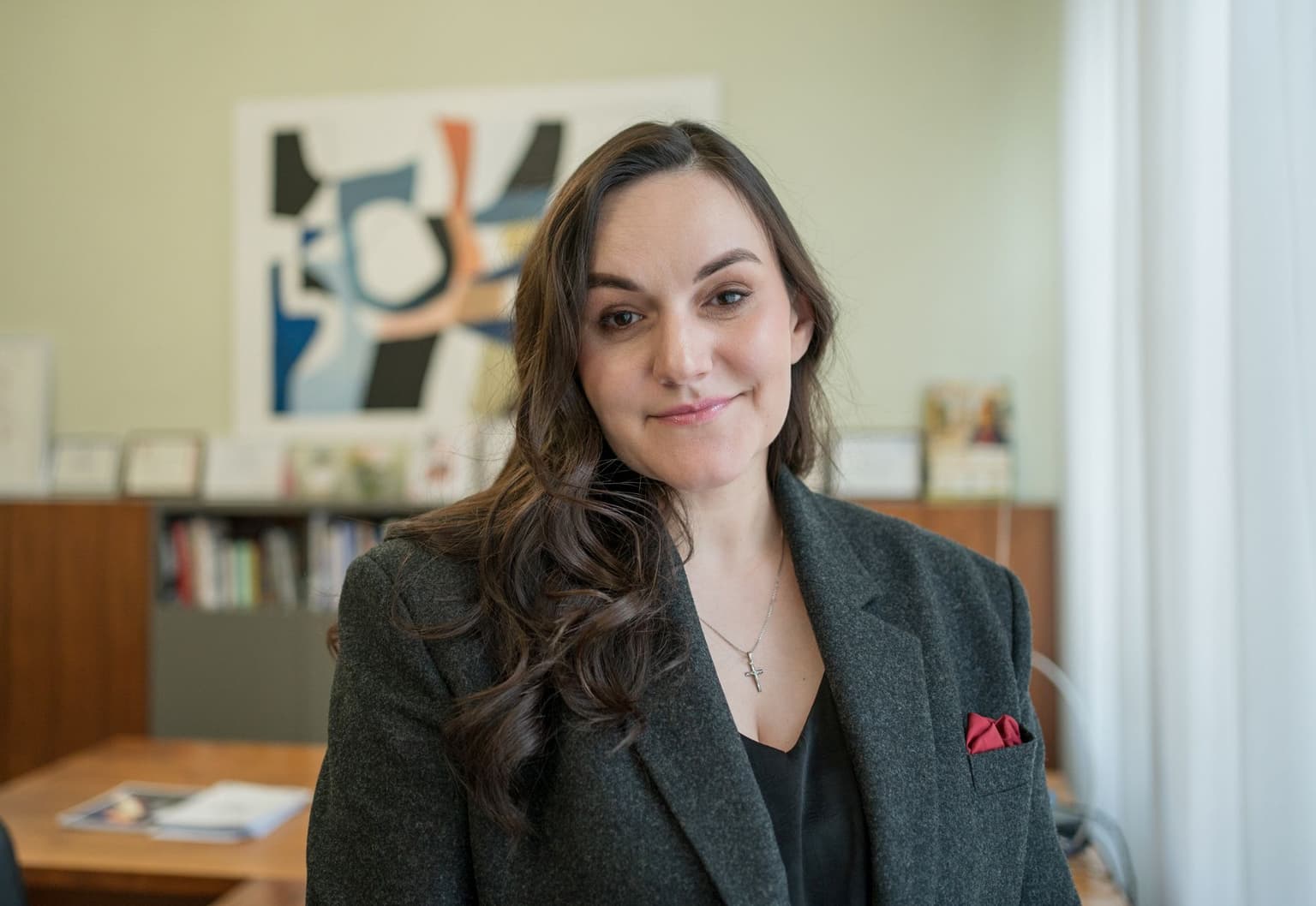
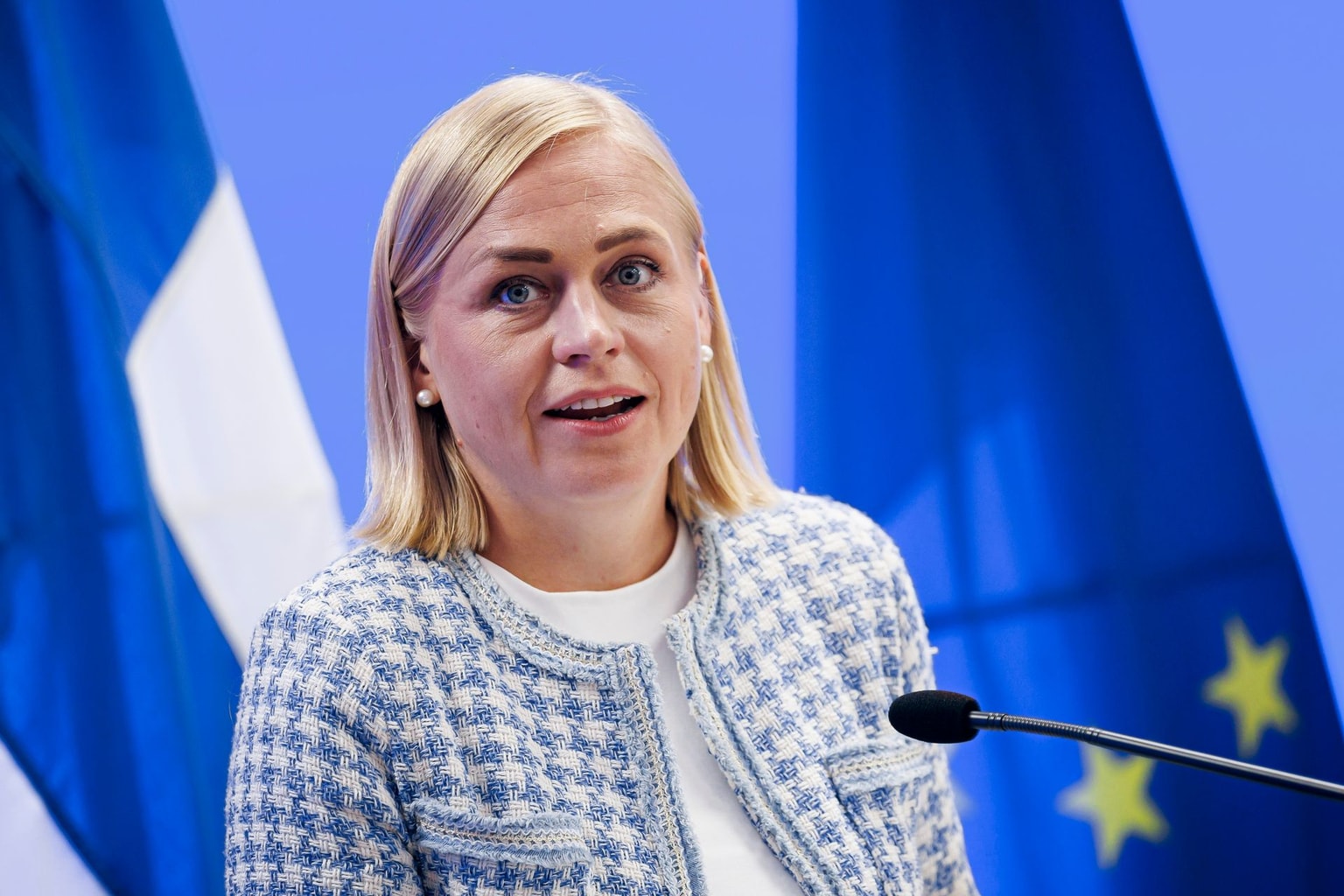
Culture Minister Tetyana Berezhna in Kyiv, Ukraine on April 21, 2026. (Elena Kalinichenko/The Kyiv Independent)
 on Google
Since Russia launched its full-scale invasion of Ukraine, the country's culture has finally received the attention it had previously lacked.
But Culture Minister Tetyana Berezhna aims for more than mere survival — she envisions a cultural sphere that thrives and becomes a major economic driver for Ukraine.
In a conversation with the Kyiv Independent, Berezhna explains why culture needs measurable goals to succeed both nationally and internationally, how her experience in law, economics, and government informs her cultural policies, and what it will take for Ukraine's creative industries to achieve a sustainable, independent future.
This interview has been edited for length and clarity.
The Kyiv Independent: I'd like to begin our conversation by asking about your background. I understand you previously worked at the Economy Ministry. Could you tell me about your transition to the Culture Ministry and how your background influences your current role?
Tetyana Berezhna: I joined the government in 2022 when I was invited to serve as deputy economy minister working under Yulia Svyrydenko during her tenure as first vice prime minister and economy minister. After three years in this role, I was invited by Yulia, now the prime minister, to work as the culture minister.
During my time at the Economy Ministry, I was responsible for the human capital dimension and also served as ambassador and commissioner general at the 2025 Expo in Japan. This project, centered on cultural diplomacy, was closely aligned with the work I do now at the Culture Ministry. It was my first significant government experience connected to cultural policy, and it was a great success, which led to my being invited to my current role.
My economic background informs my view that culture needs clear KPIs, and we should view it not just as entertainment or a matter of national security, but also as a vital part of our economy. The cultural sector creates jobs and generates significant revenue, so I bring that economic perspective to my work now. This includes areas such as the film industry and the broader creative industries. I'm convinced that adopting more measurable goals for culture will make the sector even more successful in Ukraine.
For us, promoting and supporting the creation of our own cultural content is absolutely essential.
I know there are many people in the cultural sphere with brilliant ideas and a real understanding of the sector. However, if they don't know how to navigate government procedures, bureaucracy, and — if it's a law — even parliamentary processes, those ideas might not get implemented. What truly matters is having decisions and procedures that will last for years, which is what makes our cultural sector resilient.
Ukrainian culture is especially close to my heart. I've never spoken Russian or been raised on Russian cultural content. For me, Ukrainian culture stands on its own — it's independent and more than enough.

This is something Bohdana Laiuk, one of my deputy ministers, also expressed beautifully in a recent interview: from childhood, her parents taught her that Ukrainian culture is self-sufficient and independent. Unfortunately, there are still people in the cultural sphere who, deep down, don't fully believe that Ukrainian culture is enough on its own. Without that belief, it's hard to create truly meaningful cultural products. That's why, at the Culture Ministry, one of our main goals is to support and reinforce the idea that Ukrainian culture is self-sufficient and independent — especially in the face of ongoing pressure from Russia, which has always tried to suggest otherwise.
The Kyiv Independent: Should we worry, amid the push to promote Ukrainian culture, that messaging against anything related to Russian culture could inadvertently turn the latter into a counter-culture taboo?
Tetyana Berezhna: For the Ukrainian government, it's more crucial to promote and support Ukrainian cultural content rather than simply restricting Russian content. We work across different areas to achieve this. For example, we have had quotas for Ukrainian content on radio stations, and there are also laws on the ban of books printed in Russia. Of course, turning these policies into practice requires action from our government.
Our main priority is to create a strong Ukrainian alternative through initiatives like "Tysyachovesna" (or "A Thousand Hours of Ukrainian Content.) We also conducted a survey with the respected Ukrainian sociological agency, Gradus. According to the survey results, 71% of Ukrainians watch or listen to Russian-language content regularly, with up to 25% doing so every day. This is not good.
But it's important to understand why this happens. It's not because people are fans of Russia or share Russian values. It's mostly out of habit and, more importantly, because there simply are not enough Ukrainian alternatives in the media space. That's why, for us, promoting and supporting the creation of our own cultural content is absolutely essential.
This program is designed to create thousands of hours of Ukrainian content in various forms. It includes films and television series, documentaries, animation, children's content, contemporary music, performing arts, visual arts, audiovisual shows, and social media video content. The belief is that after Hr 4 billion ($92 million) is invested in the market, there will be more Ukrainian content to replace Russian content.
The Kyiv Independent: I know that cultural preservation is a big initiative for you and your team. Could you tell me more about the Ukrainian Cultural Heritage Fund?
Tetyana Berezhna: We recognize that culture always requires resources, and this sector has historically been underfunded by the Ukrainian government. However, in 2026, we received a 45% increase in funding compared to 2025. Still, we know that the state budget alone cannot address all of the cultural losses we've experienced (during the full-scale war). According to the World Bank, these losses total around $4 billion. Many cultural heritage sites across Ukraine were either damaged or outright destroyed during the full-scale invasion.
To address this, Ukraine established the Ukrainian Cultural Heritage Fund to gather commitments and funding from our international partners to help restore and rebuild Ukraine's cultural heritage. This idea was conceived at the beginning of 2025. Although I was not yet working at the Ministry of Culture at that time, my predecessor, Mykola Tochytskyi, organized a conference in Uzhhorod that helped launch the fund.
"We truly believe the state plays a major role in cultural diplomacy, but Ukrainians themselves are free, independent, and autonomous people who are making their own contributions as well."
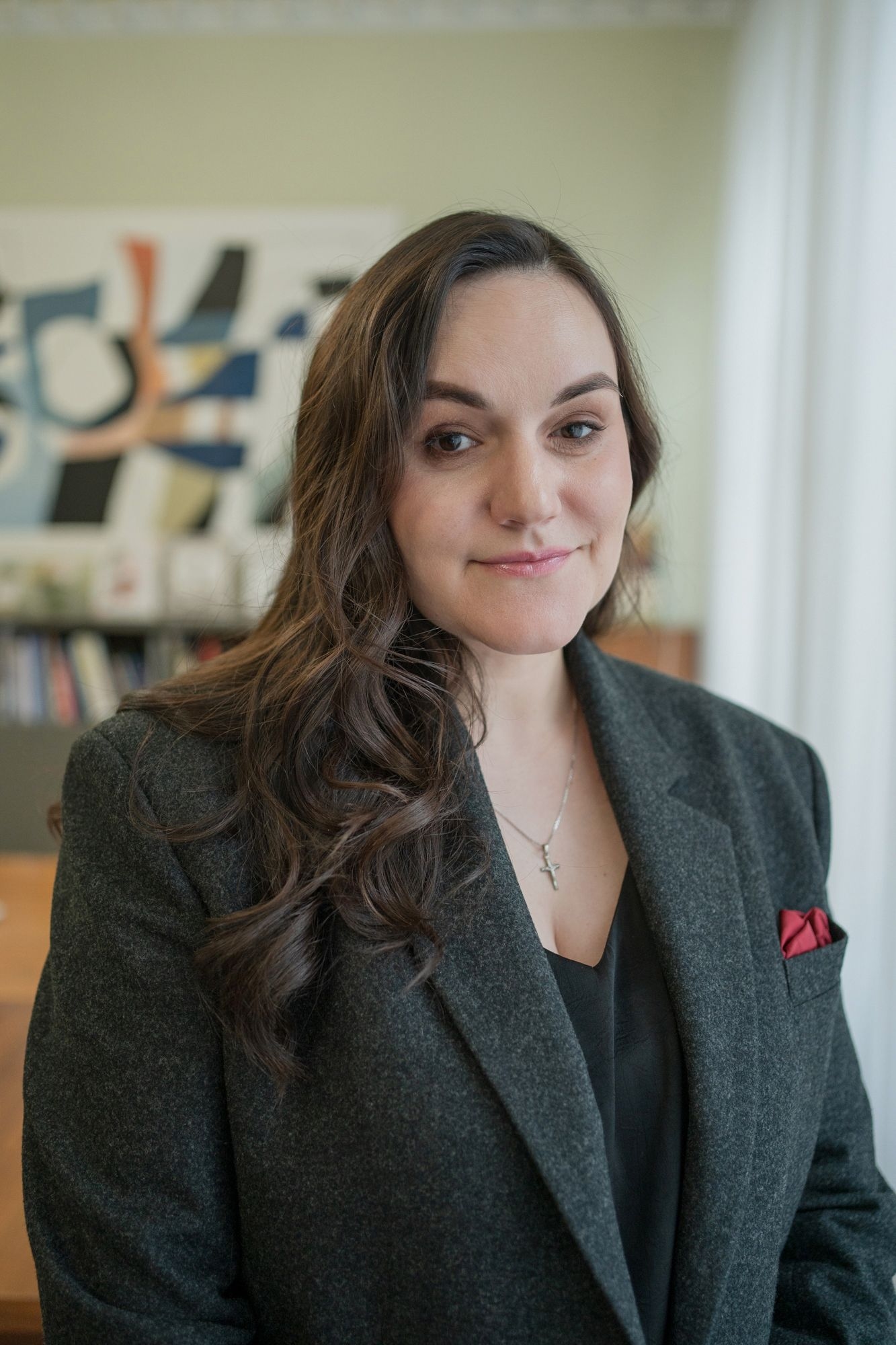
Culture Minister Tetyana Berezhna in her office at the Ministry of Culture of Ukraine, Kyiv, Ukraine on April 21, 2026. (Elena Kalinichenko/The Kyiv Independent)
When I became minister, the fund was still just an idea, with informal commitments from Italy and possibly some other countries. Our next step was to establish the fund as a legal entity in Belgium and open a bank account. We've also approved the fund's governance structure, created a board of directors, and appointed Pierre Heilbronn — formerly France's envoy to Ukraine — as the chair. Representatives from the ALIPH Foundation, a non-governmental organization that helps restore cultural heritage worldwide, also joined the board. We expect to appoint the fund's managing director very soon.
So far, we have received 4.2 million euros ($4.9 million) for the fund. Soon, we'll present the first projects that will use these international commitments to help rebuild cultural sites in Ukraine. When we met in Lviv for the conference (at the end of March), there had just been a massive attack — the Bernardine Monastery, a UNESCO World Heritage site in the city, was damaged. We were concerned that some ministers who planned to attend would cancel, but all of them came to Lviv, undeterred. We showed them the damaged site, which motivated them to pledge even more support for the fund.
We hope that once we can show the first "before and after" results, even more support will follow — this initial five million euros is just seed money to launch the fund's work. I am very grateful to my predecessor for his diplomatic efforts and for uniting our partners around this mission. With my team, including Deputy Culture Minister Ivan Verbytskyi, we have now put this vision into practice.
The Kyiv Independent: Ukraine recently sanctioned five members of the Russian pavilion for the upcoming Venice Art Biennale. I understand the Culture Ministry has been actively working to persuade the Biennale to prevent Russia's return. Are you seeing any encouraging developments on that front, or is there still significant progress to be made?
Tetyana Berezhna: Italy's Culture Minister, Alessandro Giuli, who is a great friend and supporter of Ukraine, who attended the conference in Lviv and has been helping us restore cultural heritage sites, explained that the Venice Biennale is a non-governmental institution, and as a state, Italy cannot directly influence its decisions. This is the challenge.

We're pursuing several approaches (to stop Russia from participating). Glenn Micallef, the European Commissioner for Innovation, Research, Culture, Education, and Youth, and EU Commission Executive Vice-President Henna Virkkunen also stated that if Russia participates in the Biennale, the European Commission will withhold its 2 million-euro ($2.3 million) funding. Both Italy and the European Commission treat the Biennale as an independent entity, so their support is not guaranteed if Russia is involved.
Recently, we achieved an important milestone you just mentioned: the President of Ukraine signed a decree imposing sanctions on five individuals linked to the Russian pavilion. These are Ukrainian sanctions, but we are also working with our European partners to ensure these measures are aligned at the EU level.
The overall situation is quite cynical. The organizers of the Russian pavilion and the Venice Biennale kept Russia's participation secret until the start of 2026 and tried to mitigate the impact of sanctions by changing how they presented their work. Instead of a live performance in the pavilion, they plan to show a recording on the wall featuring so-called indigenous people of the Russian Federation, including two from temporarily occupied Crimea. This makes the situation even more problematic.
I'm very grateful for the support of our European partners. For example, Agnese Lāce, Latvia's culture minister, issued a statement on Russia's participation that 23 other countries have signed. We're in daily contact with her and with the culture ministers from Poland, Estonia, and Lithuania to coordinate efforts to prevent Russia's participation. Time is short — we have less than a month left — but we're determined to keep pushing forward.
The Kyiv Independent: Ukrainian culture has reached an unprecedented level of global visibility in the past four years, but still, there's a lot of work to be done. In your view, what more can the Culture Ministry — and Ukrainians more broadly — do to further promote Ukrainian culture globally in the months and years ahead?
Tetyana Berezhna: We are extremely proud of Ukrainians' achievements, which include recognition in the film industry. We are systematically working with international film festivals, and Ukraine is represented with national stands and pavilions at four of the world's leading film festivals in Berlin, Cannes, Toronto, and Warsaw.
Speaking of the Venice Biennale, it's not just about Russia's presence — Ukraine has its own pavilion as well. We have an outstanding pavilion called Security Guarantees, curated by Zhanna Kadyrova and Leonid Marushchak. The exhibition features the evocative sculpture Origami Deer from Pokrovsk, a powerful symbol of fragility, security, and the transformation of art in times of war.

This will further highlight Ukrainian culture on the international stage. Literature is also an important field. We have worked with Bohdana Laiuk, our deputy culture minister, to increase the number of books translated (into multiple languages) through our Translate Ukraine program. This year, we will have over 100 new translations across 33 countries and 30 languages, including Lebanon, Egypt, Brazil, and India.
I understand this is all that we do at the state level, but we also believe in various grassroots actions by artists and non-governmental organizations. For example, at the Venice Biennale, there will also be an independent exhibition curated by others, outside the framework of the official Ukrainian pavilion, and we absolutely encourage these efforts.
Museums also play a significant role in cultural diplomacy. I have to mention the Zenyk Art Gallery (ZAG) in Lviv, which hosted our group of cultural ministers during our recent conference. They now feature an exhibition of Taras Shevchenko — perhaps you have visited it. It offers a very modern look at Shevchenko's artworks and poetry, and many foreigners also visit it while in Ukraine.
We truly believe the state plays a major role in cultural diplomacy, but Ukrainians themselves are free, independent, and autonomous people who are making their own contributions as well.
read also