Ukraine war latest: Kyiv’s negotiating team heads to US for planned meeting this weekend
 on Google
Key developments on March 19:
- Ukraine’s negotiating team heads to US for planned meeting this weekend, Zelensky announces
- Major Russian air defense factory in occupied Crimea reportedly hit in Ukrainian strike
- Russian losses surge, Ukrainian commander claims hundreds of soldiers 'picked off' by drones
- Ukraine edges closer to budget oblivion as Orban refuses to budge on 90-billion loan
President Volodymyr Zelensky said on March 19 that a Ukrainian negotiating team is heading to the U.S. for a meeting scheduled this Saturday with American representatives.
The planned meeting comes after weeks of uncertainty in negotiations, with officials warning that the conflict in the Middle East has diverted political attention and resources away from Ukraine.
"There has been a pause in the talks, and it is time to resume them. We are doing everything to ensure that the negotiations are genuinely substantive," Zelensky said.
He confirmed that senior officials, including Rustem Umierov, Kyrylo Budanov, Davyd Arakhamia, and Sergiy Kyslytsia, will participate.
"Our priority is to do everything possible to create the conditions for a dignified peace," Zelensky added.
It remains unclear whether Russia will take part in the upcoming discussions set for March 21.
The last round of trilateral talks between Kyiv, Moscow, and Washington took place in Geneva on Feb. 17–18, while a follow-up meeting scheduled for March 5 in Abu Dhabi was postponed after U.S.-Israeli strikes on Iran and has not been rescheduled.
European officials have cautioned that U.S. military support, particularly air defense systems, could face delays as Washington prioritizes the Middle East, with EU foreign policy chief Kaja Kallas saying there is now “competition for the same assets.”


Major Russian air defense factory in occupied Crimea reportedly hit in Ukrainian strike
Ukrainian forces reportedly launched a drone attack on the city of Sevastopol in occupied Crimea overnight on March 19, Russian Telegram media channels reported, citing resident accounts.
Explosions were heard in the city centre, with residents reporting that a building housing the Russian military's 3rd Radio-Technical Air Defense Regiment was targeted.
The Telegram channel 'Crimean Wind' claimed at least five drones struck a building belonging to the Russian defense conglomerate Almaz-Antey, a major state-owned manufacturer of air defense systems such as the S-300 and S-400.
Russian-installed proxy governor Mikhail Razvozhaev said that a total of 27 drones were downed while approaching Sevastopol.
At least one fire was reported at an apartment building, Razvozhaev said, further claimed that one person was killed and two other injured in the attack.
Ukraine's Special Operations Forces confirmed they had struck Russian military targets in occupied Crimea, including a logistics warehouse at the Khersones airfield and equipment supporting electronic warfare and radio reconnaissance systems in Sevastopol.
The Kyiv Independent could not immediately verify the reports nor claims made by Russian officials.
Ukraine regularly strikes Russian military and energy infrastructure in an effort to diminish Moscow's fighting power as it continues to wage its war against Ukraine.
First annexed by Russia in 2014, Crimea has served as a key target of Ukrainian attacks given its proximity to Ukrainian-controlled territory. Kyiv has regularly targeted oil refineries and military vessels that operate off the Black Sea.
Russian losses surge, Ukrainian commander claims hundreds of soldiers 'picked off' by drones
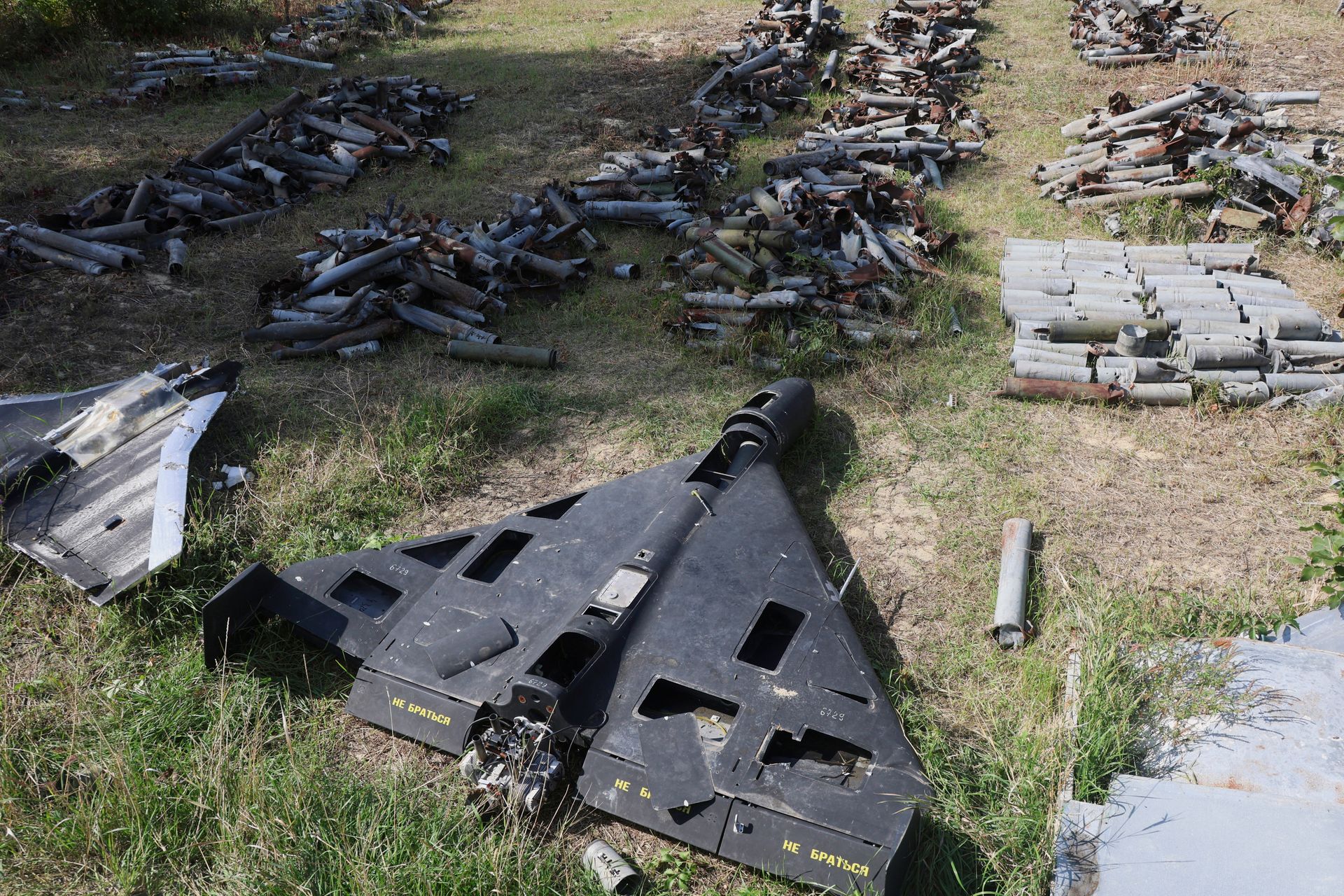
Russian losses have surged over the past several days, according to Ukraine's General Staff, as fighting intensifies across key front-line sectors in eastern and southern Ukraine amid expectations of a broader Russian spring offensive.
Kyiv reported 1,520 Russian casualties on March 19, following 1,710 on March 18 — about twice the daily losses reported on March 16 and March 17, which stood at 810 and 760, respectively, a level at which they've been for several months over winter.
Open-source battlefield maps by DeepState show continued Russian pressure along the Pokrovsk and Huliaipole directions, without confirmed major territorial gains over the same period.
Ukrainian military commanders link the spike in losses to renewed Russian assault attempts.
"Sudden weather changes on March 17–18, including fog, were used by the enemy to resume assault actions," said Robert Brovdi, known as "Madyar," commander of Ukraine's Unmanned Systems Forces, in a Telegram post.
According to Brovdi, Russian forces launched coordinated assaults using infantry, armored vehicles, and motorcycles across a 100-kilometer stretch between Rodynske and Huliaipole.
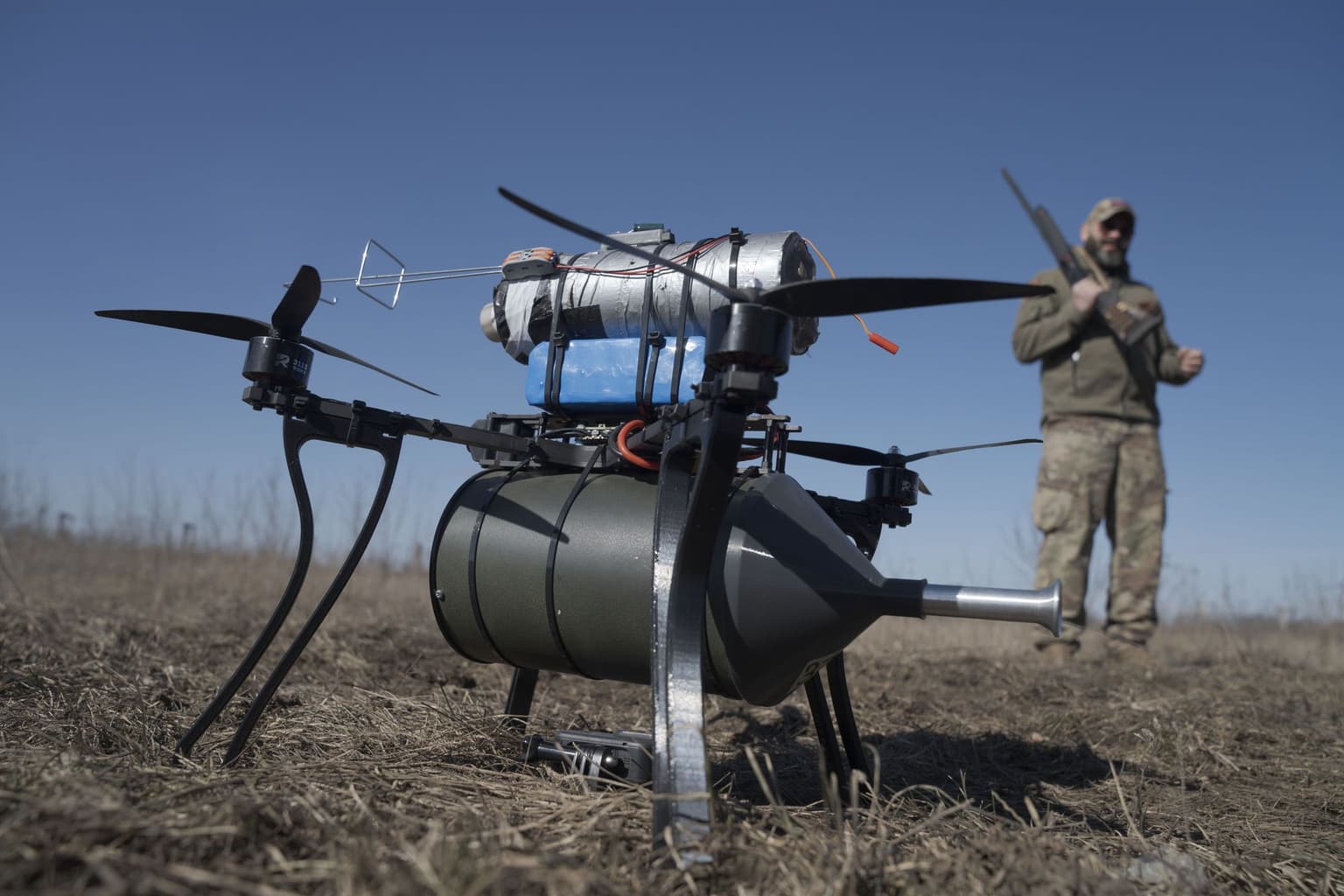
Describing the fighting on March 17, Brovdi said Russian troops advanced "with accumulated infantry, motorcycles, simultaneously across more than a dozen sectors," adding that over 500 were "picked off" by Ukrainian drone units.
He specified that the losses included "292-200 and 221-300," using military code for those killed (200) and wounded (300).
By midday on March 18, he said, an additional 277 Russian troops had been lost – "141-200 and 136-300" – bringing the total to more than 900 killed or wounded over roughly a day and a half.
Brovdi portrayed the assaults as repeated waves of personnel advancing under limited visibility, with Ukrainian drone operators striking them before they could reach Ukrainian positions.
The commander added that overall Russian losses were "significantly higher" than those recorded in this sector alone, but warned that "the remainder of March will be a heavy and prolonged fight."
The claims could not be independently verified by KyivIndependent. Defence Minister Mykhailo Fedorov has previously said Ukrainian forces aim to inflict up to 50,000 Russian losses per month, as part of a strategy to degrade Moscow's offensive capacity.
Ukraine edges closer to budget oblivion as Orban refuses to budge on 90-billion loan
Hungary refused to back down in opposing a financial lifeline to Ukraine at a summit in Brussels on March 19, putting Kyiv at risk of running out of cash by the end of spring unless a resolution or other funding can be found.
Hungarian Prime Minister Viktor Orban continued to oppose a 90-billion-euro loan to Ukraine at a gathering of European leaders in Brussels today, according to two EU diplomats familiar with today's discussions, which he has tied to Russian oil transit through the Druzhba pipeline.
All 27 EU countries unanimously agreed in December last year to provide a 90-billion-euro ($104 billion) loan to Ukraine to cover two-thirds of Ukraine's needs over 2026–2027. Kyiv relies on foreign assistance to keep the state afloat and fund its war effort.
Ukraine says that Russian air strikes damaged the Druzhba pipeline in late January. Hungary and Slovakia accuse Kyiv of slowwalking repairs.
A European delegation arrived in Kyiv yesterday to inspect the pipeline, Serhii Koretskiy, CEO of Ukraine's state gas company Naftogaz, said on March 18.
Koretskiy said that he met with the delegation, alongside Ukrtransnafta, the Ukrainian company that manages oil transport through the country.
"Alongside the management of Ukrtransnafta, we provided partners with detailed information on the consequences of the Russian attack on the Druzhba pipeline infrastructure," Koretskiy posted on social media.
"We outlined the current situation and presented a comprehensive reconstruction plan."
The European diplomats also said that both Hungary and Slovakia blocked the EU's 20th sanctions package against Russia. European countries had hoped to approve the package last month to mark the fourth anniversary of Russia's full-scale invasion of Ukraine.
Ukraine has no good options to replace the funds, should Hungary keep the funds frozen.