Ukraine is cautiously optimistic as Trump's son-in-law enters peace talks

Jared Kushner looks on as U.S. President Donald Trump speaks in the White House on January 29, 2020, in Washington, DC. (Drew Angerer/Getty Images)
 on Google
As U.S. President Donald Trump's son-in-law Jared Kushner takes on a more active role in the latest peace push, Ukrainian officials say they are cautiously optimistic about his involvement.
Kushner joined U.S.-Ukraine negotiations in Geneva on Nov. 23 and in Florida on Nov. 30, and then traveled to Moscow to meet Russian President Vladimir Putin on Dec. 2.
"The very fact that Trump added Kushner is a good sign," Oleksandr Merezhko, the chair of Ukraine's parliamentary foreign affairs committee, said.
He does not appear to be "under Putin's spell," Merezhko added.
Kushner's rapid emergence in high-stakes diplomacy comes as Washington seeks fresh momentum for its proposed settlement to end Russia's war.
The Kyiv Independent examines who Kushner is, what role he now plays in the negotiation process, and why Kyiv sees his involvement as a potential opportunity.
The dealmaker returns
Kushner is an American businessman and a prominent figure in Trump's political circle.
He served as a senior advisor in the first Trump administration between 2017 and 2021, overseeing areas ranging from Middle East peace negotiations to criminal justice reform and the Office of American Innovation.
Married to Ivanka Trump, Kushner wielded significant influence over Trump's foreign and domestic policies.

During Trump's first term, Kushner had limited but notable involvement connected to Ukraine and Russia, often via backchannels rather than formal diplomatic routes.
Early in the administration's term, he met Sergey Gorkov, then head of Russia's state investment bank Vnesheconombank — a meeting that triggered controversy amid investigations into Russian interference in the 2016 U.S. election.
In 2017, Kushner also found himself at the center of a scandal after it emerged that he and incoming U.S. National Security Adviser Michael Flynn had met with Sergey Kislyak, Russia's ambassador to the U.S., after the election.
Flynn later resigned, but Kushner maintained his position and influence.

Kushner also explored whether Trump's transition team could use secure channels to communicate with Moscow, but denied suggesting behind-the-scenes talks.
Trump's son-in-law met several Ukrainian politicians during his time in office. In Davos in 2017, he held talks with then-President Petro Poroshenko, who later invited him to visit Ukraine.
But Kushner's most notable foreign policy achievement came in 2020, when he architected the Abraham Accords, a landmark diplomatic breakthrough that normalized relations between Israel, the United Arab Emirates, and Bahrain.
After Trump left office in 2021, Kushner stepped back from politics and founded the investment fund Affinity Partners.
His return to diplomacy began in 2025, when he played an informal but central role in Trump's push to negotiate a ceasefire between Israel and Hamas.
The businessman traveled to Egypt with U.S. Special Envoy Steve Witkoff — who, much like Kushner, comes from the real estate business — and participated in the final stage of those negotiations.

Even now, Kushner holds no formal government position, instead acting as the U.S. president's trusted confidant.
"President Trump has a trusted family member and talented advisor in Jared Kushner," White House Deputy Press Secretary Anna Kelly told the Kyiv Independent, citing his role in Middle East peace agreements.
"The president and Special Envoy Witkoff often seek Kushner's input, given his experience with complex negotiations… He is an informal, unpaid advisor."
Arta Moeini, the Managing Director of U.S. Operations at the Institute for Peace and Diplomacy, said such a power dynamic is typical for the Trump administration, noting that "it doesn't care about protocol as much as it cares about results."

Kushner's role in Ukraine diplomacy
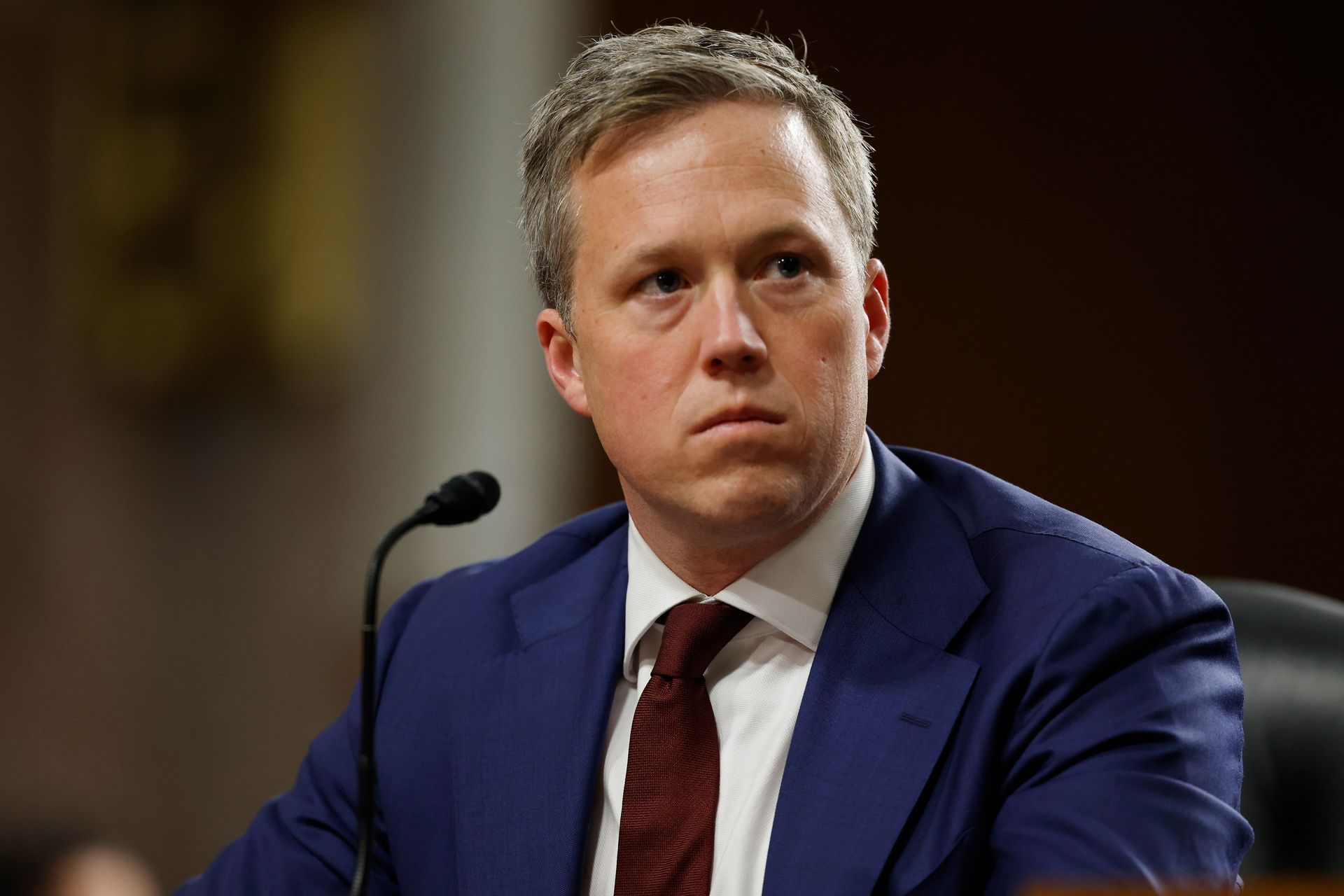
Kushner entered the Ukraine peace track in late autumn, joining Witkoff in meetings with Ukrainian officials on the now-infamous 28-point plan drafted by Witkoff and Russia's top economic negotiator, Kirill Dmitriev.
After meetings with Kyiv, Kushner and Witkoff traveled to Moscow for talks with Putin, who was accompanied by top Kremlin aide Yuri Ushakov and Dmitriev.
Ushakov described the discussions as "very useful, constructive, and highly substantive," while noting that no concrete deal had been reached.
The Kyiv Independent has learned that Kushner later held conversations with top European officials to brief them on the talks with Putin.
In those discussions, Kushner claimed that most elements of the deal were agreed, with the main unresolved issue remaining Moscow's demand that Ukraine cede territory — a condition Kyiv has repeatedly rejected.
Ahead of his trip, Kushner told European leaders that he would not travel to Russia unless an agreement was already in place, the Kyiv Independent has learned.

Kushner is expected to continue his involvement. He and Witkoff met Ukrainian officials on Dec. 4 to brief them on negotiations with Putin.
Initially, President Volodymyr Zelensky was expected to meet Kushner and Witkoff. But the Kyiv Independent has learned that Ukraine decided to send lower-level officials instead, signaling caution with Washington's process.
The Kremlin's top foreign policy aide said Moscow expects Kushner to play a decisive role if a plan to settle Russia's war in Ukraine is drafted.
"I personally believe that if a plan leading to a settlement is put down on paper, it will largely be Mr. Kushner who will be 'holding the pen,'" Ushakov said on Dec. 5.
Better than Witkoff?
Trump administration officials are not viewed uniformly in Ukraine.
Some — such as Secretary of State Marco Rubio — are seen as supportive of Kyiv. Others, including Witkoff, are widely perceived as sympathetic to Russia.
Witkoff has met Putin at least five times this year, often spending several hours with him and later echoing Kremlin talking points in U.S. media.
His role drew deeper scrutiny after Bloomberg published leaked conversations in which Witkoff advised a Russian official on how to influence the White House.
Against that backdrop, many in Kyiv see Kushner's arrival as a potential counterbalance.
Merezhko told the Kyiv Independent he views Kushner's involvement "positively."
"I trust Kushner more than Witkoff."
His emergence in the negotiations means that "Trump doesn't trust Witkoff anymore and wants someone closer to him… to effectively oversee Witkoff," Merezhko added.
Kushner, he said, "has more experience in diplomacy," referring to the Abraham Accords.
Another individual familiar with the matter echoed this sentiment, calling Kushner's involvement "rather positive."
Doug Klain, a nonresident fellow at the Atlantic Council's Eurasia Center, said Kushner's sudden entrance "could be a signal that Trump knows the process centralized by Witkoff is not producing real results."
"Trump is sticking with Witkoff so far, even after we learned that he coached the Kremlin on how to get what it wants with the president," Klain said.
"But I have to imagine Kushner is entering in part because Trump needs someone he absolutely trusts — and Kushner is indeed in that inner circle."
Klain said it is too early to judge whether Kushner will benefit Ukraine, but added that he brings direct access to Trump — a crucial advantage as negotiations intensify.
"I've heard some positive things about Kushner from Ukrainians with knowledge of the negotiations," he said, "but few specifics."
Hi, this is Tim. The author of this article. Thank you for taking the time to read it.
At the Kyiv Independent, we speak to top experts to bring you accurate, in-depth reporting. We don't have a wealthy owner or political backing.
If you found this article interesting, consider joining our community today