Polish PM Tusk caught between Kyiv and Warsaw as Ukraine rift deepens
A growing diplomatic dispute with Volodymyr Zelensky and rising domestic pressure from hard-right President Karol Nawrocki are squeezing Poland’s prime minister ahead of key elections.
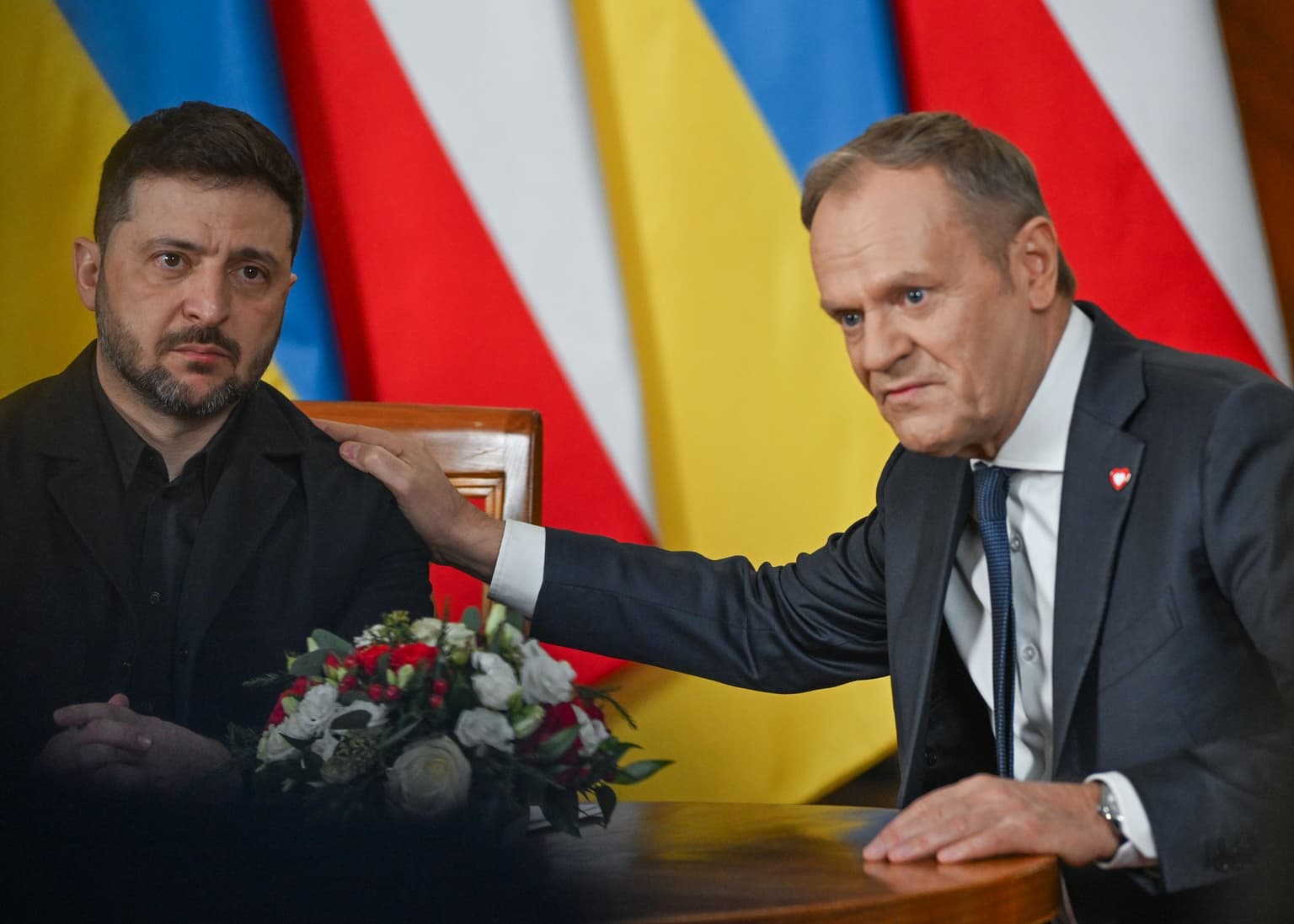
President Volodymyr Zelensky meets with Polish Prime Minister Donald Tusk in Warsaw, Poland, on Dec. 19, 2025. (Artur Widak / NurPhoto via Getty Images)
 on Google
Polish Prime Minister Donald Tusk is in a tough spot. The liberal pro-EU, pro-Ukraine prime minister is looking at a country increasingly at odds with both.
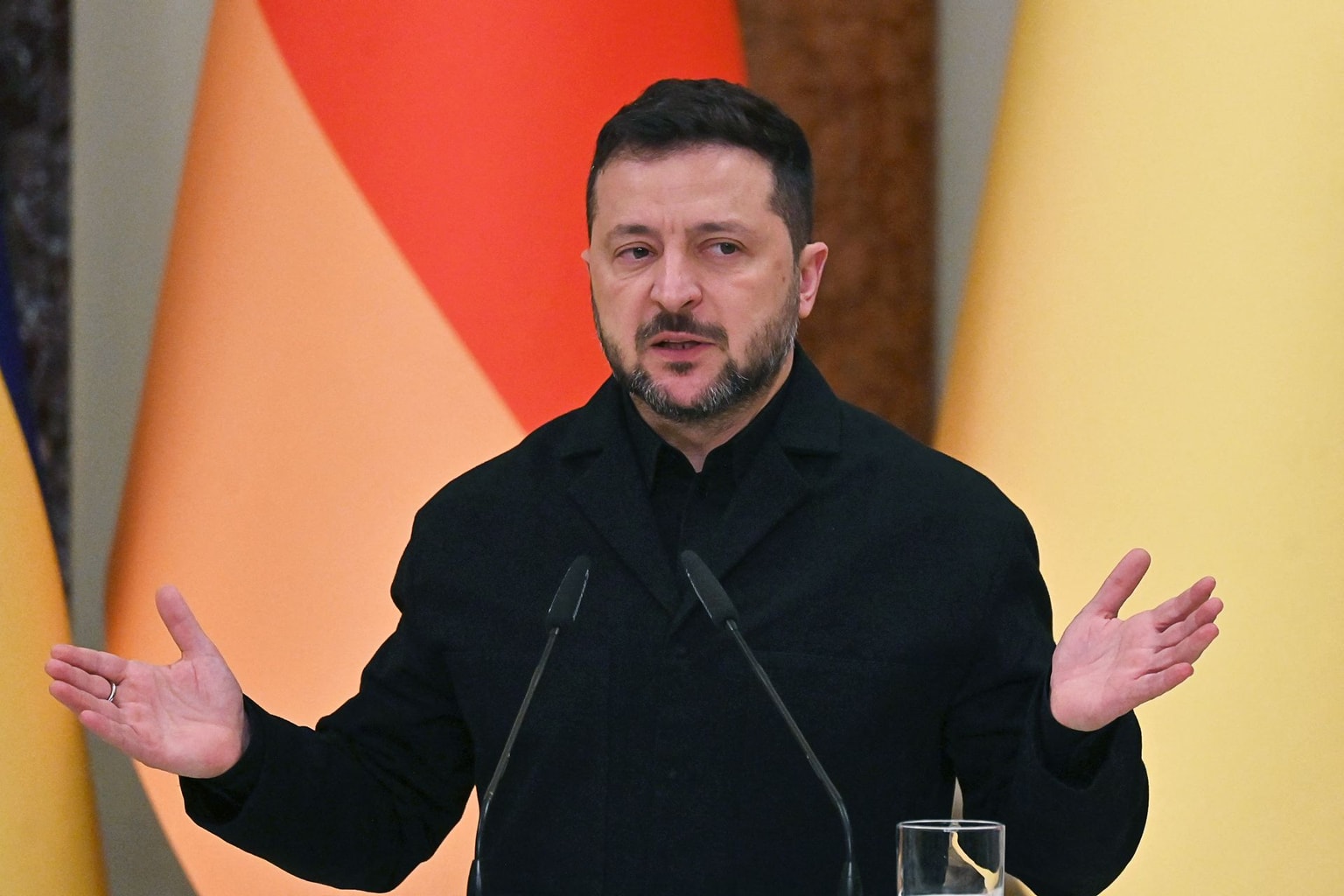
In recent weeks, ties between Kyiv and Warsaw have sharply deteriorated after President Volodymyr Zelensky named a military unit in honor of the World War II–era Ukrainian Insurgent Army (UPA), prompting his Polish counterpart to revoke the country's highest state honor previously awarded to the Ukrainian president.
The unfolding row saw Zelensky skip the Ukraine Recovery Conference taking place on June 25-26 in Gdansk, casting a shadow over the event meant to underscore Poland's role as Ukraine's partner and ally.
Caught between his partnership with Kyiv and Polish public opinion increasingly backing Polish President Karol Nawrocki's hardline stance, and upcoming parliamentary elections set for late 2027, Tusk finds himself walking a tightrope.
The prime minister "understands that neither Poland nor Europe gains if nationalist narratives dominate across the continent — especially between the EU and candidate countries," says Wojciech Przybylski, an editor at Visegrad Insight and president of Res Publica Nowa.
"In a two-player polarisation game between Nawrocki and Zelensky, Tusk has no role as a third party."
The Polish mood shifts on Ukraine
Averse to being drawn into the dispute, Tusk has denounced the rift as a strategic blunder and a gift to Moscow.
"The task of presidents Zelensky and Nawrocki is to calm emotions, not to stoke tension. The front line runs elsewhere," he said.
Speaking the same day as Ukraine confirmed Zelensky would skip the Gdansk conference, Tusk simply noted: "I will not contribute in any way to fueling this tension. Whether it's popular or not, frankly, I'm not interested at this point."
And popular it is.
Surveys show that 51% of Poles supported stripping Zelensky of the state award, and that Polish attitudes toward Ukraine have worsened significantly as a result of the controversy.
"[Nawrocki] embraced the most radical anti-Ukrainian positions of the far right in order to capture their votes."

A sentiment that is gaining traction in the Polish public — and is articulated by Nawrocki — is that "Poland needs to be more assertive in its dealings with Ukraine," especially where their views diverge, says Aleks Szczerbiak, an expert in European politics at the University of Sussex.
This prevents Tusk from moving too strongly against Nawrocki on the matter.
At the same time, a diplomatic tussle with Ukraine undermines the prime minister's foreign policy vision, experts say.
Tusk has cast the war in Ukraine as an existential struggle between East and West, and sought to align himself internationally with those who share similar views, Szczerbiak said.
While Poland's previous conservative government pursued ties with Europe's "black sheep," such as Hungary's Viktor Orban, Tusk moved firmly into the European mainstream, especially when it comes to Ukraine.
But this strategy has not always borne fruit.
International snubs as an opening for Nawrocki
Poland was sidelined from some key events on Ukraine — such as the August 2025 summit in Washington — despite the country's location on NATO's eastern flank, its shared borders with Ukraine, and its growing military potential.
Just two weeks ago, Tusk criticized the E3-format talks on Ukraine between Germany, the U.K., and France, stressing that any regional questions cannot be answered without Poland at the table.

Such foreign policy snubs handed Nawrocki and other critics a ready-made argument that the Tusk government is failing on the foreign policy front.
The Polish Presidential Office has also promptly framed Zelensky's absence from the Ukraine Recovery Conference as international "humiliation" for… Tusk.
According to Szczerbiak, the latest dispute has weakened the government's international standing — but has also laid bare a growing sentiment among Poles that their country's unconditional support for Ukraine never translated into concrete gains for Polish global standing.
Przybylski, however, offers a counter-argument: "If anything, the episode helps Tusk position himself as the responsible, desired leader and further isolates Nawrocki."
The expert further pointed out that the E3 talks were followed up by a meeting in an E5 format, with Poland and Italy sitting at the table this time.
It is hard to disentangle Nawrocki's attacks on Zelensky from Poland's domestic political struggle.
Zelensky, who met Tusk just a day before Nawrocki stripped him of the order, even accused his Polish counterpart of intentionally escalating the rift to weaken Tusk ahead of next year's parliamentary elections.
Poland's war within
The Polish political landscape has been evenly split between pro-EU left-leaning centrists and the hard right.
In the 2025 presidential runoff, Nawrocki beat Warsaw Mayor Rafał Trzaskowski from the liberal Civil Coalition by 1.7%. In parliamentary opinion polls, Civil Coalition maintains first place, yet trails behind a diverse coalition of right to hard-right political projects.
While the Polish presidential office has been viewed mostly as ceremonial, Nawrocki has been pushing the limits of its powers — namely, his legislative prerogative.
In less than a year in office, he topped the record of legislative vetoes — 37. The runner-up, Aleksander Kwasniewski, vetoed 35 bills over a 10-year period.
Nawrocki has filed more parliamentary proposals than any previous Polish president, making his mark on governance through an unprecedented level of legislative engagement.
He has clashed with Tusk's government even on critical security issues, for example, when he blocked the SAFE Act that would unlock 44 billion euros ($50 billion) in EU defense loans.
Nawrocki has also been laser-focused on Ukraine.
The president submitted a bill criminalizing "propaganda of the Bandera ideology," delayed Ukrainian refugee aid legislation, and questioned Kyiv's EU and NATO ambitions.

According to Przybylski, Nawrocki is adept at "choosing fights that keep him popular."
When he revoked Zelensky's award — an idea first voiced by a far-right lawmaker — he was therefore following his tried-and-tested strategy.
"The same pattern was visible in his 2025 presidential campaign, where he embraced the most radical anti-Ukrainian positions of the far right in order to capture their votes," Przybylski added.
Nawrocki was elected with the support of the conservative Law and Justice (PiS) party and backed a manifesto by the far-right Confederation that included several anti-Ukraine points.
These right-wing parties, which increasingly fish for Ukraine-skeptic voters, aim to unseat Tusk's centrist coalition next year.
However, Szczerbiak does not view Nawrocki's steps on the UPA dispute as merely pragmatic maneuvering.
"Nawrocki is both following his own political instincts, but the line he's articulating is what he actually personally feels very strongly about," the expert says.
Whereas the response of former Polish President Andrzej Duda, also a conservative, may have been very different, now, "you've got both the president and the public opinion who feel very strongly about this (historical dispute)."
And for Tusk's government, there seems to be no easy way out of the current conundrum.
Note from the author:
Hi, this is Martin Fornusek, the author of this article.
I hope you enjoyed this article. In our team, we believe fact-based and truthful reporting should be available to all — that's why we don't use a paywall.
If you'd like to help us provide you with more in-depth coverage of Ukraine's struggle against Russian aggression, European politics, and other topics, please consider joining the Kyiv Independent community.