Trump vows to eliminate 'Russian threat' to Greenland as he ramps up pressure on Europe
 on Google
Editor's note: The story has been updated with the latest details.
U.S. President Donald Trump said on Jan. 19 that his administration would move to remove what he called a "Russian threat" to Greenland, arguing that "Denmark has been unable to do anything about it."
The comments come as Trump threatens to impose up to 25% tariffs on European countries that oppose his ambitions to annex Greenland, the world's largest island and semiautonomous territory of Denmark, a NATO ally.
"NATO has been telling Denmark, for 20 years, that 'you have to get the Russian threat away from Greenland,'" Trump said on his Truth Social platform. "Now it is time, and it will be done!"
Trump has repeatedly staked his claim to the strategically valuable island, not ruling out the use of military force after Danish and Greenlandic authorities rejected his offer to buy it.
European leaders have hit back at Trump's threats and are reportedly drawing up their own economic countermeasures, including tariffs or restrictions on U.S. companies.
The escalating dispute is seen as the most serious rupture in transatlantic relations in a decade, a development openly praised by Russia.
Trump has justified his claim to the island on national security grounds and accused Danish authorities of insufficient investment in its defense, arguing it makes Greenland vulnerable to Russia and China.
Washington already operates a military base on the island, and a 1951 treaty with Denmark grants it broad rights to station forces there.
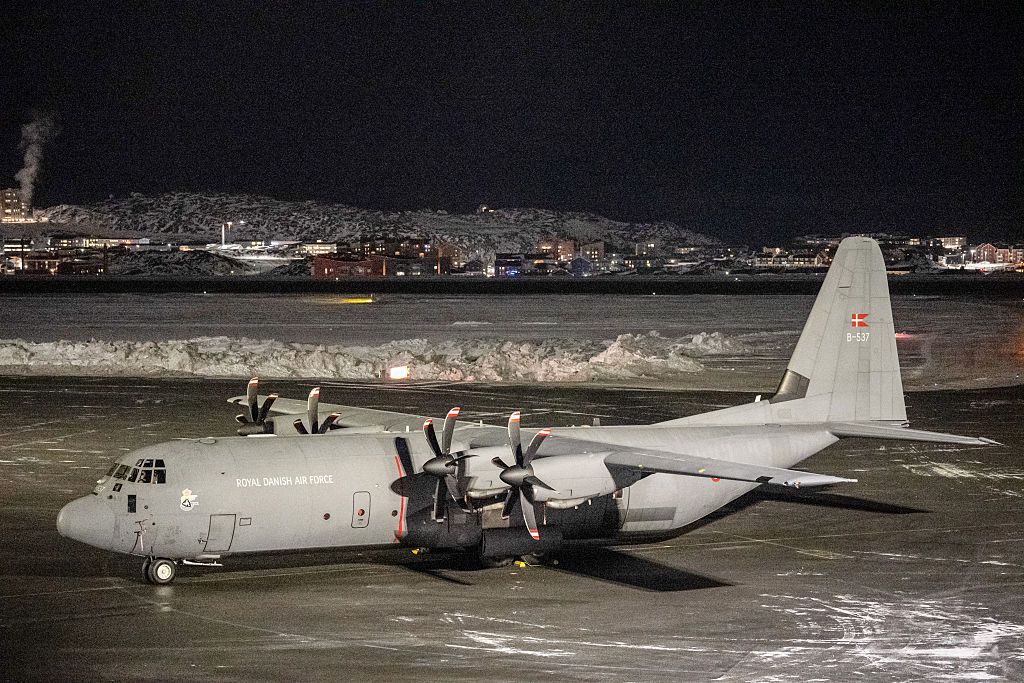
European leaders have rejected the accusations and dispatched a small contingent of troops for exercises on the island last week.
In a letter to Norwegian Prime Minister Jonas Gahr Store, Trump reportedly linked his claim to Greenland to not being awarded the Nobel Peace Prize.
"The world is not secure unless we have complete and total control of Greenland," Trump wrote, according to Bloomberg.
The U.S. president reiterated his stance in a phone interview with NBC News, once again declining to rule out military options. He also rebuked European leaders for pushing back on the matter.
"Europe ought to focus on the war with Russia and Ukraine because, frankly, you see what that's gotten them," Trump told NBC News. "That's what Europe should focus on — not Greenland."
In private discussions with top aides, Trump has also complained about Canada's alleged inability to counter the Russian and Chinese threat in the Arctic region, NBC News reported, citing undisclosed sources.
While Trump previously also floated the idea of annexing Canada as the "51st U.S. state," officials told NBC News that the U.S. president is not discussing purchasing the country's territory or seizing it by force.
Trump's warnings about the Russian threat contrast with his often conciliatory stance toward Moscow, especially in regard to the war in Ukraine. Only last week, the U.S. president declared that Russian President Vladimir Putin seeks peace, accusing Kyiv of standing in the way despite ongoing talks on a peace deal between U.S. and Ukrainian officials.