Japanese drone maker doubles down on Ukraine as Tokyo eases arms rules
 on Google
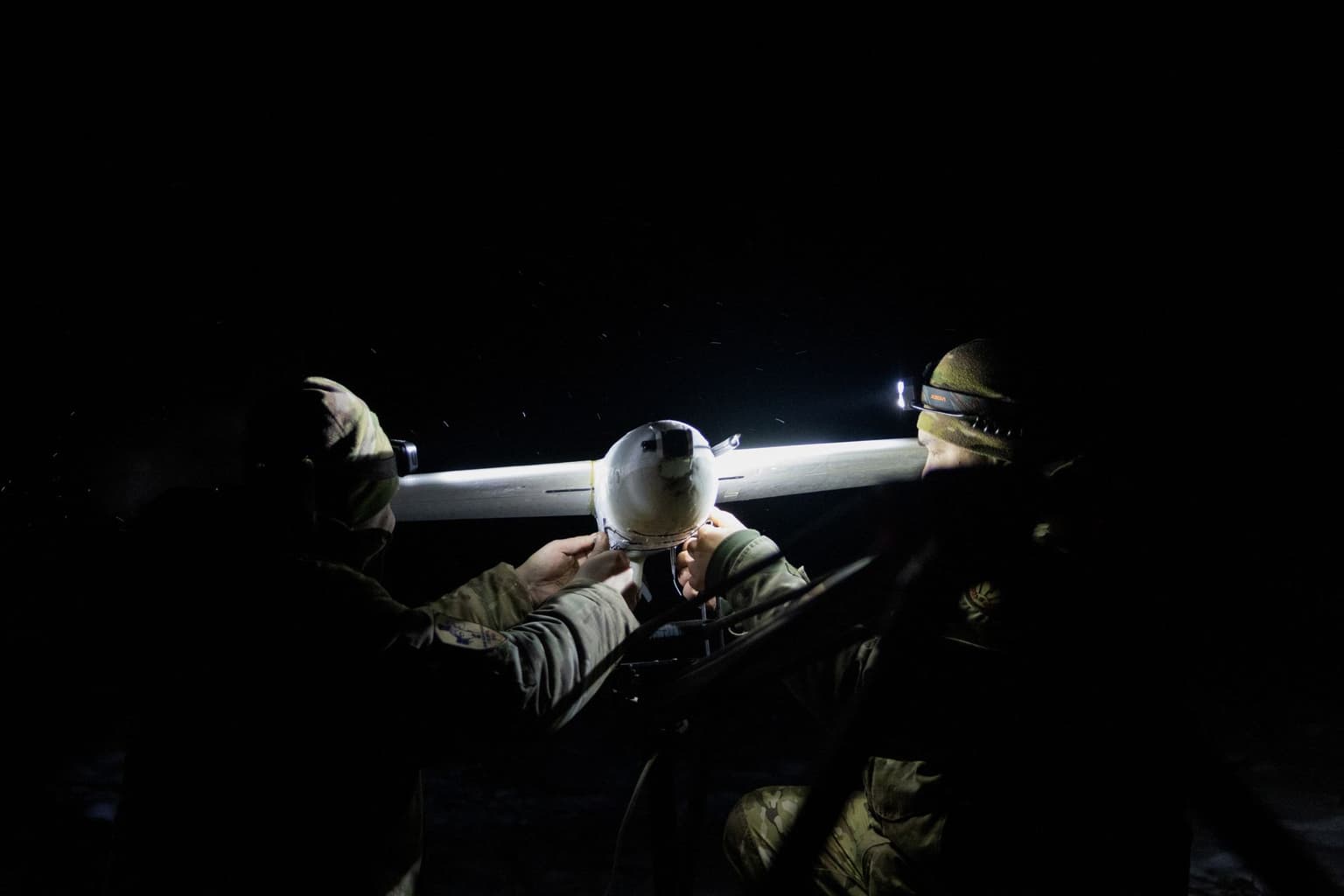
Japanese drone firm Terra Drone has announced a second major investment in a Ukrainian defense tech company, as Japan increases support for its defense sector.
During a presentation in Japan on April 28, CEO Toru Tokushige announced a partnership with Ukrainian firm WinnyLab to scale the Terra A2, a long-range fixed-wing interceptor drone.
The investment comes a week after Japan lifted a ban on weapons exports put in place following the Second World War. Following the historic move, Japanese producers can now send arms to 17 countries approved by Tokyo.
Tensions in the region with China and North Korea have heightened in recent years, leading Japan to raise its defense budget to record levels this year.
Terra Drone — a Tokyo listed firm — became the first Japanese company to break into the Ukrainian defense market last month by investing in Kharkiv-based Amazing Drones to produce and scale the Terra A1, a short-range rocket-type interceptor drone.
"The easing of export restrictions is expected to accelerate Terra Drone’s projects in Ukraine as well as our future global expansion," Tokushige told the Kyiv Independent in a written comment on April 29.

Previously Terra Drone had to find workarounds via its Dutch unit to handle its Ukraine-related projects since Japanese regulation made it hard to directly supply technology for military-related products, Tokushige said.
But under the new legislation, Tokushige expects that collaboration on software and defense technology with Ukrainian firms will be easier.
"Going forward, we expect broader opportunities for more direct collaboration with partners such as WinnyLab and Amazing Drones. In modern warfare, where speed of development can be decisive, this is a major advantage," he said.
The Terra A2 works alongside the company’s rocket-type interceptor drone, the Terra A1, to bolster what Terra Drone calls a "layered defense system."
Interceptors collide with Shahed-type drones, destroying them before they reach their targets.
The Terra A2 flies longer and farther than the Terra A1, capable of flying for more than 40 minutes and covering 75 kilometers, with a top speed of 312 kilometers per hour.
It is better suited for wide-area surveillance and early threat detection, while the Terra A1 — a rocket interceptor drone — provides base protection with a quick, close-range response, the company said.
"By combining a fixed-wing platform with longer endurance and coverage together with a rocket-type platform optimized for rapid response, we believe it is possible to build a more resilient and sustainable shield capable of addressing multiple attack patterns," Tokushige said.
Terra Drone’s investments haven’t gone down well in Moscow. Shortly after Terra Drone announced its collaboration with Amazing Drones, Russia summoned the Japanese ambassador in Moscow on April 8 to protest the deal.
Tokushige told the Kyiv Independent at the time that Moscow had not contacted him directly and that he did not feel any pressure to halt the deal.
The company plans to keep expanding in Ukraine, leveraging its capital to scale Ukrainian defense firms for global markets.