Ukraine's point man with Trump tested as corruption probe intensifies
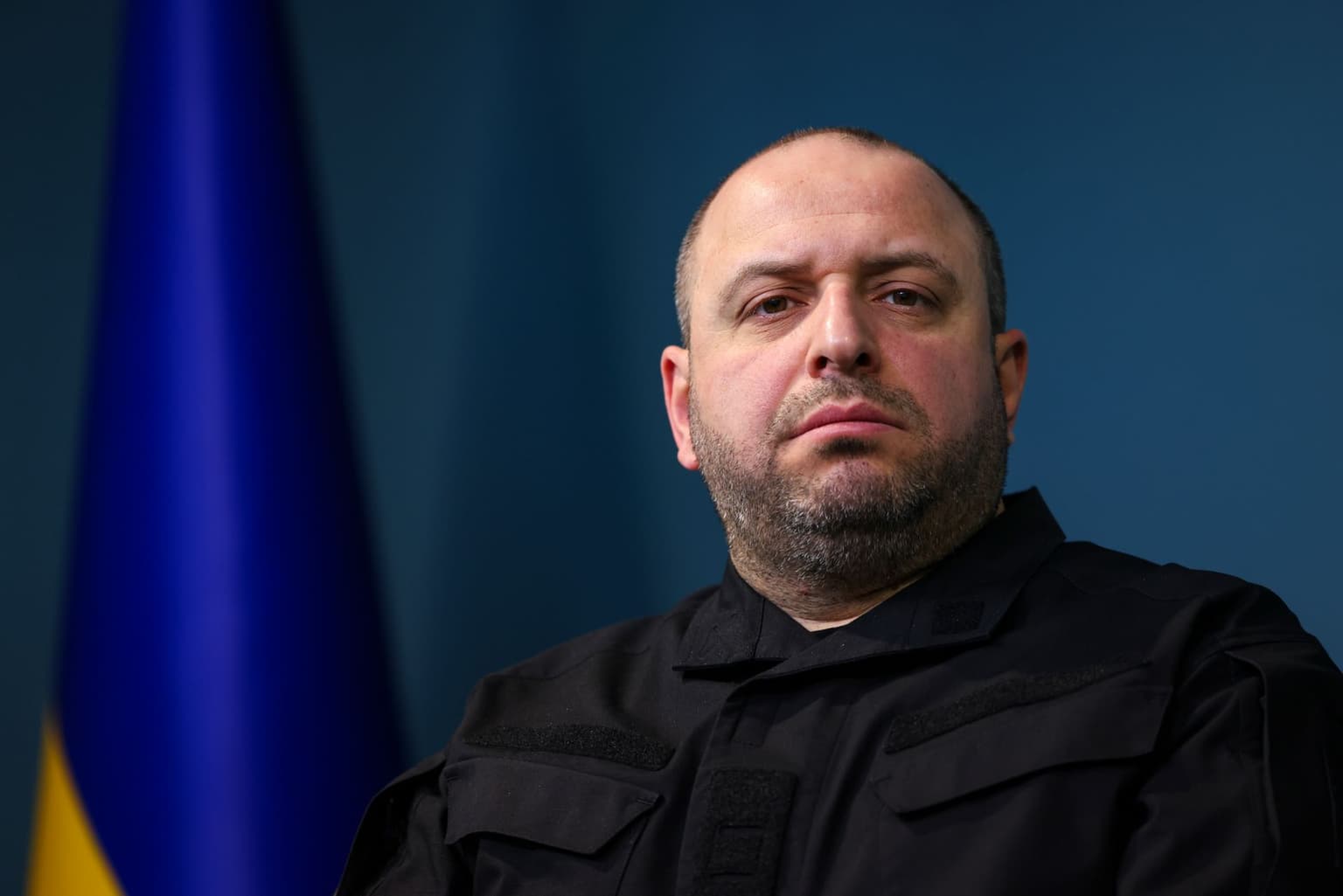
Rustem Umerov, secretary of the National Security and Defense Council of Ukraine, attends a meeting in Kyiv, Ukraine, on March 3, 2026. (Maksym Kishka/Frontliner/Getty Images)
 on Google
Newly released recordings linked to Ukraine's biggest corruption scandal have put Rustem Umerov, secretary of the National Security and Defense Council, back into the spotlight, prompting renewed scrutiny over his role in U.S.-brokered peace negotiations.
The developments come at a particularly sensitive moment.
Umerov, a former defense minister, has not been formally charged but is allegedly under investigation. He is reportedly mentioned in the most recent set of leaked recordings, tying him to one of the culprits.
Despite the controversy, Umerov remains deeply involved in Ukraine's foreign dealings, with one source saying he is "in almost constant contact with the Americans," even as negotiations with Russia have been frozen for more than two months.
The overlap between domestic pressure and foreign diplomacy raises a question: whether the scandal could affect Ukraine's negotiating position — or Umerov's place in it.
From negotiator to power broker
Before being entangled in the current controversy, Umerov built a reputation as one of Ukraine's most effective behind-the-scenes negotiators.
He first gained prominence during early wartime diplomacy with Russia, including prisoner exchanges and the Black Sea grain deal that enabled Ukraine to export more than 33 million metric tons of agricultural goods despite the all-out war.
"I'm not here for idle talk… I want to save the country," Umerov told Le Monde in July 2022, capturing the tone that would come to define his role.
His career trajectory quickly accelerated.
In 2022, he was appointed head of the State Property Fund, where privatization revenues hit Hr 1.82 billion ($49 million) in the first half of 2023 — the highest in a decade.
By September 2023, President Volodymyr Zelensky nominated him as defense minister, tasking him with reforming a ministry shaken by procurement scandals.
Umerov held the post until July 2025, when he was moved to the National Security and Defense Council as part of a broader government reshuffle.

In his current role, Umerov has remained at the center of Ukraine's diplomatic outreach — leading delegations in trilateral talks with the U.S. and Russia while also working to secure defense agreements in the Middle East.
"There is trust in him, and he will continue to work."
"He really is working on important matters… Rustem is handling negotiations with the Middle East, the Gulf, Turkey, Azerbaijan, and European countries regarding drone deals," one senior Ukrainian official told the Kyiv Independent.
"There is trust in him," the official added.
Yet even as that trust holds in some quarters, the corruption probe has begun to cast a shadow over his standing.
Scandal widens with new tapes
The case centers around alleged corruption within Energoatom, Ukraine's state nuclear power company, and has evolved into the country's biggest political scandal in years.
Investigators from the National Anti-Corruption Bureau (NABU) first released recordings in November, capturing conversations among senior officials and associates allegedly discussing large-scale kickbacks.
At the center of the case is Timur Mindich, a businessman with close ties to Zelensky, who left Ukraine for Israel shortly after the initial revelations.
Nine suspects have been charged. Umerov is not among them, but he was questioned and is referenced in the materials.

The latest wave of tapes — published by Ukrainian Pravda and opposition lawmakers Yaroslav Zheleznyak and Oleksiy Honcharenko without investigators' authorization — adds new details to the alleged scheme.
According to the alleged transcripts, Umerov and Mindich discussed defense procurement issues, including drones and body armor, as well as personnel decisions and potential investment deals.
One focal point is Fire Point, a Ukrainian defense tech firm producing long-range strike drones and missiles. In the recordings, Mindich allegedly complains about the company's underfunding while discussing a possible sale of a 33% stake to foreign investors.
In August, the Kyiv Independent published an investigation showing Mindich's link to Fire Point. The company has denied any connection to Mindich.

Umerov allegedly asked whether certain decisions "will suit us," according to the transcripts — phrasing that critics argue suggests an inappropriate level of coordination.
The recordings also capture Mindich describing Umerov as the most "comfortable" defense minister for him, while the two reportedly discuss potential candidates for the post, including then-Prime Minister Denys Shmyhal, who later replaced Umerov.
Still, interpretations of the tapes vary.
One Ukrainian official familiar with Umerov's working style argued that the conversations reflect his informal approach rather than evidence of wrongdoing.
"His style is like: 'Brother! We'll sort everything out,'" the official said. "But that doesn't always translate into action."
"That's why these conversations with Mindich are so funny to anyone who knows Rustem," the person said. "Rustem didn't actually do anything."
Even so, Ukraine's Defense Ministry anti-corruption watchdog called for Umerov's suspension in late April, citing "unverified but credible evidence" of links to Mindich.
Tensions spill into diplomacy
The controversy has also intersected with sensitive negotiations over a U.S.-backed peace framework for Ukraine back in November.
According to one senior U.S. official, Umerov played a role in discussions surrounding a 28-point plan developed by U.S. and Russian representatives — a proposal widely viewed in Kyiv as unfavorable.
The official claimed that Umerov supported much of the plan but sought changes to a key provision concerning accountability.
While earlier drafts reportedly included a broad audit of international aid to Ukraine, the language was allegedly revised to offer "full amnesty for actions during the war," the official said.
"Umerov agreed to the majority of the plan, after making several modifications, and presented it to President Zelensky," the U.S. official said.

This change would effectively allow Ukrainian officials to avoid persecution for corruption.
Umerov rejected those claims, describing them as "unverified" and stressing that his role was limited to facilitating dialogue.
"I provided no assessments or approvals of any points," he said at the time, adding that such decisions fall outside his authority.
Yet the dispute highlights broader tensions — and raises questions about how internal Ukrainian dynamics intersect with external pressure, namely from the U.S.
Uncertain impact, steady role
Despite the intensifying scrutiny, there are no immediate signs that Umerov will step back from his diplomatic role.
Ukrainian officials maintain that he continues to enjoy the president's confidence and remains central to engagement with Washington and other allies.
"There is trust in him, and he will continue to work," one official said. "If there were reasons not to trust him, the NABU's reaction would have been different."
"it appears that the president is comfortable with this situation."
On the U.S. side, officials declined to comment on whether the new revelations could affect cooperation.
"Why should they respond to a news article or political debate?" the Ukrainian official said, reflecting a view that the scandal has not yet translated into consequences.
Umerov's spokesperson also dismissed any impact, saying work on the peace track continues unchanged.
"We're working just as hard as we were before," she said.
Still, the political fallout may not be entirely contained. Yaroslav Yurchyshyn, a lawmaker from the opposition Holos party, pointed out that the peace process ultimately rests with Zelensky.
"It is worth asking whether, in light of recent reports, the president considers Umerov a suitable candidate," he said.
"Since he's still involved in the (peace) process, it appears that the president is comfortable with this situation."
read also
Note from the author:
Hi, this is Tim Zadorozhnyy, the author of this article.
From our newsroom in Ukraine, we report on the issues that matter to a global audience, without outside influence. Independent journalism is only possible with reader support. If you value our work, please consider supporting us — it makes a real difference.