Why Ukraine's arms makers are still waiting to sell abroad
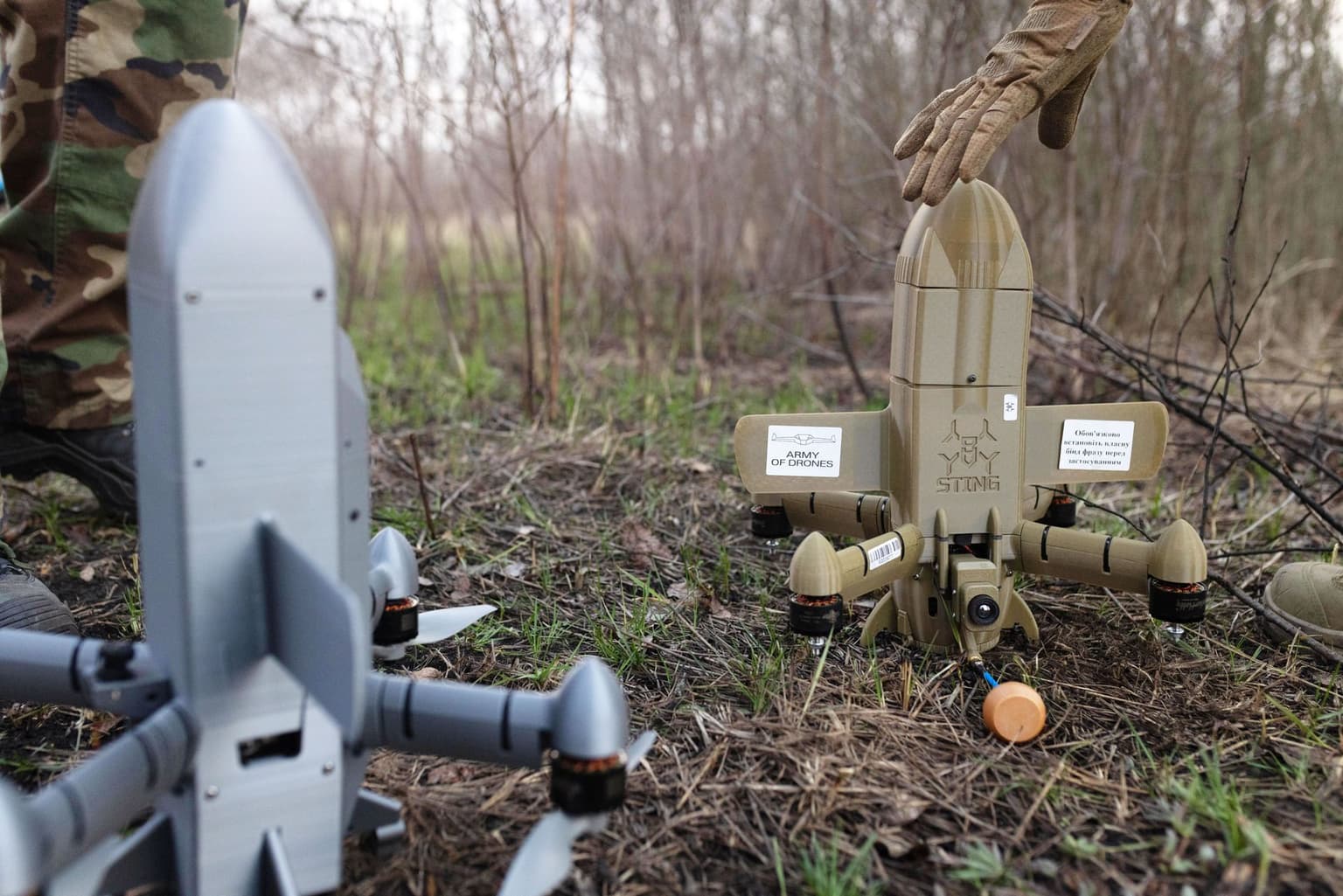
Ukrainian-made interceptor drones in Kharkiv, Ukraine, on March 31, 2026. (Nikoletta Stoyanova/Getty Images)
 on Google
At the start of July, Ukraine's government announced with much fanfare that it would ease restrictions on arms exports. Businesses across Ukraine’s defense sector had long argued the move was necessary to help them grow and bring the country’s battle-tested innovations to the world.
But two and a half months later, not a single export permit has been issued.
The issue, according to Ukraine's State Service for Export Control, is bureaucratic: "At present, there are no mechanisms or instruments for the practical implementation" of the procedure, it told the Kyiv Independent in an email on Sept. 16.
As Ukraine's government moved to make drone deals across the world, particularly in the wake of the war in Iran, the July 1 resolution — formally known as Resolution No. 875 — raised hopes that arms exports would actually open by establishing a fast-track procedure for selling weapons and military technology to partner countries.
But its latest promise to help manufacturers turn battlefield innovation into export earnings remains unfulfilled, even as Kyiv positions the defense industry as a key driver of economic recovery.
Kyiv understandably needs to keep its weapons at home for the war effort. But Ukrainian arms makers have long argued they can produce more weapons than Kyiv can afford to buy. And as competitors race to develop and produce the next generation of military technology, Ukraine faces a narrowing opportunity to turn its battlefield advantage into a lasting industrial role.

"There was excitement," said Anastasiia Mishkina, executive director of the defense industry association Tech Force in UA. Others in the industry recalled similar optimism back in July. But a closer reading of the resolution cooled that enthusiasm: "When we read it, we immediately understood that we need to work on it," said Mishkina.
Why is the fast track stalled?
The government held early consultations with companies but kept much of the later drafting closed to them, according to Mishkina.
Two essential lists remain unfinished: products deemed too critical to Ukraine’s defense to export and partner countries eligible for the fast track. Without those lists, manufacturers do not know what they can sell or where, leaving the procedure practically unusable.
Tech Force in UA and other industry associations have since been invited to advise on the amendment process, meeting with the National Security and Defense Council to coordinate their proposals.
Another dispute concerns the cost of exporting. The government’s resolution sets export charges of 20% on finished defense products and 30% on components.

"We did not expect the introduction of an additional 20% contribution linked to export contracts," said Tetiana Uzhvii, head of export at BlueBird Tech, a Ukrainian drone and jammer manufacturer. She warned that the charge could consume a company’s entire profit, which could make some products unprofitable to export.
Higher-margin products could be sold at a profit even after the charge, while others, especially components, could become uncompetitive.
Mishkina offered an example: A Chinese sensor sells for $150, while a Ukrainian equivalent costs $120 to produce. A 30% export charge would leave the Ukrainian producer with less than its production cost.
What is the cost of waiting?
Export restrictions limit the money Ukrainian manufacturers can earn and reinvest in production and new technology. Selling abroad could help them attract investors by offering room to grow beyond what Ukraine can afford to buy.
In discussions with the Kyiv Independent, government officials pointed to efforts to improve what manufacturers can earn from sales at home. In 2023, the government revised pricing rules for state purchases of Ukrainian-made drones, allowing profit of up to 25% of production costs.
But this profit allowance still leaves limited room for expansion, according to TAF Industries, a major Ukrainian drone maker. "Operating during a full-scale war, with a profit margin of around 25%, naturally limits how much we can reinvest in new technologies and production development," the company told the Kyiv Independent.

While Ukraine's war-stressed economy necessitates slimmer profit margins it is true that Ukrainian drones often sell for a fraction of what Western governments are prepared to pay for the drones.
In June, a Ukrainian army unit contracted to buy 55 Ukrainian-made SL-10 first-person-view (FPV) drones for approximately $513 each. The Pentagon’s 2026 Drone Dominance program set a procurement price of $4,500 per drone with similar key specifications.
Blaming the government for the delay, Mishkina says that Ukraine risks wasting its technological advantage while foreign competitors attract investment, expand production, and secure customers.
Exporting would give Ukrainian manufacturers the experience they need in navigating European requirements and competing abroad, said Uzhvii from BlueBird Tech. "If Ukrainian companies cannot gain this experience and establish international partnerships now, there is a risk that others will capture those markets first," she said.
The scale of that opportunity is already visible abroad. German drone maker Quantum Systems reported in May 2025 that its revenue had more than doubled annually for several years. This July, it announced a $1.2 billion financing round to expand production and deliveries across allied markets.
BlueBird Tech sees reliable export access as essential to building a lasting position in Europe. "For us, this is the key long-term issue, Ukraine has the technology and real-world experience, but it also needs the opportunity to turn that advantage into sustainable participation in Europe's defense industry," said Uzhvii.
What is next for Ukraine’s arms makers?
Mishkina expects amendments within weeks, citing signals from the government. But when asked whether those changes would let manufacturers begin exporting, she clarified that they would mean companies can start applying and exports would come months later.
The test will be whether applications lead to permits and deliveries. Until then, another announcement would offer little evidence that the promised opening has become a practical reality.
The stakes extend beyond arms manufacturers’ earnings. Access to foreign markets could help determine how closely Ukraine’s defense industry becomes integrated into Europe’s long-term security plans through weapons supplies, investment, and joint development.
In an interview with the Kyiv Independent, Deputy Digital Transformation Minister Natalia Denikeieva said the government was working to identify and remove bureaucratic bottlenecks for technology companies, describing flexibility as one of Ukraine’s strengths.
Deborah Fairlamb, a founding partner at Green Flag Ventures, which invests in Ukrainian defense technology, says that "there is nothing that is a fast track within (the defense tech) ecosystem" anywhere in the world.
Ukraine’s attempt to create a faster system, even if it had fallen short of expectations, was itself encouraging, according to Fairlamb.
"The fact that they are trying to do something, I think actually speaks volumes about the intent of the Ukrainians," she said.