Russia's banks face major service outages amid internet crackdown
 on Google
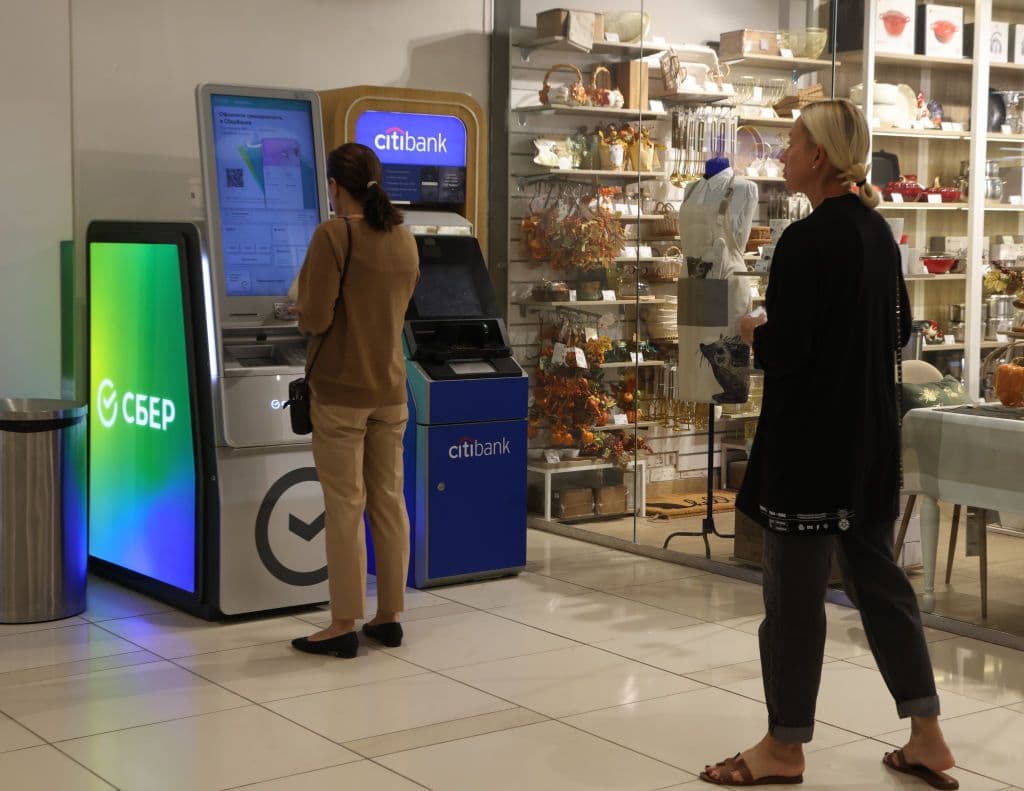
Russia's major banks faced large-scale disruptions to their electronic services on April 3, according to online tracking data and customer reports.
The outage comes as the Russian government has increasingly tightened control over internet access in the country, imposing restrictions on popular apps and seeking to clamp down on the use of virtual private networks (VPNs).
Sberbank, the largest bank in Russia, reported a temporary service disruption on April 3. Other Russian institutions, including T-Bank and VTB, reported similar issues. Data from the monitoring service Downdetector indicated a spike in outages across the Russian banking sector that morning.
At around 10 a.m. Moscow time, customers began reporting problems with mobile banking apps, payment transfers, and ATM withdrawals. Long lines formed at shops, restaurants, and gas stations in multiple cities, as establishments could only accept cash payments.
The Russian Central Bank's National Payment Card System (NSPK) said the disruption was caused by a "technical failure at one of the banks."
The NSPK oversees Russia's Fast Payment System, an instant interbank transfer network that relies on QR codes and phone numbers.
"There may be short-term difficulties in processing bank card operations or the cancelation of such operations. The situation does not affect the safety of funds," the NSPK said in a statement.


The pro-Kremlin Russian news outlet Kommersant reported that the problem arose from a glitch in Sberbank's payment services and may have been "complicated" by customers' use of VPN services.
The mass outage comes less than a week after Russia's Digital Development Minister Maksut Shadayev said on March 30 that the government will work to "reduce the use of VPNs" — one of the few remaining ways for Russian citizens to bypass online censorship.
Shadayev reportedly asked telecom operators and digital platforms to introduce fees and block users for using VPN services following an order by Russian President Vladimir Putin.
The blockage of VPNs likely contributed to the banking service failures on April 3, according to Fyodor Muzalevsky, technical director of RTM Group, an IT security firm.
"It is precisely the blocking of VPNs that has been a subject of intense discussion in recent days, and it is highly probable that this very issue contributed to today's outage — a case of so-called 'friendly fire,'" Muzalevsky told Kommersant.
Russian authorities have progressively intensified online censorship since the full-scale war in Ukraine began, an effort that accelerated rapidly in recent months. In early March, the Kremlin introduced a "whitelist" system that allowed access only to selected websites — mainly pro-government social media, outlets, and official state sites — during ongoing mobile internet outages.
Internet shutdowns have become increasingly common in Russia, with the Kremlin justifying outages as a security measure in the face of Ukrainian drone attacks.