Putin lacks troops in Ukraine but fears mobilization in Russia
 on Google
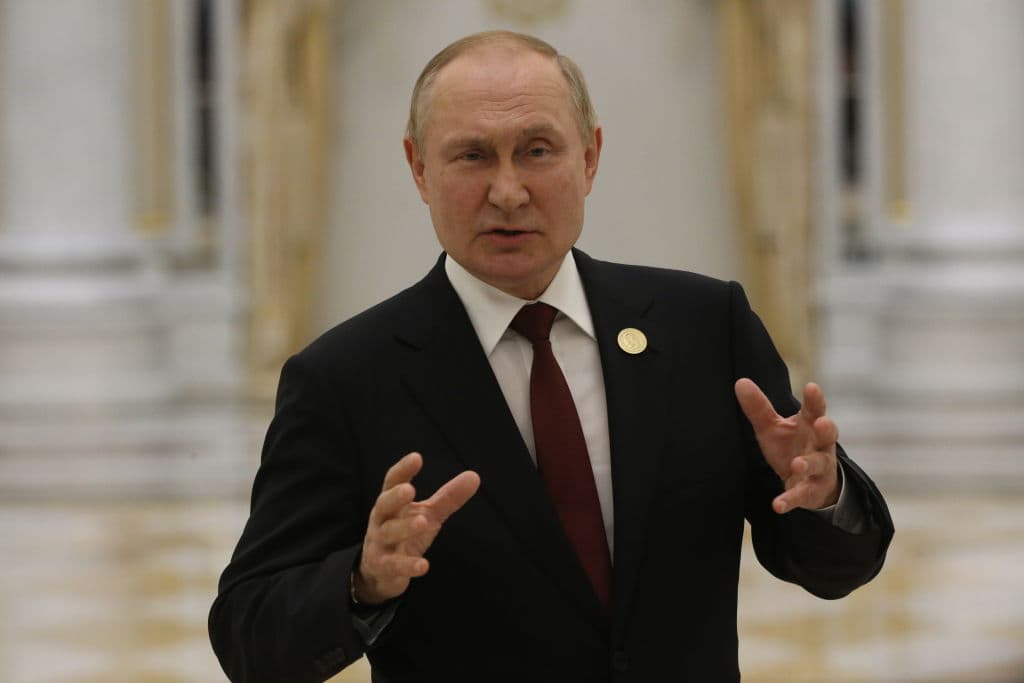
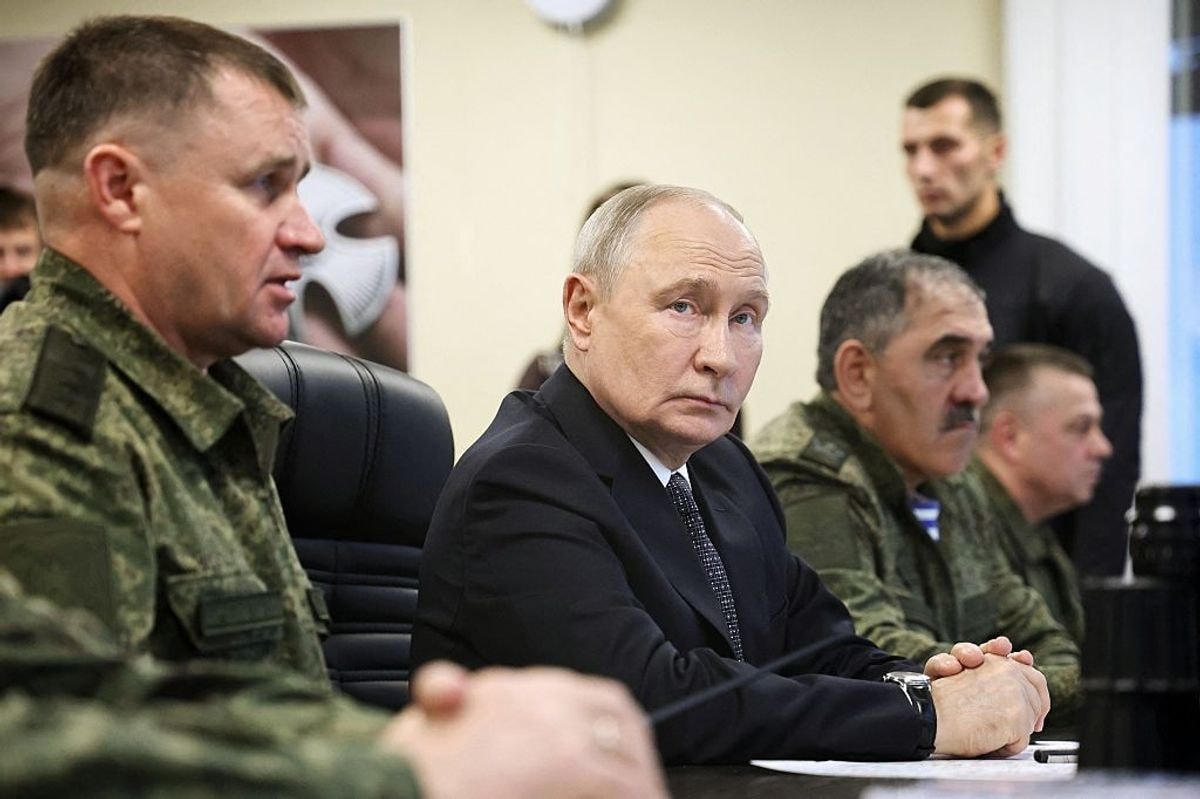
Although Russia surpasses Ukraine in terms of weapon capabilities, the number of troops it has committed to Ukraine is insufficient for the full-scale war it’s waging.
Russia’s hawks have urged Russian dictator Vladimir Putin to introduce martial law and to initiate full or partial mobilization to expand the size of Russia’s army and boost its war effort. If this happens, the scale and number of victims of Russia’s war are likely to increase.
But despite failing to achieve any of Russia’s strategic objectives in its all-out invasion of Ukraine in over four months, Putin has been reluctant to carry out mobilization.
Some experts suggest Putin may fear that mobilization would trigger domestic resistance, with large numbers of potential recruits evading the draft. He may also be wary of the devastating effect that it would have on Russia’s economy: thousands would be removed from the civilian sector and living standards would fall drastically.
Another potential fear is that Russia’s administrative system may not be able to handle such a tremendous task. Moreover, mobilization in Russia would likely entail a transition to an even more totalitarian system, and it may not prove so easy to transform Russia into North Korea.
Statistics
There are an estimated 200,000 Russian troops and their proxies in Ukraine. By contrast, President Volodymyr Zelensky said in May Ukraine had 700,000 troops.
Ukraine has already conducted several waves of mobilization and has substantially increased its number of troops. The number Zelensky provided likely includes Ukraine’s National Guard and its Territorial Defense units.
Some military analysts say that an insufficient number of troops is one of the main reasons why Russia failed to encircle Kyiv in March and was forced to withdraw from Kyiv, Sumy, and Chernihiv oblasts.
In April, U.S. military analyst Michael Kofman said in a War on the Rocks podcast that Russia has failed because it has been fighting a "large conventional war at peacetime strength."
Russian hawks have criticized Putin, arguing that he is not going far enough in Ukraine and urging him to initiate mobilization efforts.
One such hawk is Igor Girkin, also known by the alias Igor Strelkov, a former Russian Federal Security Service officer who was at the forefront of Russia's war against Ukraine in 2014, leading the attack on the city of Sloviansk in Donetsk Oblast. Girkin has also been charged by the Dutch Public Prosecution Service with shooting down Malaysia Airlines Flight 17 in 2014, killing all 298 people aboard.
While Putin has so far ignored Girkin's pleas for mobilization, Russian-occupied areas of Donbas have been used as a staging ground for potential mobilization in Russia.
Since the beginning of Russia's full-scale invasion, Russian proxies in Donetsk and Luhansk oblasts have mobilized residents of the region's occupied areas en masse. Russian proxies have often sent scantily armed and poorly trained recruits to the frontline, leading to high casualty rates.
Is mobilization possible?
Sergei Sazonov, a Russian-born political philosopher at Estonia's Tartu University, says Putin may be afraid that Russia is incapable of conducting mobilization successfully.
"There are fears that the administrative system won't be able to handle it and that it has become rotten," Sazonov told the Kyiv Independent. However, he added that he thinks Russia is capable of accomplishing the task.
"Ukraine has carried out mobilization successfully, although partially it was due to a patriotic upsurge," Sazonov says. "Russia's administrative system is no worse than Ukraine's."
By contrast, Kofman said in an interview with Riddle Russia news outlet that he thinks it would be difficult for Russia's military to carry out mobilization.
"The Russian army is not the Soviet one," he said. "It does not have an infrastructure for general mobilization. They don't have 'empty' divisions with officers and tanks."
According to Kofman, Russia has also lost a lot of military equipment during its invasion of Ukraine, making mobilization even more difficult.
If Russia were to initiate mobilization, it would take a lot of time, he added.
Ukrainian military analyst Vyacheslav Tseluiko says that, if mobilization were to be announced, Russia would have to send poorly trained conscripts to the frontline, with few resources available to arm them. However, Tseluiko told the Kyiv Independent that Russia may be able to ramp up its production of weapons.
Despite the difficulty in obtaining Western technology due to sanctions, Russia may still be able to produce low-tech weapons, Tseluiko says. He added that this will give Russia more opportunities for an offensive.
Popular resentment
One of the reasons that Putin is holding off on launching full-scale mobilization is his fear of being overthrown, says Sazonov.
"He's afraid that his approval rating will plummet," he says. "Putin always exaggerates the risk of a popular uprising."
Sazonov himself believes an uprising is unlikely in Russia.
Tseluiko says that "there may be a negative reaction (to mobilization) from society, and the government has to take this into account."
"It's not clear if they will have enough resources to suppress it," he told the Kyiv Independent.
Something similar happened during World War I, which encountered domestic resistance in Russia by 1917. As a result, millions of mobilized soldiers disaffected with the war eventually contributed to the 1917 Russian Revolution.
Mobilization is also expected to cause significant damage to Russia's economy, which has already shrunk due to Western sanctions imposed on Russia for its war against Ukraine.
Putin is concerned that an economic downturn will also contribute to popular resentment, Sazonov said.
“(Mobilization will lead to) an increase in public spending, a further contraction of the consumer goods and technology sectors and, as a result, an increase in consumer goods shortages and accelerated degradation of the civilian economy,” Grigory Bazhenov, an economist at Russia’s Higher School of Economics, told the Kyiv Independent.
Total war
Some also argue that Putin may be reluctant to carry out mass mobilization and militarize Russia's economy because it would require transitioning to a full-fledged totalitarian state. Whether Russia has reached a point at which totalitarianism is possible is subject to much debate.
“Mobilization requires a political model that mobilizes the population,” Bazhenov says, adding that it is essentially a totalitarian model. “And currently we have the opposite - a model that encourages people to sit on their sofas.”
He also says that Russian society does not view the war as a defensive one, meaning a big repressive apparatus would be required for mobilization under these conditions. Russia lacks the resources for creating such an apparatus, he says.
Bazhenov argues that Russia does not have an “appropriate social base” for mobilization.
“The regime doesn’t have resources for a full-fledged mobilization, first of all, human resources,” he says. “There must be a large uneducated rural population. Creating a totalitarian regime in an urbanized society with middle-class incomes is not an easy task.”
Announcing mobilization and martial law would drastically raise the stakes, incurring significant risks for Putin.
Since the beginning of its full-scale invasion, Russia has effectively downgraded its proclaimed objectives from turning Ukraine into a Russian satellite state to the seizure of Donbas. However, Kofman believes that Russia will have to switch back to maximalist aims if mobilization is announced, which would be difficult to achieve.
“Putin wants to avoid general mobilization because fighting this as a special operation without declaring a state of war allows him to dictate what victory is,” he said on the War on the Rocks podcast. “If he announces national mobilization, this can’t be a limited stakes war. Then it has to be for maximalist war aims.”