Putin claims he delayed full-scale invasion of Ukraine over economic, military factors
 on Google
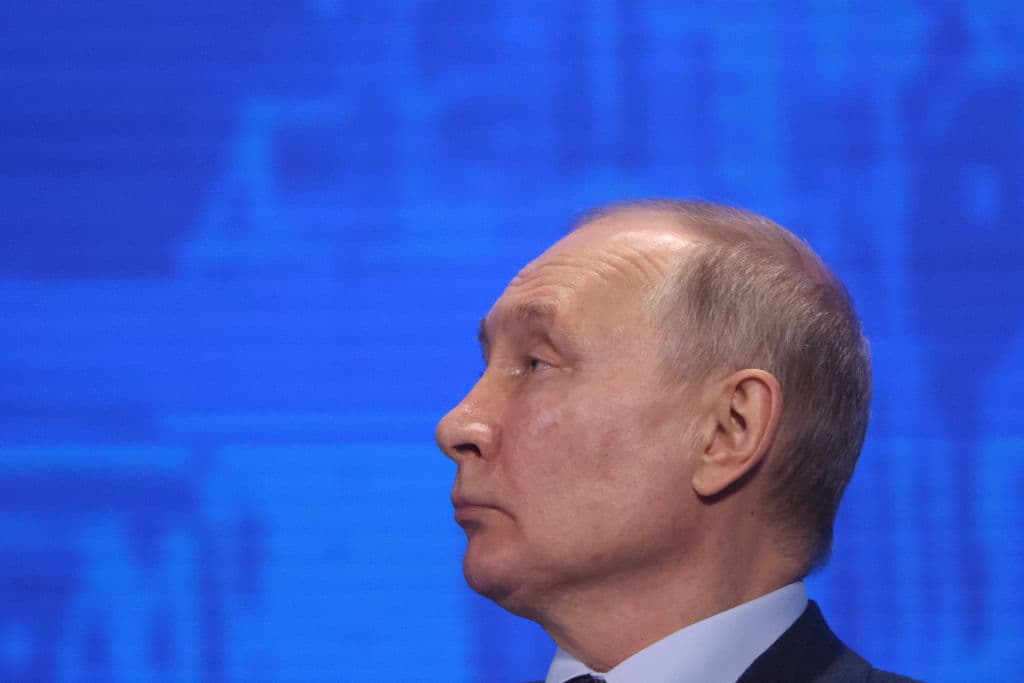
Russian dictator Vladimir Putin said that he had decided to launch a full-scale invasion of Ukraine in 2022 rather than earlier because of economic and military factors.
Speaking on Russian state television on March 19, Putin laid out the reasons why, according to him, Russia didn't go for a full-scale invasion of Ukraine in 2014, when it invaded Crimea and started a war in the eastern Donbas region.
Putin claimed that Russia wasn't ready militarily in 2014 for a full-scale war, primarily because it didn't have "hypersonic weapons."
Russia's hypersonic missile Kinzhal entered service in 2014. Since the start of the full-scale invasion, both Russia and Ukraine have said that Russia had launched Kinzhal missiles at targets in Ukraine. The missiles are considered impossible to intercept.
Speaking on March 19, Putin also said that Russia had been preparing economically to withstand the cost of the war. He cited good harvests, import substitution policies, and “improving” the country’s financial system as the factors that allowed him to start the invasion.
In February 2014, Russia invaded and occupied Ukraine’s Crimea peninsula. It then illegally claimed it as Russian territory. Internationally, Crimea is considered a part of Ukraine.
Russian President Vladimir Putin visited the Russian-occupied Crimean Peninsula nine years after proclaiming its occupation “official,” Russian state-controlled media reported on March 18, the anniversary of a sham referendum that Russia staged in Crimea following the invasion, to justify its annexation.
read also
Putin’s visit to Crimea came a day after the International Criminal Court (ICC) issued an arrest warrant for Putin for overseeing the “unlawful deportation of children” from Ukraine. More than 16,000 children have been forcibly removed from Ukraine since the start of the full-scale invasion, according to Ukrainian officials.
Ukraine said that “it’s only the beginning” of a long road ahead to punish Russia for its war crimes committed in Ukraine.
Moscow dismissed the ICC’s decision, with the Foreign Ministry claiming that “decisions of the International Criminal Court have no meaning for our country, including from a legal standpoint.”
The ICC’s arrest warrant enables countries that have adopted the Rome Statute to arrest Putin. Ukraine signed the statute in 2000 but has not ratified it to date.