Pentagon invites 2 Ukrainian drone makers to 'The Gauntlet' — $1.1 billion in contracts at stake
 on Google
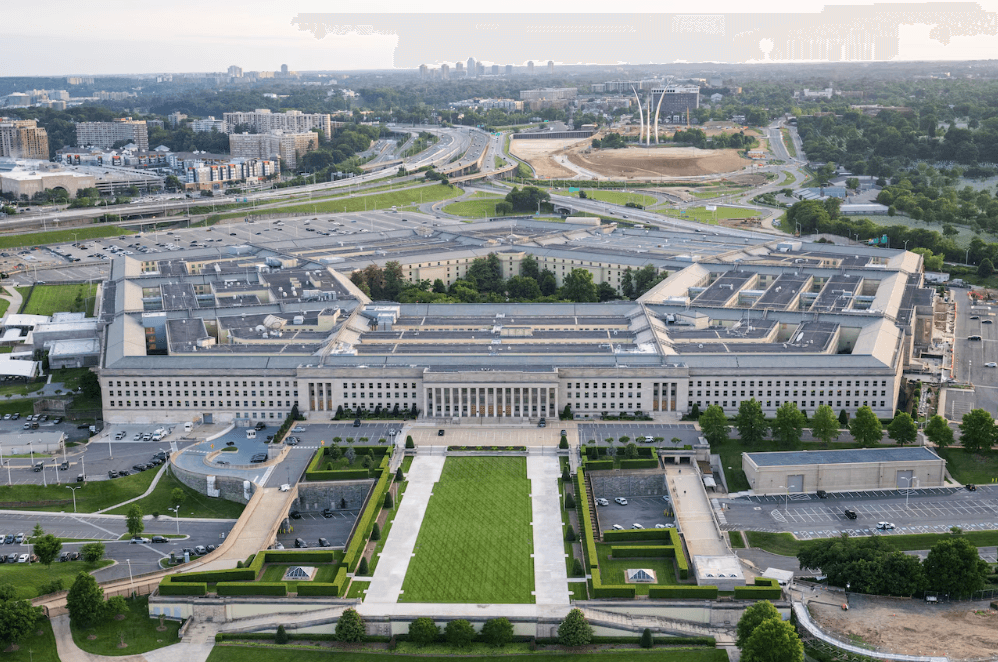
The U.S. Pentagon is trialing attack drones for new contracts that should total $1.1 billion, inviting two Ukrainian drone makers to take part.
A Feb. 3 notice listed 25 companies invited to take part in a competition as the intro to the "Drone Dominance Program."
One of the firms invited is General Cherry, in Ukrainian known as Heneral Chereshnya, one of the largest producers of first-person view (FPV) drones in the country, though its sudden rise over 2025 attracted extensive scrutiny.
Another seemingly Ukrainian firm selected is "Ukrainian Defense Drones Tech Corp," but the Kyiv Independent could find no record of an entity by that name in corporate registries in the U.S., Ukraine or EU.
Round one will consist of a competition called "The Gauntlet" in Fort Benning, Georgia, the largest Army training facility in the U.S. and home of, among a number of relevant units, the Expeditionary Warrior Experiment, which has spent recent years testing new drone technologies.
Following the first phase, the Pentagon says it will order $150 million in prototypes from successful competitors.
The budget is $1.1 billion across all four phases in pursuit of what the Pentagon termed "competitive, iterative cycles measured in months, not years."
The Pentagon's current system of coordinating purchases can extend decades often privilege massive and expensive weapons systems, for example the sixth-generation F-47 fighter jet program that has been underway since 2014. Those timespans are out of sync with fast incremental iterations, which the Russian-Ukrainian front has shown to be key to modern electrified war.
The U.S. Defense Department is also famous for overpaying wildly on drones. While the military often keeps pricing details on weapons secret, available figures suggest massive upcharging. A 2024 contract with Anduril for 500 Roadrunners – effectively interceptor drones – and an unknown number of "Pulsar" electronic warfare stations ran for just under $250 million. Half a million dollars per unit would put those Roadrunners at roughly two orders of magnitude more expensive than their Ukrainian equivalents.
The most recent drone initiatives from the Pentagon have sought to address this price differential – for example a Made-in-USA copy of the Iranian-Russian Shahed deep-strike drone – but results are uncertain. Days ago, the U.S. used an F-35 Fighter to shoot down an Iranian Shahed that was approaching an American aircraft carrier on the Arabian Sea.