How Ukrainian and Belarusian entrepreneurs have set new standards in Warsaw’s café scene
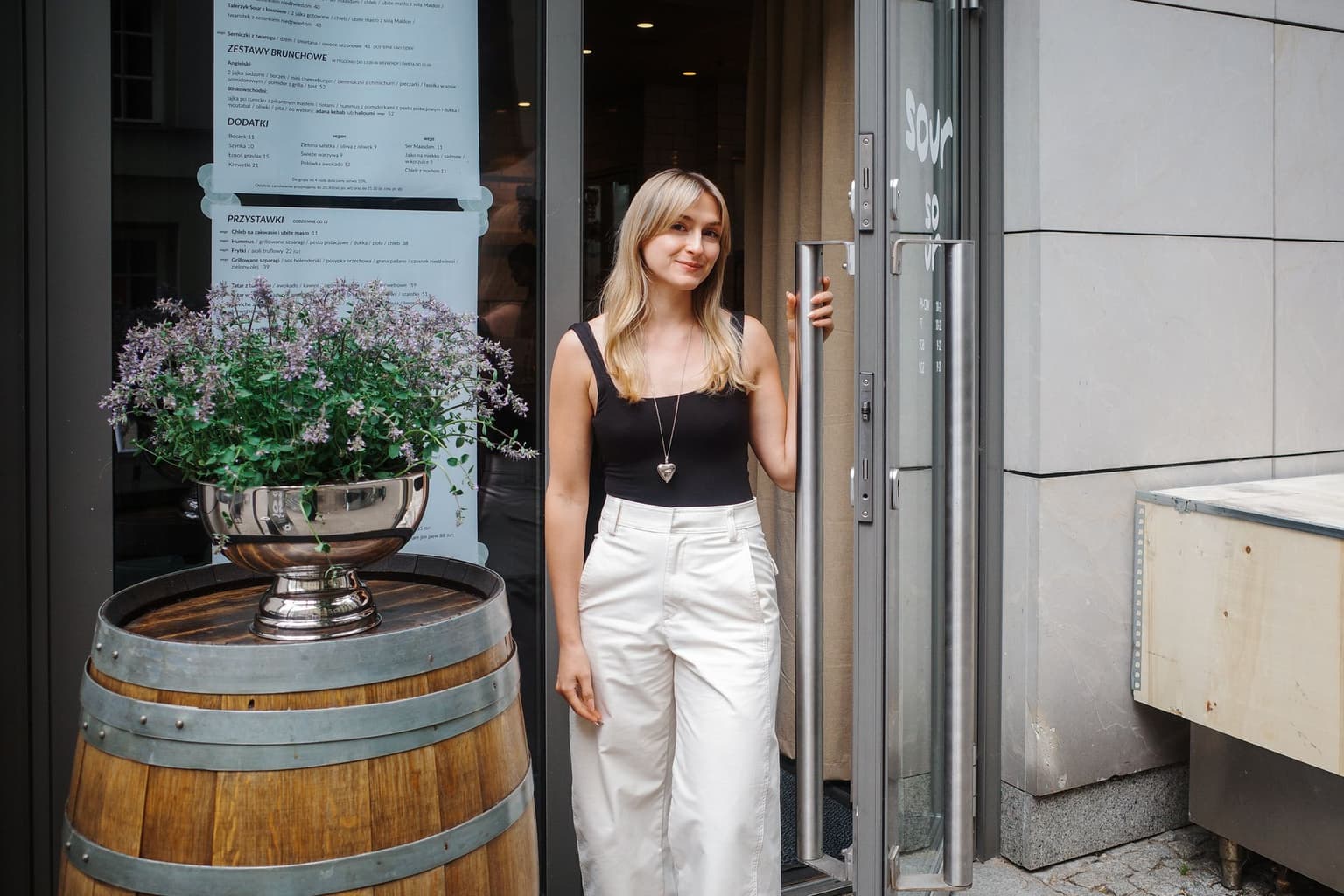
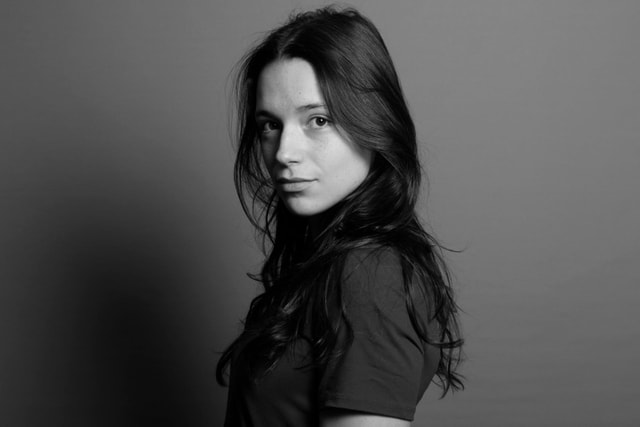
Ksenia Mazur, owner of Sour, poses in front of her restaurant in Warsaw, Poland, on May 28, 2026. (Noémie Naudin / The Kyiv Independent)
 on Google
WARSAW, Poland — Walk into Milk Bar in central Warsaw, and you'll find the new face of the city's café scene. The lines are clean, the lighting deliberate, and the cakes arranged with gallery-like precision.
Without an ear for accents, you might never guess that for its owners and staff, it is a second home, rebuilt after war in Ukraine and political repression in Belarus that forced many of them to start over in Poland.
Anna Kozachenko launched the original Milk Bar in Kyiv 12 years ago. She fled Ukraine in April 2022 to protect her six-year-old son after the start of Russia's full-scale invasion. By 2023, she had opened a Warsaw location — her first abroad. She opened her third in Baku, Azerbaijan, by the end of 2025.
"Opening Milk Bar abroad was connected to recreating a sense of home — not literally, but emotionally," Kozachenko said.
Since February 2022, Poland has absorbed close to 1 million Ukrainian refugees — and with them, a generation of entrepreneurs who brought the aesthetics, standards, and ethos of Kyiv's café culture with them. More than 100,000 Belarusians who fled the brutal crackdown following the country's fraudulent 2020 elections have similarly reshaped the city's café scene with their emphasis on design and quality.

"Ukrainian and Belarusian concepts have already become a natural part of the city’s landscape," Marcin Ksiazka, executive chef and owner of Zyes Kuchnia, with over 20 years of experience in the restaurant industry, told the Kyiv Independent in an interview.
"Their emphasis on good coffee, seasonality, and fresh ingredients has certainly helped set new standards and expectations."
Ukrainians have opened more than 100,000 businesses in Poland since the start of Russia's full-scale invasion. Many of the most visible are in hospitality, and many of the most talked-about are in Warsaw.
Milk Bar has been one of the trend setters, with its appeal quickly extending beyond the Ukrainian community. "Many Ukrainians brought their Polish friends and families to us, saying: 'This is our Milk Bar,'" Kozachenko said.

Milk Bar's name is a nod to Poland's ubiquitous bar mleczny — Communist-era canteen-style restaurants known for serving affordable, traditional home cooking — but reimagined the concept for a contemporary Ukrainian audience.
"After 2022, many people came to Poland suddenly. At first, they didn't know if they would stay, so spaces where they felt familiar became very important," Milk Bar's manager Anastasiia Reva said.
What began as a refuge became something more. Milk Bar is now a place where regulars celebrate birthdays, meet for job interviews, and mark milestones. "This place is about creating core memories," according to Reva.

But it's also about the interior, Reva said while giving the Kyiv Independent a tour of the restaurant.
"We like to create a 'wow effect' — with the interiors, desserts, decorations, and seasonal concepts," she said. "People choose cafés not only for food, but for the experience."
Designed to feel like home
Ksenia Mazur, the owner of Sour, a modern brunch spot and restaurant, arrived in Warsaw in 2010 on a scholarship. She wasn't originally planning on settling in Poland, but when Russia annexed Crimea four years later, she decided to stay.
Mazur spent a decade in retail and large corporations before opening Sour in 2024. The café's cream tones, soft lighting, and curated playlist feel intentional. It now attracts an equal mix of Polish and Ukrainian customers.

"Before, many places in Poland focused mainly on cuisine. Ukrainians brought more attention to the full experience — the aesthetics, the details, the atmosphere," she said. "People choose cafés visually now. They look at Instagram first."
Restauranter Ksiazka agrees that this shift has occurred, saying that Belarusian and Ukrainian entrepreneurs "often bring a very clean and refined design style, with many influences drawn from Slavic and Eastern European culture, which fits beautifully with current trends."

Despite the political tensions between Ukraine and Poland, the competition in the restaurant sector hasn't brought the same hostility, Ksiazka said. "I personally see them as peers and fellow entrepreneurs," he told the Kyiv Independent.
"A strong and diverse food scene benefits everyone. Healthy competition pushes us to improve."
For Mazur, Sour was never just about food. The restaurant doesn't advertise its Ukrainian identity — but it doesn't hide it either. Kyiv chicken and borsch are among the best-sellers.
"Restaurants became a way to express culture, identity, and creativity," she said. "I think Ukrainian culture was suppressed for a very long time. Now people finally feel free to express themselves — through food, design, fashion, hospitality."
That expression has only intensified since Russia's full-scale invasion. "For a long time, Ukrainian identity was overshadowed by Russia. After 2022, people suddenly felt the need to build and show their own culture."
The first wave
Exiled Belarusians in Warsaw understand that feeling well. Since the brutal crackdown that followed Belarus's disputed 2020 election, more than 140,000 Belarusians have settled in Poland, many of them in Warsaw.


Yahor Perakhod moved from Minsk to Kyiv in 2021, where he and his wife opened a restaurant shortly before the full-scale invasion began. The plan had always been to eventually settle in Warsaw. The war accelerated everything.
Gigi opened on March 3, 2023. The Morning After followed 55 days later. The two venues could not feel more different. Gigi is a cocktail bar built around gin and raw food — a natural extension of Perakhod's previous life in Minsk, where he was a brand ambassador for several gin labels.


The Morning After is an urban café anchored by a 300-year-old olive tree, designed to feel — according to the owner — like a summer city park. At 8 a.m, it opens as a breakfast destination. At 4 p.m., the menu, the music, and the mood all change. The full name is The Morning After (The Night Before).
Neither venue advertises a Belarusian identity. Most customers at The Morning After are Polish. But Eastern European regulars find their way in — drawn, Perakhod believes, by a standard of hospitality they recognize. Syrnyky, a popular Eastern European cottage cheese pancake, remains among the bestselling breakfast dishes.
"Before the full-scale war, both Ukraine's and Belarus's restaurant industries were operating at a very high level," he said. "Kyiv was one of Europe's most exciting gastronomic capitals. Minsk had developed a remarkably vibrant and ambitious hospitality scene of its own."
Perakhod considers himself part of Warsaw's first wave of Eastern European hospitality entrepreneurs. Many who opened later contacted him for advice. "We did not open because of a trend," he said. "But I hope our story encouraged someone else to start their own project."
No going back
Burger Lab tells a different story — one that started as a food truck in Minsk in 2017, and survived a revolution to reach Warsaw.
Slava, who declined to give his full name citing safety concerns, took his back-of-the-van burger kitchen and upscaled it into one of Minsk's most popular restaurants. But after the 2020 crackdown, his customers began leaving for Poland. So did his team, and eventually, he did too. The Warsaw branch opened in 2023.

"We understood we weren't going back," Slava said. Since 2020, Belarusian authorities have imprisoned thousands of protesters, with documented cases of torture and prolonged detention. For those who took part in the demonstrations, crossing the border again is a gamble few are willing to take.
Inside, graffiti-covered walls, Belarusian art, and industrial details blend effortlessly with design elements straight from the Minsk and Kyiv cafe-lexicon. On weekends, DJs, always Belarusian, play until late.
Despite that, tourists wandering into the restaurant, and even most locals, might likely never realize the owners are Belarusian. The choice not to wear their national identity on their sleeves, influenced perhaps by stories of persecuted friends and years of living under an oppressive political regime.

For a time, the team ran both locations simultaneously — the original in Minsk and the new one in Warsaw. But some Ukrainian customers pushed back, questioning how a Belarusian exile could continue paying taxes under Alexander Lukashenko's regime, in light of Belarus’s role in Russia’s invasion of Ukraine.
They eventually sold the Minsk location in 2024. "This is where life is now," Slava said about the decision to give up the Minsk restaurant.
Anna, who handles digital marketing at Burger Lab and is now Slava's partner, left Belarus after the protests and has not returned since. She has not seen her parents in three years. Visiting them in Belarus, would be a lottery she said, and she doesn't want to test her luck. Anna also requested anonymity, citing concerns for her safety.
When asked how Warsaw compares to Minsk, neither hesitates. "Poland wins. It's not easy to be an immigrant. But I feel safe," Slava says.
The transformation driven by newcomers hasn’t gone unnoticed by those who have watched Warsaw evolve from the inside. "Having spent 16 years in London, I witnessed how a truly international city evolves through the influence of different cultures," said Ksiazka, the Polish chef and restaurant owner, "I see many similarities in Warsaw today."
The shift is also visible among the newly-arrived restaurateurs' paths. Perakhod, the Belarusian owner of Gigi and The Morning After, ended his written response to the Kyiv Independent with two lines — one in Ukrainian, one in Belarusian.
"Slava Ukraini. Zyvie Belarus — Glory to Ukraine. Long live Belarus."
Editor's note:
This is Liliane Bivings, the editor of this piece — we hope you enjoyed reading! Despite all the headlines about rising political tensions between Ukraine and Poland, the good news is that the restaurant scene has warmly embraced Ukrainian and Belarusian aesthetic and culinary standards brought along with the people fleeing Russia's war in Ukraine and political repression in Belarus. Stories like this go beyond the headlines to bring you on the ground reporting of how people are living — to see more like this, consider becoming a member of the Kyiv Independent to help us do even more!