Inside Ukraine's AWOL and military desertion crisis
The spike in AWOL and desertion comes as Ukraine faces a deepening infantry shortage on the front line, allowing Russian troops to probe and advance in thinly manned sectors.
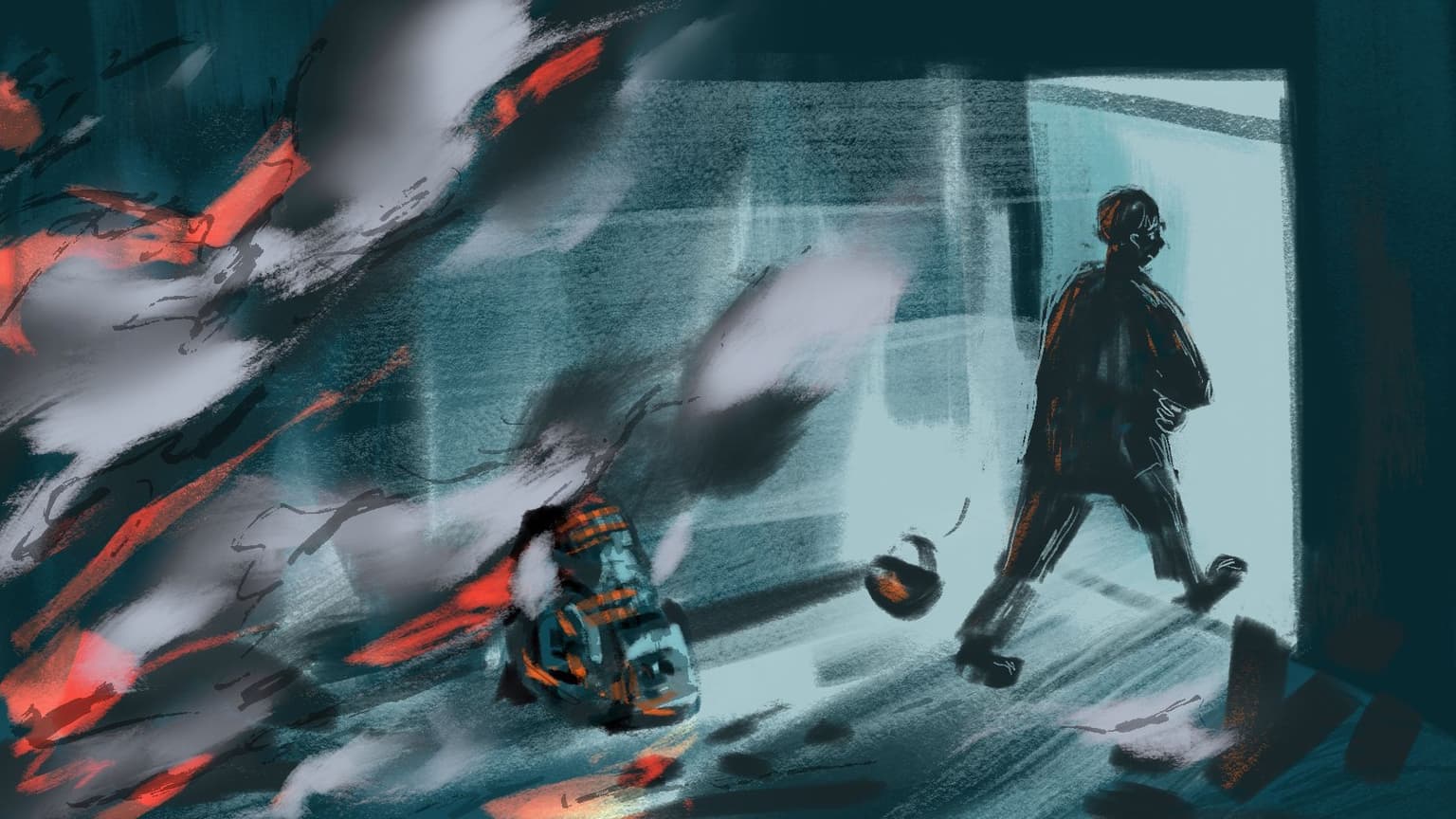
In October 2025, the number of AWOL and desertion cases in the Armed Forces of Ukraine reached a record 21,602. (Karolina Gulshani / The Kyiv Independent)
 on Google
Panic attacks have haunted Ukrainian serviceman Yaroslav since he returned home in the summer, leaving him gasping at night.
Frustration with his commanders drove the 33-year-old to go absent without leave (AWOL), joining a growing number of Ukrainian soldiers who have left their units without permission. For Yaroslav, then a deputy platoon commander, it began with what he described as his leadership's "indifference" to soldiers' lives.
Yaroslav said his command kept ordering missions that, in his view, led to avoidable casualties, including long marches across open fields under drone threat, and at times failed to supply front-line troops, unwilling to learn from what he saw as repeated mistakes. Over time, he said, the feeling that he could not change anything broke him.
"(The commander) knows where he is sending the guys, and he, the pr*ck, still sends them to, you could say, death," Yaroslav, who enlisted in the military in 2015, told the Kyiv Independent.
Yaroslav said he witnessed similar issues in two mechanized brigades throughout the full-scale war. Of the roughly 40 to 50 soldiers he served with in the second brigade in the summer of 2023, Yaroslav said about half were killed in action, and he was among the last survivors to go AWOL.
"We would have had enough guys (in the army) if (the commanders) valued these people," Yaroslav told the Kyiv Independent.
The spike in AWOL and desertion comes as Ukraine faces a deepening infantry shortage on the front line, allowing Russian troops to probe and advance in thinly manned sectors. Ukrainian officials have begun publicly acknowledging the scale of the problem: New Defense Minister Mykhailo Fedorov said in his Jan. 14 appointment speech that 200,000 soldiers are currently AWOL.
In October 2025, the number of AWOL and desertion cases reached a record 21,602, Ihor Lutsenko, a former lawmaker who serves in the military, said, citing the Prosecutor General's Office.
Lt. Col. Kyrylo Berkal, a deputy commander of the elite Third Army Corps, told the Kyiv Independent that if combat-capable soldiers returned from AWOL or desertion, Ukraine would gain the capability to "conduct counteroffensive operations across the entire front."
AWOL refers to soldiers who leave their units without permission but intend to return, whereas desertion denotes soldiers leaving to evade military service indefinitely, including by finding civilian employment, forging documents to alter their identities, or fleeing abroad. Both are crimes under Articles 407 (AWOL) and 408 (desertion) of Ukraine's Criminal Code, punishable under martial law by 5 to 10 years in prison for AWOL and 5 to 12 years for desertion.
"There is no inevitability of punishment."
It’s hard to know exactly how many soldiers have deserted or gone AWOL – the Prosecutor General’s Office ceased publicizing AWOL data in November 2025 and declined to provide it to the Kyiv Independent, stating that disclosure under martial law could discredit Ukraine’s defense forces and harm state interests. So did the General Staff.
However, both anecdotally and in rare instances that the numbers trickle into the public domain, both categories — AWOL and desertion — are on the rise.
Some of that increase reflects soldiers who used going AWOL as a common, albeit illegal, shortcut to transfer between units to avoid a lengthy bureaucratic process, though this practice has recently been clamped down on in 2025. The General Staff said it now sends the returnees to reserve battalions before dispersing them to units based on priority.
In the past, Ukraine has tried to deal with soldiers who went AWOL. Back in 2024, Ukraine’s parliament passed a bill granting a one-time amnesty to those who returned. Authorities said it prompted over 29,000 soldiers to return to the army after going AWOL from November 2024 to August 2025.
The lack of punishment exacerbates the issue, according to military lawyer Oleh Leontyev, who runs a Facebook group providing legal support for soldiers with over 20,000 members. The conditions are "ideal" for AWOL soldiers or deserters to live almost normally in big cities like Kyiv, Leontyev said, by finding work to stay afloat while some still hide at home.

Three deserters the Kyiv Independent spoke to said they found construction jobs, often alongside others who fled the army, and said they still go out to restaurants and cafes on their days off — even though they are supposedly wanted. Officials agreed that law enforcement is overwhelmed by the volume of such cases and overstretched with other duties.
"There is no inevitability of punishment," Leontyev told the Kyiv Independent, stressing that only individual soldiers' values are holding them back from going AWOL or deserting.
The most common reasons for soldiers to go AWOL or desert are conflicts with their commanders, exhaustion, a psychological breakdown through the fear of death, and the constant constraint of resources — from manpower to weapons and cars, according to interviews with deserters, commanders, psychological support officers, officials, and civil activists. The harsh brutality of the war grinds soldiers down, from repeated losses to one too many close calls, especially as manpower shortages make breaks in the rear increasingly rare.
While commanders and soldiers may sympathize with some cases, many still view AWOL and desertion as a "betrayal" that leaves those who stay to cover the gap. Soldiers who had gone AWOL and deserters, such as Yaroslav, spoke to the Kyiv Independent either on condition of anonymity or by first name only, out of fear of punishment.

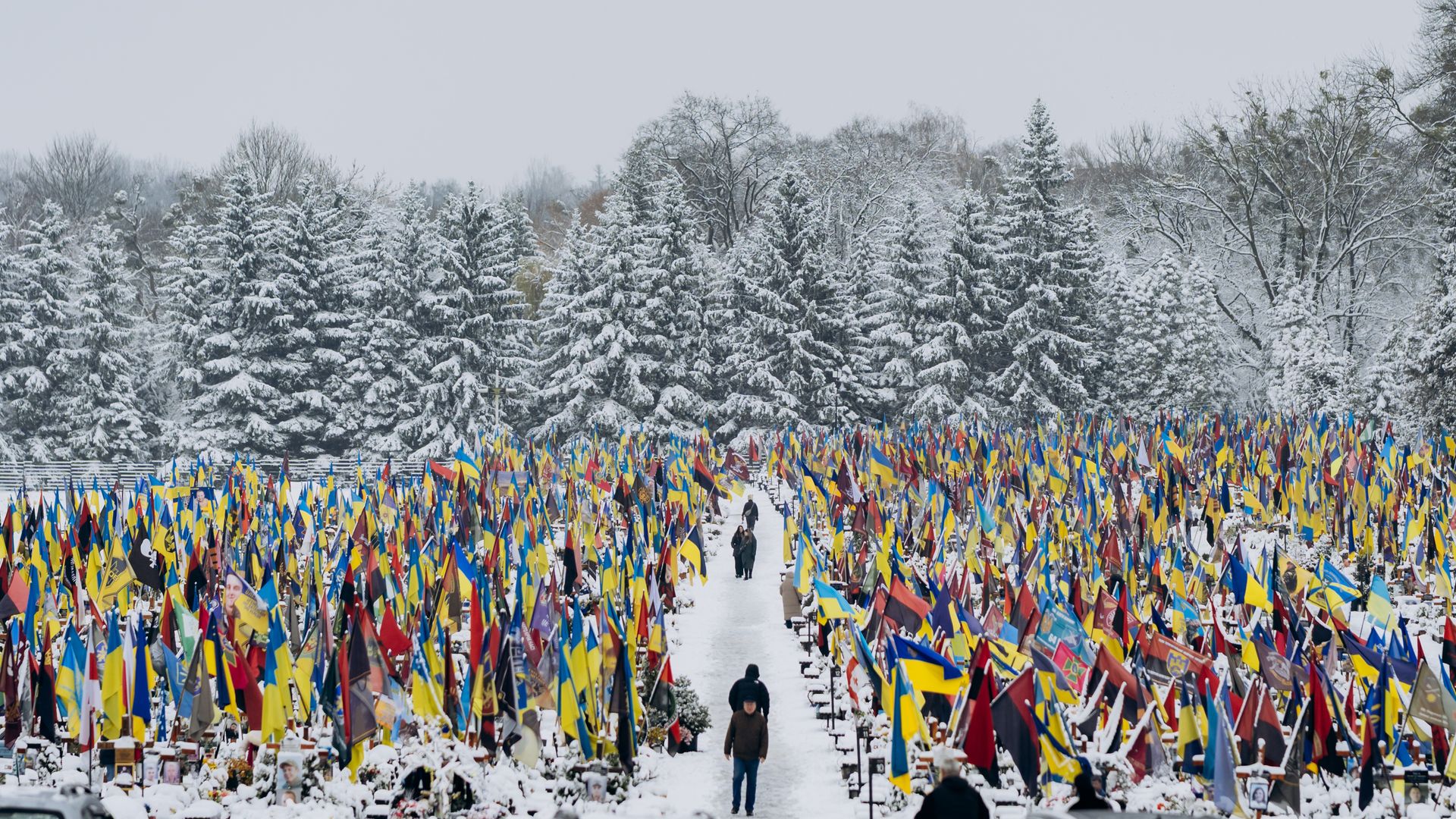
Losing trust in command
For many soldiers, the decision to walk away begins with a loss of trust in the command after one or more orders that feel like a death sentence.
Such orders often stem from the Soviet-style top-down command structure, in which senior leadership orders subordinates to hold certain positions at all costs, without regard for the realities on the ground, officers told the Kyiv Independent.
For Illia, a 30-year-old who deserted after serving in the army for half a year in 2024, it took seven missions he perceived as "one-way" orders before he completely lost his trust in the command. He was deployed near the fiercely contested city of Pokrovsk in eastern Donetsk Oblast for half a year in 2024, serving as a tank crew commander.
"You either get killed, or you get killed — there is no other option."
The first mission in May 2024 was already rough, Illia said, when a Russian guided aerial bomb (KAB) narrowly missed his tank and another tank nearby was destroyed, killing its crew.
In his last mission near Pokrovsk, another KAB strike left his crew badly shaken and their vehicle disabled. Commanders promised an evacuation that never came, so they walked out to a friendly position through the minefield for a ride back. Illia refused to return to the front and deserted in October 2024. He simply drove off from Donbas and then hopped on a bus in adjacent Dnipropetrovsk Oblast.
His 10-year-old daughter repeatedly begged him, "Don’t die," Illia said. "You either get killed, or you get killed — there is no other option," he added.
Being sent on mission after mission that soldiers like Illia see as one-way, and left without evacuation or timely withdrawal plans, erodes their trust in the chain of command.
Company and platoon commanders who spoke to the Kyiv Independent said they often try to push back against what they see as "meaningless" orders that could cause avoidable casualties, but still end up sending soldiers out when higher command insists the unit hold positions at all costs.
Another deserter, Ruslan, enlisted in 2020 but has been on the run since going AWOL from his mechanized brigade in March 2022. He described one assault mission in northeastern Kharkiv Oblast as decisive. The mission was to liberate a village near Balakliia, Ruslan said, but his roughly 70-man company was sent in after being told it was empty, and only 16 men made it back. Ruslan said the survivors later confronted the commander, who, he said, admitted he knew roughly 2,000 Russian soldiers were defending the village.
"I just can’t wrap my head around it, how the commander could do that," the 28-year-old told the Kyiv Independent.
"I am a patriot, but I'm not ready to die and feed the earth for the sake of (someone's) medals and promotions," he said.
His escape was a two-day walk to Kharkiv. Ruslan and four others found an empty house, where they changed into civilian clothes, sleeping during the day, and walking only at night.
Sometimes, the reasons are more case-specific. A soldier who went AWOL in September 2024 said he left after commanders transferred him to the infantry, despite having served in the artillery since the start of the war. He volunteered in 2022, but said his chronic leg injury worsened during service, making it impossible to walk for kilometers under drones and artillery, as infantrymen often must to reach the front.

Some of the officers who spoke to the Kyiv Independent said specialist troops are sent to infantry to plug gaps when losses leave units unable to hold the line, while others called it "a waste of resources," noting it takes months to develop their skills.
Multiple company commanders also stressed that they rarely receive replenishment for their infantry units and that, in their experience, the few new soldiers who arrive are poorly trained or physically unfit to fight, often due to age. This forces them to extend their soldiers' deployment on the front, sometimes for weeks or months, as they must obey orders to hold their unit's positions.
Andrii Podik, head of the Ground Forces’ Communications Department, said commanders earn soldiers’ trust by staying present and proving their competence. But an officer who has been fighting since 2015 said that trust can fray quickly under sustained pressure.
"When you are constantly on the verge of death, a person can't be fully prepared for this," said the officer, who goes by the callsign "Owl."
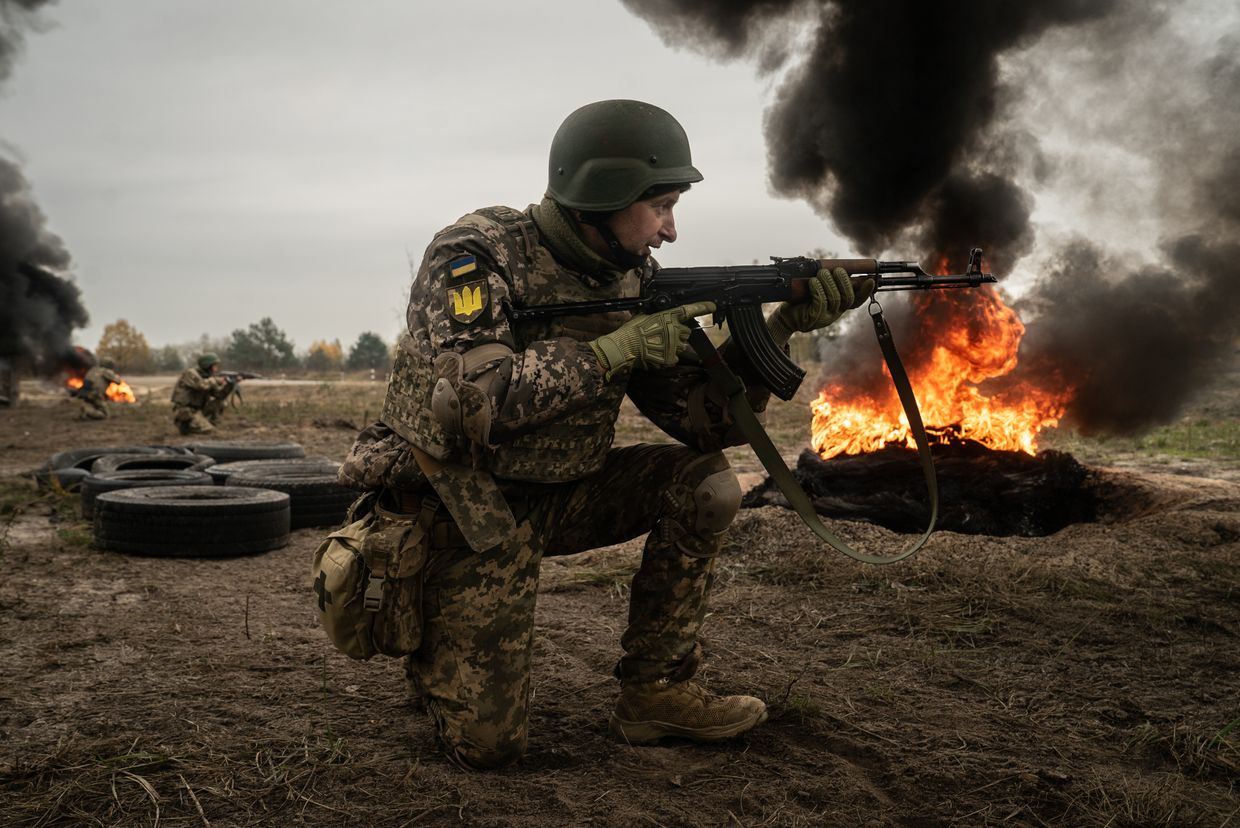
An easy way out of exhaustion
That strain takes a toll: What feels like endless back-and-forth between the front and the rear can wear soldiers down, especially as shortages keep deployments longer, psychological support officers say.
"(Soldiers) are being squeezed to their limit, because there aren't enough people, so they sit outside for months at a time," a psychological support officer with the 80th Airborne Brigade, who goes by his callsign Matvii, told the Kyiv Independent.
Battle-tested brigades are often rushed from one hot spot to another without time to rest or rebuild, as Ukraine’s mobilization struggles to replace heavy losses with motivated new troops, soldiers and officers say. A Ground Forces officer who spoke anonymously said that with each brigade covering about 15 kilometers (9 miles) across a front that extends over 1,200 kilometers (746 miles), it’s nearly impossible to conduct rotations without doubling the army size.
Ruslan Gorbenko, a deputy committee chairman in parliament who regularly visits front-line areas and speaks with brigade commanders, said some brigades are operating at only 30% capacity due to a lack of new, motivated soldiers, a claim echoed by the Ground Forces officer.
"There is also the question of fairness, with (soldiers asking) why another person can continue living normally and not have to fight," the officer said.
Solution in limbo
Commanders who spoke with the Kyiv Independent said Ukraine needs to address the military's command culture and management system, which are driving AWOL and desertion, rather than relying on punishment alone.
Lt. Col. Bohdan Krotevych, the former chief of staff of Ukraine’s well-known Azov Brigade, blamed the "unhealthy management system" that the Ukrainian military leadership has built for the uptick in AWOL and desertion, and said he sees little evidence that the army is analyzing the root causes of the issue.
"The longer this distorted system exists, the more personnel we will lose and the worse the situation on the front will become."
"(Army) reforms should have been carried out a year ago," Krotevych told the Kyiv Independent, calling the AWOL issue "critical."
"The longer this distorted system exists, the more personnel we will lose and the worse the situation on the front will become."

Fedorov, the new defense minister, listed an analysis of the commanders' performance, not based on rank but on results, as one of the key steps to be taken during his Jan. 14 speech. He stressed that there is "a large number" of issues that the army faces, including the Soviet-style way of commanding troops, and they needed to be addressed immediately.
The General Staff declined to answer detailed questions but said steps had been taken to curb AWOL and desertion, such as improving medical examinations during basic training or easing procedures for soldiers who couldn't return to service due to serious illness or injury.
Officials have also pointed to steps aimed at prevention and retention. Podik said the Defense Ministry and the General Staff are discussing additional measures and have taken steps, including expanding psychological support and establishing a unit to identify the preconditions for AWOL and desertion.
To reduce AWOL and desertion cases, it is crucial for commanders to prioritize soldiers' lives in planning operations, as they are "the most valuable asset," according to Lt. Col. Berkal, the deputy commander of the elite Third Army Corps, formerly the Third Assault Brigade. He said trust often hinges on junior leadership — sergeants and small-unit commanders — who set standards and enforce discipline.
"Soldiers who feel cared for from the moment of high-quality training to the moment of combat operations understand the price of their presence in the war," Berkal, who goes by his callsign "Kirt," told the Kyiv Independent.
Some of the soldiers who had gone AWOL are returning. The Ground Forces officer stated that, as of summer 2025, when he last had access to data, approximately 30 percent of soldiers who went AWOL were returning to service.

Taras Chmut, the head of Come Back Alive, a major Ukrainian charity foundation that supports the military, said that the authorities are likely aware of the reasons behind the AWOL issue, but the question is whether they possess the capacity and the competence to address it.
Chmut stressed that the AWOL issue is "a problem for the state," and said Ukraine should stop treating it as solely the military’s responsibility.
"The question is, will we do something about this, or will we do nothing at all?" Chmut told the Kyiv Independent.
"If the state does not want to lose the war, it has to do something about these problems."
A note from the author:
Hi, this is Asami, the author of this article. Thank you for reading it till the end. At the Kyiv Independent, we try our best to shed light on both positive and alarming developments in Ukraine. It's our job as journalists. This was particularly difficult to cover, from finding deserters who would speak to us to convincing the interviewees why it's important to report on it. Please consider supporting our reporting, which is available without a paywall thanks to the support of our members.