Fact check: False 'mass exodus' claims spread as Russia bombards Kyiv
 on Google
As Russia continues its aerial onslaught against Kyiv, disinformation online alleges that citizens are fleeing in droves, painting a picture of collapse and panic.
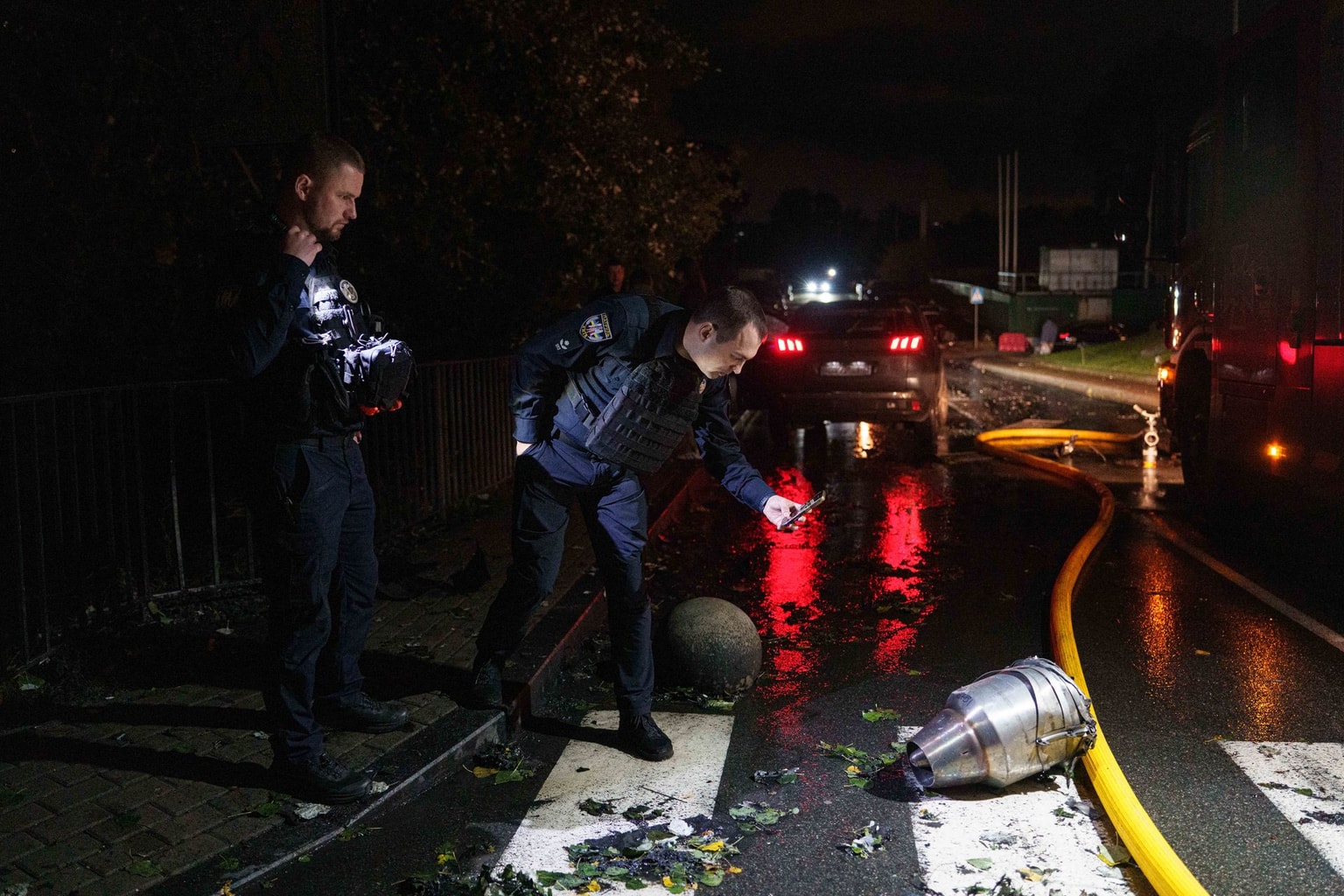
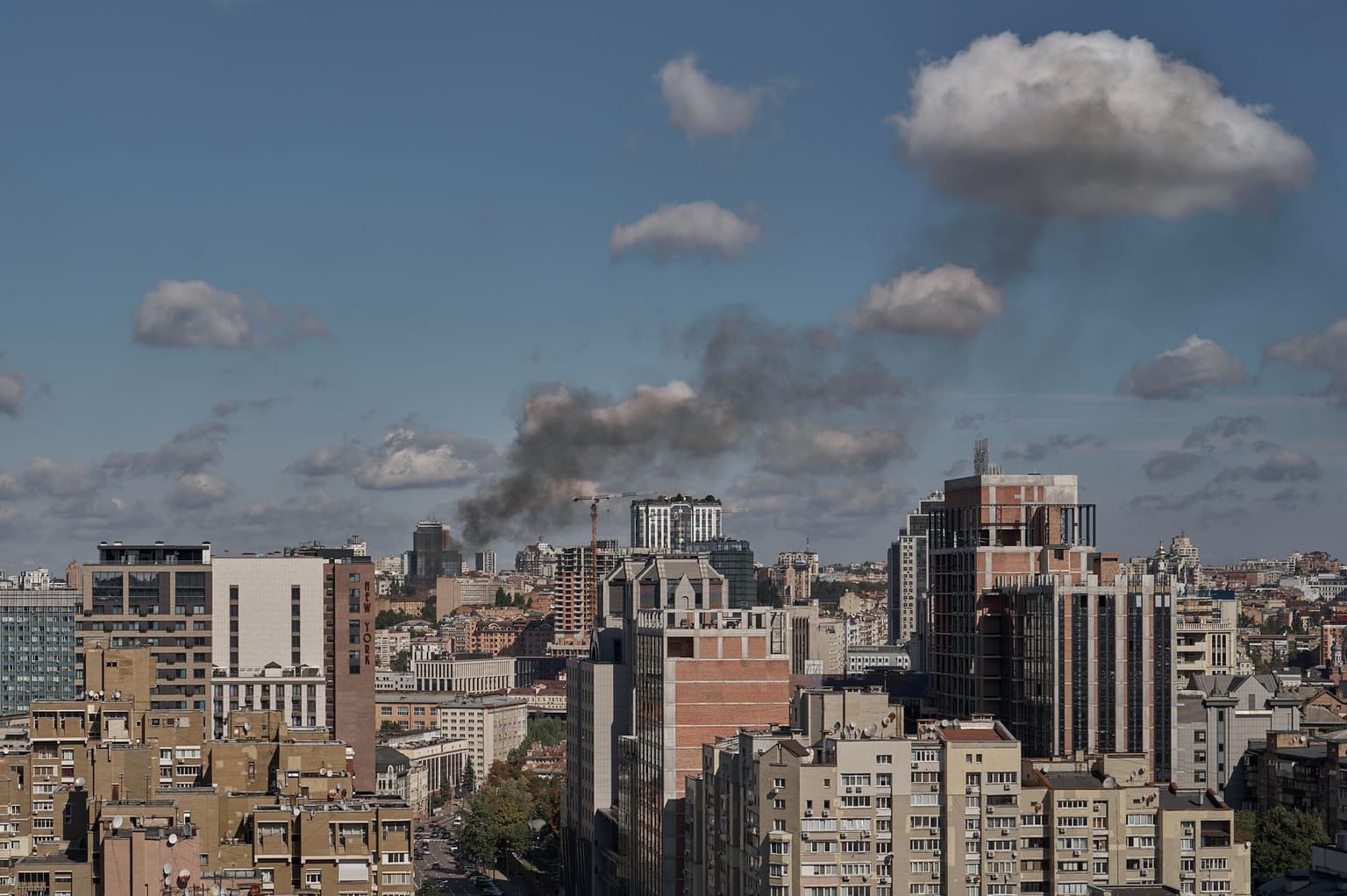
For more than a week, Moscow's forces have attacked Kyiv every single day, disrupting businesses, schools, and the daily lives of its residents.
But hand in hand with these strikes, social media accounts have shared photos and videos purportedly showing traffic jams and crowds of Kyiv residents attempting to escape the capital.
These included out-of-context videos of Kyiv city traffic or photos not taken in Ukraine at all, all accompanied by manipulative or false text.
One Sept. 1 post on X that garnered half a million views, accompanied by the text "mass exodus of civilians leaving (Kyiv)," shows what appears to be, in fact, a rush-hour scene at a Kyiv metro station. The city's metro does not reach beyond Kyiv's limits.
Another post from Aug. 29 shows nighttime footage of a massive traffic jam at a toll booth that spans dozens of lanes, captioned "Massive traffic jam to leave Kyiv: residents are fleeing the city."


Barring the fact that Kyiv has no road of that size, the photo actually shows Wuzhuang Toll Station, the largest toll station in China.
Another post, published on Aug. 29 by the official account of Our Country Our Choice — a self-described "America First" group led by retired U.S. colonel and fervent Ukraine critic Douglas Macgregor — purports to show people "fleeing the capital in massive numbers."
The accompanying photo shows a row of cars and a group of men in winter jackets, despite supposedly showing Ukraine in late summer.
The photo predates the current wave of attacks by several years, capturing people moving to the Polish border in western Ukraine shortly after the outbreak of the full-scale invasion in 2022.

Multiple accounts also shared a video of a traffic jam in Kyiv, presenting it as another example of the city's mass exodus.
The original video, published last week, can be traced to the local channel "Kyiv Operative," with a caption that simply describes a traffic jam on the Patona Bridge in central Kyiv amid an air raid alert — with no indication that the cars in the footage are attempting to leave the city.
Similar claims have recently emerged in English- and other foreign-language social media spaces.
When it comes to Ukrainian- and Russian-language social media, the claims have gained relatively little traction, though they are not nonexistent, a disinformation monitoring team at the LetsData tech company told the Kyiv Independent.
LetsData's analysis has detected narratives that paint Kyiv as uninhabitable and its daily life "collapsing" under the pressure of constant air-raid alerts and chaos.
Accounts identified by LetsData as "malign assets" mix real difficulties facing the city's residents with "exaggerated worst-case projections" to achieve a simple goal — create panic and force residents to flee.
Teah Pelechaty, a senior disinformation analyst at the European Center of Excellence for Countering Hybrid Threats (Hybrid CoE), describes the narrative's goal as a "campaign of psychological attrition."
The expert added that whether the content is part of a deliberate Kremlin campaign or is simply being unwittingly shared by users online, it ultimately fits into Russia's broader goals.
"At its core, this kind of narrative functions as a form of terror by other means. Suggestions that Ukraine's capital is emptying, or that its population is fleeing en masse, are designed to make Ukrainians feel isolated, abandoned, and as though resistance is futile," she told the Kyiv Independent.
At the same time, she continued, this narrative also targets foreign audiences in an effort to erode international support.
"If even Kyiv's own residents are giving up on the city, the implicit question becomes why foreign taxpayers should keep funding its defense," Pelechaty explained the reasoning behind the tactic.
Throughout the war, residents of Kyiv — as well as other cities and regions more exposed to Russian attacks — have sought refuge in relatively safer western regions.
And while the latest wave of strikes ramps up pressure on the people living in the capital, there is no public data indicating that people have been fleeing the city en masse over the past few weeks.
The last time Kyiv was said to experience such a situation was last winter, when a Russian blitz against the energy grid caused mass blackouts amid freezing temperatures.
Citing mobile user data, Kyiv Mayor Vitali Klitschko said in January that 600,000 people had left the capital, a city with a pre-war population of 3 million. However, the Kyiv City Military administration later said it could not confirm Klitschko's figures.
Disclaimer: This article was produced as part of the F.A.C.T. (Fighting Against Conspiracy and Trolls) project, funded by the European Union through HaDEA. The views expressed are those of the authors and do not necessarily reflect the views of HaDEA or the European Union. Neither HaDEA nor the EU is responsible for any use of the information contained herein.