Exclusive: Trump envoys find Putin still unwilling to compromise on Ukraine
 on Google
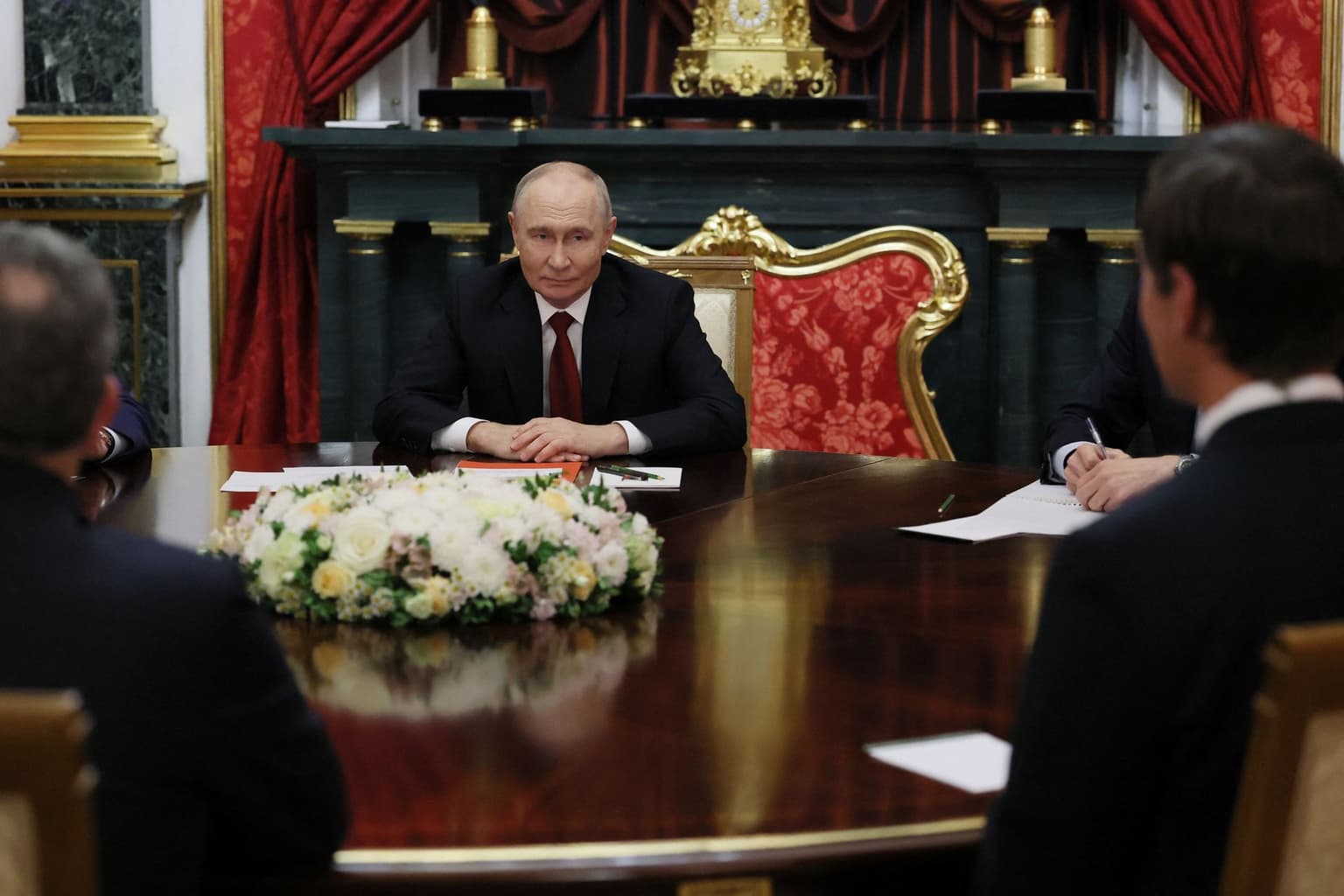
Russian President Vladimir Putin remains committed to escalating his war against Ukraine despite a new U.S. push to revive peace talks, people familiar with the matter told the Kyiv Independent following U.S. President Donald Trump's envoys' visits to Moscow and Kyiv.
Steve Witkoff and Jared Kushner brought revised peace proposals to both capitals, but Moscow appears unwilling to make meaningful concessions, the people said.
The envoys "genuinely want" to make progress toward a ceasefire before winter, one Ukrainian official and one U.S. official said.
"But Putin still hopes to break us this winter and isn't willing to agree to anything," the Ukrainian official added.
The timing of the new peace push was not accidental. Ukrainian and U.S. intelligence increasingly believe Russia is preparing to escalate the war, potentially through a new mobilization drive and another attempt to break Ukraine over the winter.
"Their visit is literally telling (Putin): 'Let's wrap this up; we'll lift the sanctions and move your assets somewhere before this goes any further,'" the official added.
For now, however, the U.S. effort has produced little more than an agreement to resume trilateral negotiations — while Moscow continues to reject the central ideas behind a potential ceasefire.
New push, old demands
Witkoff and Kushner traveled to Moscow on Sept. 5, just a day before making their first official visit to Kyiv in an effort to restart a peace process that has been deadlocked since earlier this year.
The most tangible result of their trip was an agreement between Ukraine, the U.S., and Russia to resume trilateral negotiations.
Previous rounds of such talks produced few political results but led to major humanitarian initiatives, including prisoner-of-war exchanges.
People familiar with the negotiations told the Kyiv Independent that the U.S. envoys arrived with revised versions of earlier peace proposals. The changes reflected developments since negotiations stalled in February, when the U.S. war with Iran began.
But Moscow's position has changed little.
"The Russian army's successes were noted; confidence was expressed that the set objectives would be achieved; and, of course, the need to eliminate all the root causes of the conflict was emphasized," Kremlin aide Yuri Ushakov told reporters after the Moscow meeting.

Russia continues to insist that Ukraine withdraw from Donbas, which includes the partially occupied Donetsk and Luhansk oblasts, as a key condition for peace.
Moscow is effectively demanding that Kyiv surrender territory that Russian forces have failed to capture militarily.
One new proposal involved a potential truce in the air, either focused on energy infrastructure or halting aerial strikes altogether, one person familiar with the talks said.
Russia opposed the idea.
Little to announce
With no major breakthrough on peace, much of the Sept. 6 discussions in Kyiv focused instead on preparing Ukraine for another difficult winter.
Ukrainian officials said the talks brought progress on winter preparedness, with air defense emerging as one of the main issues.
Ukraine faces a severe shortage of Patriot interceptors, particularly PAC-3 missiles, which are among the few weapons capable of effectively intercepting the Russian ballistic missiles Moscow has increasingly used to attack Kyiv.
President Volodymyr Zelensky publicly confirmed that progress had been made.

"If the war continues — and we expect the war will continue — we are counting heavily on the winter aid package... on support for both air defense and the energy sector," Zelensky told reporters during a Sept. 6 press conference.
"The American side will increase the production volumes of anti-ballistic missiles, Patriot systems next year... we are counting on such systems to protect our state."
Still, one Ukrainian official said the U.S. envoys were reluctant to discuss details of the talks publicly at subsequent press conferences, with the official seemingly acknowledging that the visit had produced little in the way of a breakthrough.
By the end of the talks, the official said, all sides had little to announce at the subsequent press conference.
Moscow's message
The two envoys heard little that was new during their visit to Moscow, according to people familiar with the talks. Russia does not appear willing to end the war without achieving its goals in Ukraine.
Russian officials were also unhappy that Witkoff and Kushner planned to travel to Kyiv after visiting Moscow.
Ukrainian airports had been prepared for the envoys to arrive by plane, but Russian aerial attacks, including strikes near the capital's airport, prevented that option.

The trip nevertheless marked Witkoff and Kushner's first visit to Ukraine's capital, despite their previous trips to Moscow, where they met with Putin.
Russian officials advised the envoys against traveling around Kyiv, one Ukrainian official said. The Kremlin "made it clear" that it did not want Ukrainian officials taking the envoys to sites destroyed by Russian attacks, the person added.
Despite that, the Ukrainian president met the two U.S. envoys in the heart of Kyiv, at Sofiiska Square. Most of the photographs from the meeting were taken against the backdrop of a memorial to Ukrainian soldiers killed in the war.
Different roles
Ukrainian officials welcomed Kushner's active involvement in the negotiations, saying he has consistently tried to develop new ideas and present proposals to both sides.
They described Witkoff as less engaged in the process itself.
At the same time, Ukrainian officials said the U.S. administration has a clear understanding of the situation on the ground. U.S. intelligence agencies have provided detailed assessments of developments in the war.
According to the officials, both Witkoff and Kushner understand the potential for further escalation as Putin prepares for a possible new mobilization drive. Ukrainian intelligence has reached a similar assessment.
Yet this understanding has so far failed to produce a breakthrough.
The main obstacle remains Moscow's unwillingness to compromise and Putin's belief that Russia can break Ukraine over the coming winter.
"Russia still has plenty of self-confidence," Zelensky told reporters.
The U.S. side, the officials said, also does not appear to believe that increasing pressure on Russia alone will be enough to change Putin's calculations.
That leaves the new peace process facing the same problem that stalled the previous one: Washington and Kyiv are looking for a way to stop the war, while Putin appears to believe that another winter of fighting could still bring Russia closer to victory.