EU's Costa keeps Ukraine funding talks on late-November agenda despite Merz appeal
 on Google
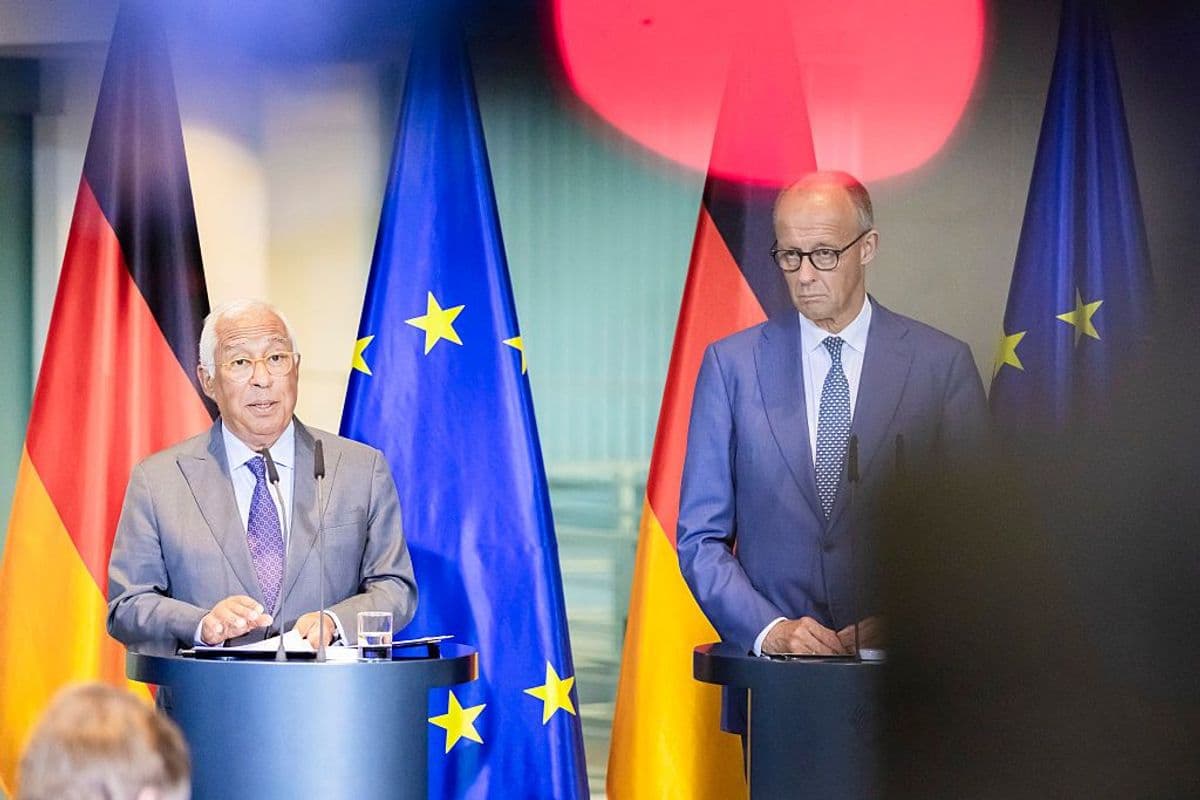
European Council President Antonio Costa has kept discussions over Ukraine's financing needs for 2027 on the late-November agenda, despite German Chancellor Friedrich Merz's request to prioritize the issue at an earlier meeting of EU leaders.
In a letter to Merz seen by the Kyiv Independent on Nov. 10, Costa affirmed that Ukraine's financing needs would be addressed at the second of two special European Council meetings, this one to be held in Brussels in late November, alongside discussions on the EU's next seven-year budget.
"We will address this issue in the Special European Council on 26-27 November," Costa wrote, adding that the European Commission would be expected to submit a proposal on Ukraine's financing before the meeting.
The reply comes after Merz wrote to Costa urging him to prioritize Ukraine's funding shortfall at the earlier summit to take place on Nov. 13 in Dublin, arguing that European countries were sharing the financial burden of supporting Kyiv disproportionately.
Ukraine faces an estimated budget shortfall of 70 billion euros ($78.6 billion) in 2027, with the EU expected to cover approximately 45 billion euros ($50.5 billion).
In his Nov. 9 letter, Merz argued that providing financial support to Ukraine was a shared European responsibility, while complaining that bilateral assistance was being carried unfairly by a small number of member states.
Costa's response indicates plans to "make time for a broad discussion on Ukraine at the upcoming informal European Council in Dublin", but leaves the previously scheduled financing discussions unchanged.
The EU has yet to come to an agreement on how to finance its share of Ukraine's projected shortfall, with some member states resisting additional contributions. Slovakia, Czechia, Hungary and Bulgaria have pushed back against Germany's demand that all EU members share Ukraine's financing burden.
Slovak Prime Minister Robert Fico has called Merz's approach “blackmail.”
The special European Council meeting on Nov. 26–27 is also scheduled to address the bloc's next multiannual financial framework, covering 2028–2034.