EU carbon rules could deal heavy blow to Ukraine’s struggling steel sector, report warns
 on Google
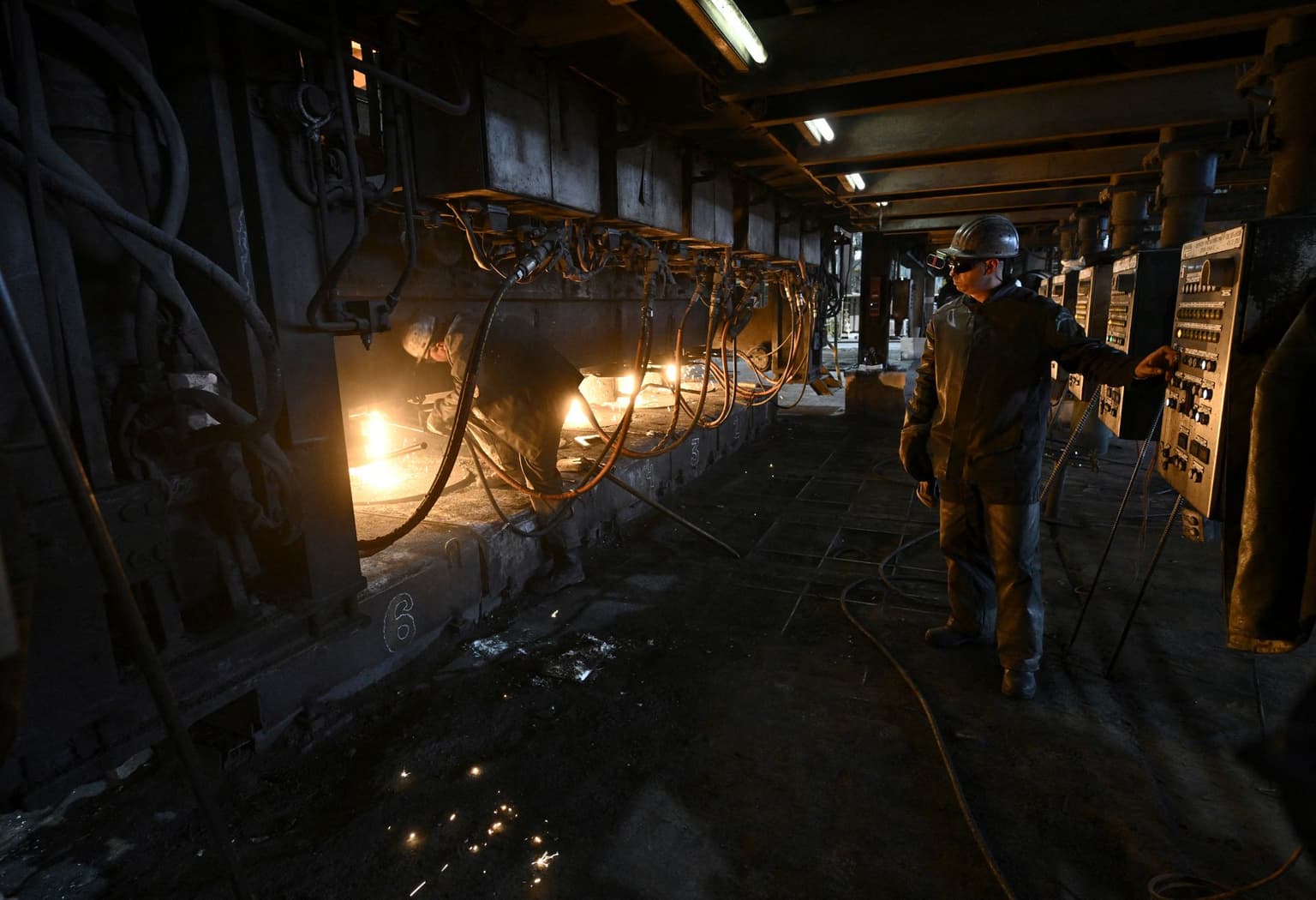
Ukraine could lose $1.4 billion by 2027 under the EU’s carbon border policy, which could slash its iron and steel exports to the bloc by half, according to a new report by the German Economic Team (GET), a Berlin-based consultancy, and the Institute for Economic Research (IER), a Ukrainian think tank.
The EU's Carbon Border Adjustment Mechanism, known as CBAM, has been highly divisive in Ukraine. While Brussels said last year it would have only a minimal effect on the economy, reducing gross domestic product (GDP) by just 0.01%, Kyiv argues that the real impact will be considerably larger.
According to the report — which was conducted in April to cut through the arguments on both sides — "the short-term impact of CBAM on Ukraine will be strong and front-loaded" and higher than the EU expected.
GET and IER predict that CBAM will shave off 0.7% of Ukraine’s GDP as exports to the EU fall by $1.392 billion over 2026-27. Iron and steel producers alone, which depend on the EU market, will lose around $1.2 billion, or about half of their exports to the EU.
This paints a better picture than what the metallurgy sector warned of — a 2.3% cut to GDP — but it’s still worrisome for Ukraine's struggling steel sector, which is under pressure from high electricity costs, disrupted supply chains, and damage from Russian attacks.
But the cement sector, which is far smaller than the metallurgy sector, faces a "near-total collapse," with volumes falling by 96%.
Following CBAM’s launch in January 2026, the EU requires importers to purchase certificates covering the CO2 emissions tied to carbon-intensive goods, such as metals and fertilizers, produced outside the EU, including Ukraine.
The policy is designed to prevent "carbon leakage," or pushing pollution to other countries, by ensuring that imports face similar costs to those imposed on EU producers.
Around 15% of Ukraine’s exports to the EU fall under CBAM. Iron and steel are the most exposed, as they account for 92% of those exports, according to the report.
The main issue concerns the default carbon emissions rates for non-EU producers, which Ukrainian officials have said are "unjustifiably" high and far above the actual output of its steelmakers.
While Brussels is currently establishing an emissions verification program, which will allow EU-accredited verifiers to visit factories and test emissions, it won’t start until September.
The high rates have pushed up the prices of Ukraine’s iron and steel products, with a sector-average CBAM cost of $146.6 per metric ton in 2026, which will rise to $178.6 per metric ton in 2027, according to GET and IER.
Mauro Longobardo, the CEO of ArcelorMittal Kryvyi Rih, a steel producer, said that once EU customers learned about the additional duty, $60 to $90 per metric ton in its case, they canceled all orders for the first quarter of 2026.
The government needs to find a way to make on-site audits possible during the war, the report stresses. To do this, Kyiv should collaborate with verification bodies and EU partners, as well as seek funding to support independent verifiers.
"The most urgent task is to get Ukrainian exporters off punitive default values. This means building plant-level emissions measurement and reporting capacity now, before the 2027 verification window opens," the report says.
So far, Sweden’s accreditation body has agreed to accredit Ukrainian verification bodies, which will speed up emissions checks for steel companies.
Since Ukraine is locked in a full-scale war with Russia, which has drastically weakened its economy, Kyiv also has the right to request a force majeure from Brussels to provide some relief from CBAM, the report says.
The report also recommends raising Ukraine’s domestic carbon tax so that more of the revenue remains in the country instead of flowing to the EU. Under CBAM rules, any carbon price already paid in the country of origin can be deducted, meaning importers would not be charged twice.
Currently, Ukraine’s carbon tax is only 0.6 euros per ton — too small to change companies’ behavior or raise significant funds to decarbonize Ukraine’s steel sector.
"Revenues retained domestically should be channeled to a Decarbonization Fund for industrial modernization and structured as bankable projects to attract EU matching grants and blended finance," the report says.