Ukraine Business Roundup — On corruption in Ukraine
 on Google
Editor's note: The following is the May 6, 2026 edition of our Ukraine Business Roundup weekly newsletter. To get the biggest news in business and tech from Ukraine directly in your inbox, subscribe here.
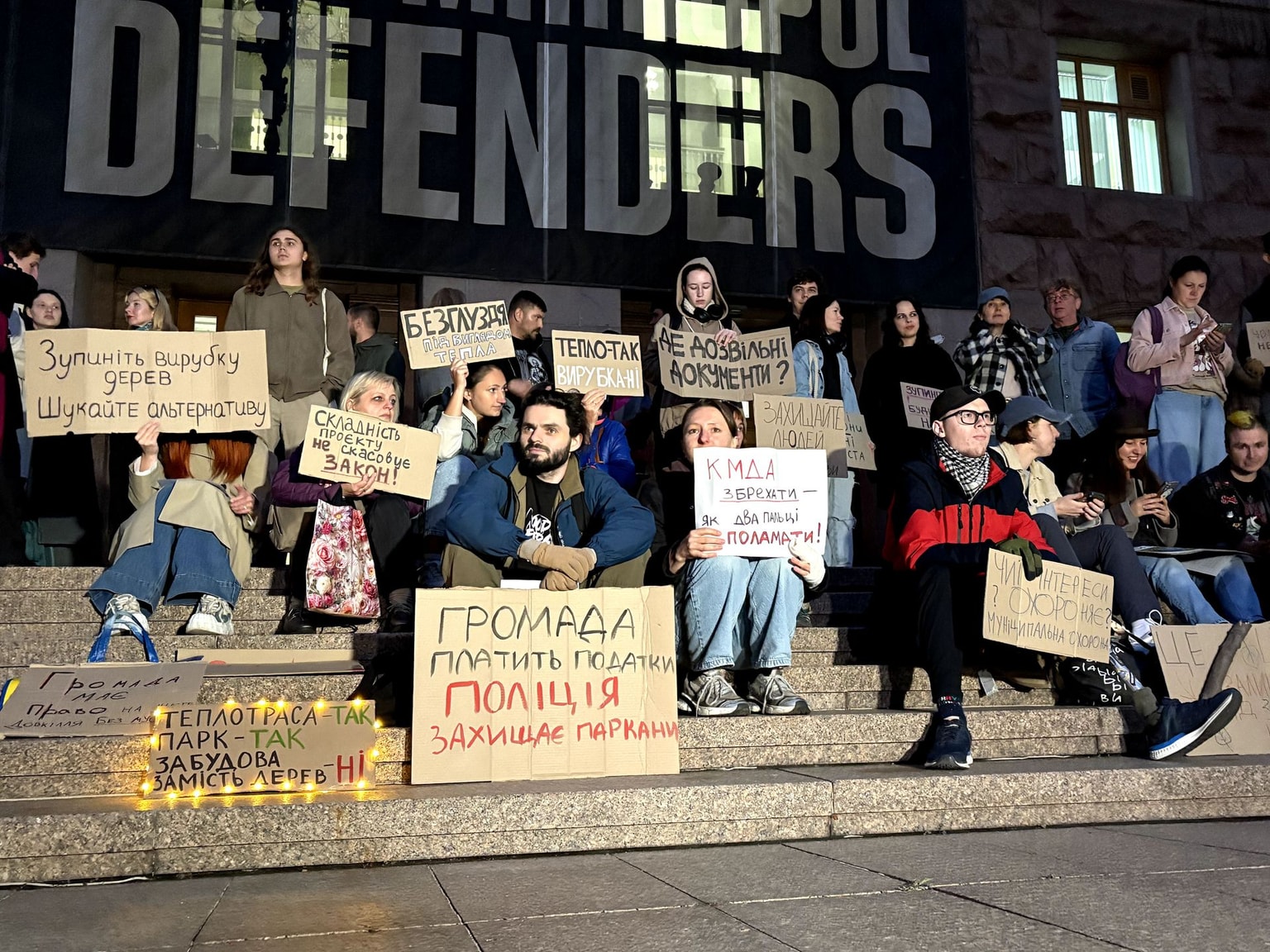
You wouldn't know it from Western media outlets — but the corruption scandal that prompted Ukraine's first wartime protests last summer continues to unfold.
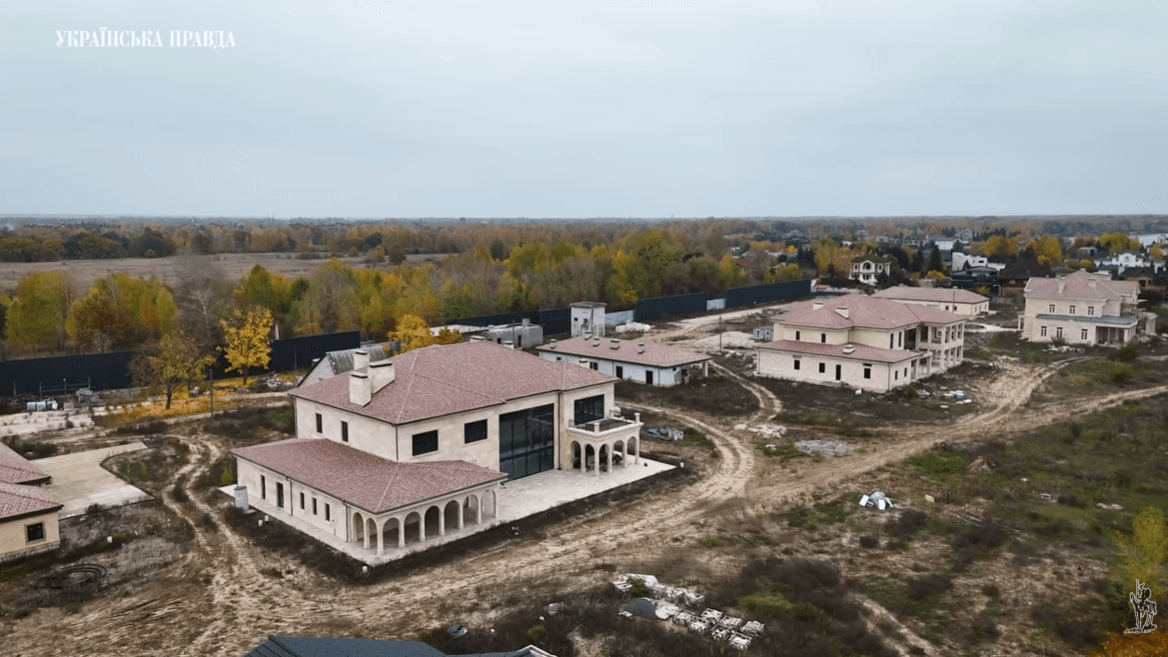
Last week, Ukraine’s leading outlet Ukrainska Pravda (meaning "Ukrainian Truth") published two videos presenting leaked transcripts of wiretap recordings from the National Anti-Corruption Bureau’s "Operation Midas," exposing widespread corruption among senior officials, largely linked to the state-owned Energoatom.
I won't relay every single detail of what the recordings reveal — you can read more about it in our chief editor's weekly newsletter here and on whether the wiretaps implicate President Volodymyr Zelensky himself on our website here.
But in short, the recordings suggest that figures in President Volodymyr Zelensky's inner circle — including former entertainment business associate Timur Mindich — exploited their role in government or connections to it to enrich themselves, their companies, notably defense firm Fire Point (the same one the Kyiv Independent revealed last summer was under investigation by NABU), and possibly used stolen public funds to build mansions.
Other recordings show that other individuals close to the inner circle conspired to get their allies on the state-owned Sense Bank's supervisory board that is supposed to be independent.

I actually have no idea why international media isn't picking this story up. Yes, there's Iran and global oil price shock, but published recordings of tapes where Zelensky himself may be implicated isn't making international headlines? The president should be counting his blessings, honestly.
But I digress.
My initial reaction to the recordings, to be frank, was despair. Hearing Mykhailo Tkach of Ukrainska Pravda read out conversations so crude and coded in criminality, you can hardly believe that, after all the sacrifices Ukrainians have made for a better country — in central Kyiv during the EuroMaidan Revolution and on the battlefield against Russia — that any of this could still be happening.
I was left with a terrible, nagging thought: My god, has anything actually changed…? Are we fooling ourselves to believe the arc of Ukrainian history bends toward justice, or is the country destined to be run by a class of political thugs?
Interestingly, I was forced to answer this question when at lunch today, an acquaintance of mine asked me if I thought there was any optimism left to be had in a country where this kind of corruption continues to exist, especially if the president himself may have been involved.
It gave me pause, and my answer was that, unfortunately, I think we’ll continue to see this kind of behavior in Ukraine for some time. I hold the view that much of it is rooted in a deficit mindset — one shaped by perceived scarcity, where people feel they have to grab what they can while it’s there, or someone else will.
Until there’s greater stability, that sense of unpredictability will keep feeding a survival instinct that puts self-interest first. That’s not to excuse this kind of thuggish behavior, but there are real historical reasons why it exists in the first place that in my opinion can't be overlooked.
But we also discussed that this corruption exists alongside people and businesses that are anything but — those who have built powerful, honest, and innovative businesses despite the instability. My acquaintance (who, by the way, has a very interesting documentary series on present-day Ukraine) drew parallels with his native South Africa: a place where, despite its reputation, you can find it all — from the poorest to the middle class, all the way up to oligarchs and the outright "crooked class."
He noted Ukraine’s IT sector and how it is largely free of corruption. Indeed, and it gets to the heart of the issue: incentives. The sector has long focused on serving Western clients abroad that were hardly going to contract corrupt businesses, pushing IT companies to mirror their clients’ standards. It also deals with very little cash.
I in no way mean to suggest that Ukrainians are hopeless without the help of the West — as already mentioned, there are plenty of Ukrainian businesses that do the right thing without outside involvement — but it is true that businesspeople tend to follow the money. And if they see it flowing freely from state-owned companies or government contracts into the pockets of well-connected individuals, some, if not many, will go that way.
Which is why, I would argue, it’s about creating incentives that change the calculation for businesses and businesspeople. Increased foreign investment and improved investment conditions would help — if companies see competitors attracting capital, they are more likely to shift their strategy. Another step is reducing the role of state-owned companies in major, high-revenue sectors like energy.
Because ultimately, it’s not about fully rooting out corruption — that will never happen — but about slowly squeezing out the "crooked class" by making it less economically attractive to operate that way.
If there is reason for optimism, it’s that better business practices can outcompete the bad ones over time. If that holds, then my answer to my acquaintance's question is a resounding yes.
The roundup: What else is happening this week
1. Exclusive: Ukraine’s Finance Ministry quietly working to convince MPs to vote for unpopular tax change. To get the parliament on board, Ukraine's Finance Ministry is eyeing bureaucracy-reducing IT measures, according to a government official with close knowledge of the matter.
2. Ukraine's central bank slashes growth outlook amid Iran fallout. The bank forecast 1.8% growth in 2026 for Ukraine in January, but dropped it to 1.3% on April 30 during a press conference to announce its key policy rate, which it left unchanged.
3. Ukraine’s economy contracts in Q1 2026. The country’s GDP fell 0.5% year-on-year in real terms in the first quarter, and was down 0.7% compared with the previous quarter, according to official data released Tuesday.
4. Poland's PZU acquires Ukraine's top insurance company. Poland’s top insurance firm, PZU, acquired a 100% stake in Ukraine’s largest life insurer, MetLife on May 4, as Polish companies increasingly move to secure an early foothold ahead of Ukraine's eventual reconstruction.
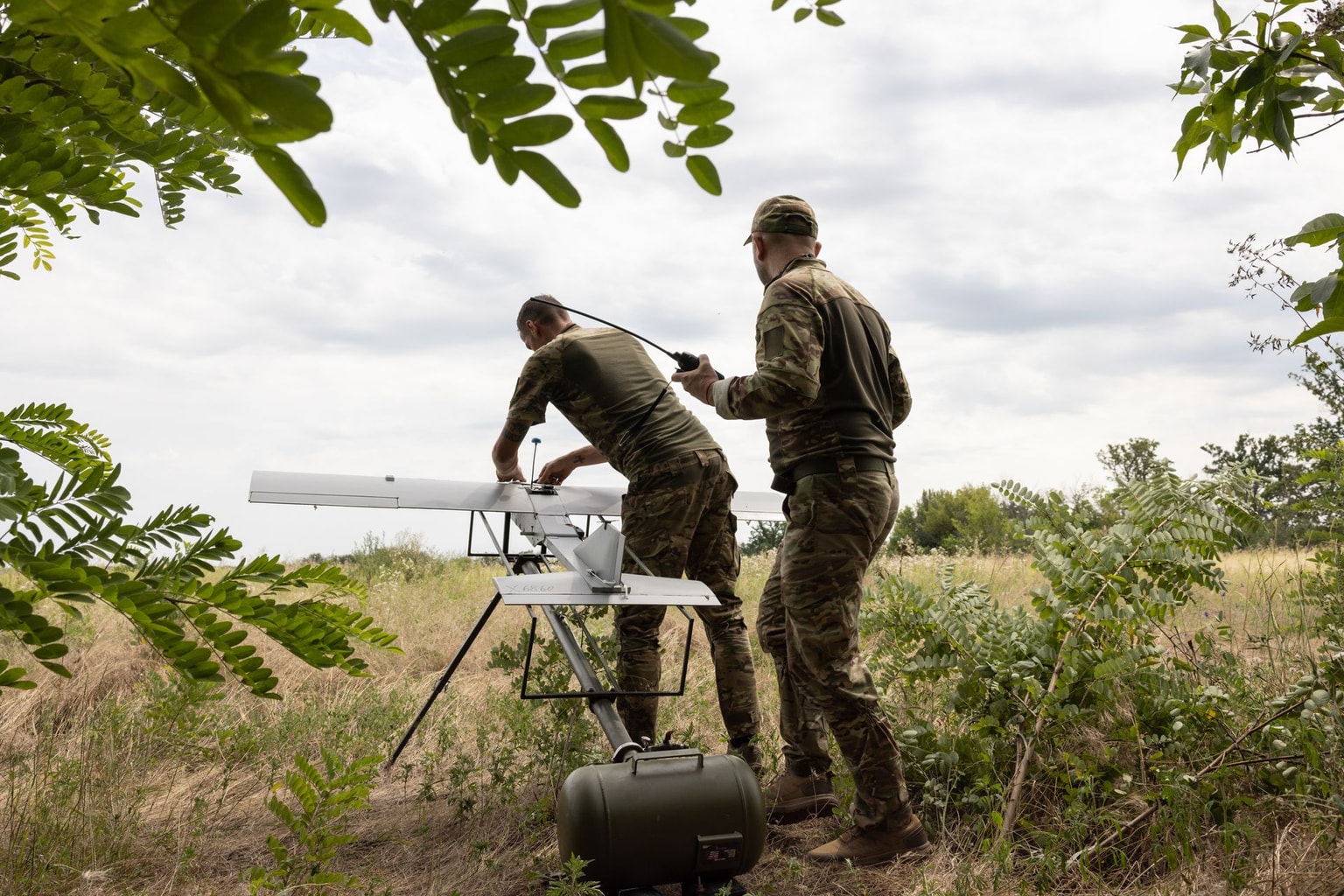
5. Japanese drone maker doubles down on Ukraine as Tokyo eases arms rules. Terra Drone announced a partnership with Ukrainian firm WinnyLab to scale the Terra A2, a long-range fixed-wing interceptor drone. Meanwhile, Kyiv's ambassador to Japan told Reuters that Japan's relaxation of arms export rules could open the door to Tokyo supplying military equipment to Ukraine.
6. Ukrainian company unveils new mid-range drone designed to exhaust Russian air defenses. General Cherry, one of Ukraine’s largest defense tech companies, unveiled its first mid-range strike drone, which it says can carry seven times the payload and has twice the range of standard first-person view drones.
7. Drone damages equipment at Zaporizhzhia nuclear plant in Ukraine. The International Atomic Energy Agency said May 5 that a drone strike damaged meteorological monitoring equipment at the Russian-occupied facility in southeastern Ukraine.
8. Russia hits five Naftogaz facilities in 24 hours, CEO says. The company’s chief said May 5 that the Russian attacks damaged equipment, sparked fires, and forced production to halt at sites in the Sumy and Kharkiv regions, following an earlier strike on a Zaporizhzhia gas pipeline that cut supplies to residents. "The intensity of enemy attacks is increasing," he said.
9. Russia launches more than 10 times as many drones at Ukraine's port infrastructure in 2026 as last year. Russia has launched more than 800 drones at port infrastructure in the first four months of this year, up from 75 in the same period last year.
10. UK considers joining EU 90 billion Ukraine loan to access defense contracts. The European Commission said Britain is in talks to participate in the scheme, which would allow it to tap into Kyiv’s defense procurement funded by the loan, but would require London to contribute to interest costs.
Events
Online
How can Ukraine use 60 billion euros in EU defense funding effectively? Organized by the Center for Economic Strategy (CES), this session is part of its May review of the Ukrainian economy and will focus on the efficient use of EU defense funding. Details: May 21. 4 p.m.–5 p.m. Kyiv time. Register here.
Kyiv & elsewhere in Ukraine
Customs Law and International Trade. Organized by the Association of Lawyers of Ukraine, the event will provide a forum for discussing recent updates in customs law, international trade security, and Ukraine’s long-term economic development priorities. Details: May 7, Lviv. Register here.
UA Energy — International Exhibition and Conference on Ukraine’s Sustainable Energy Recovery. The event will gather policymakers, investors, financial institutions, and technology leaders with the aim of advancing a modern, independent, and more secure energy system in Ukraine. Details: May 12–14, Kyiv. Register here.
Ukraine Financing Forum. An in-person forum bringing together international financial institutions, investors, and Ukrainian corporates to discuss how capital is being deployed in Ukraine and how to scale investment for recovery and growth. Details: May 20. Kyiv. Register here.
V Foreign Investment Congress. An event bringing together global investors, businesses, and officials to support private investment in Ukraine’s recovery. Details: May 28–29, Kyiv. Register here. The Kyiv Independent will be a media partner at the event, and readers of this newsletter get a 10% discount using the promo code 2X3NP5.

Around the world
Business Forum: U.S. Private Sector Engagement in Ukraine’s Reconstruction. A forum connecting U.S. and Ukrainian officials, investors, and industry leaders on opportunities in Ukraine’s recovery across key sectors ahead of URC 2026. Details: May 18, 2026, 12:30–5:30 PM. Washington, D.C. Followed by a rooftop cocktail reception. Register here.
Ukraine Recovery Conference (URC 2026). A hybrid international conference focused on mobilizing support for Ukraine’s reconstruction and unlocking investment opportunities for Ukrainian businesses across key sectors. Details: June 25–26. Gdansk, Poland. More details here.