Children are the bellwethers of Ukraine's post-war recovery
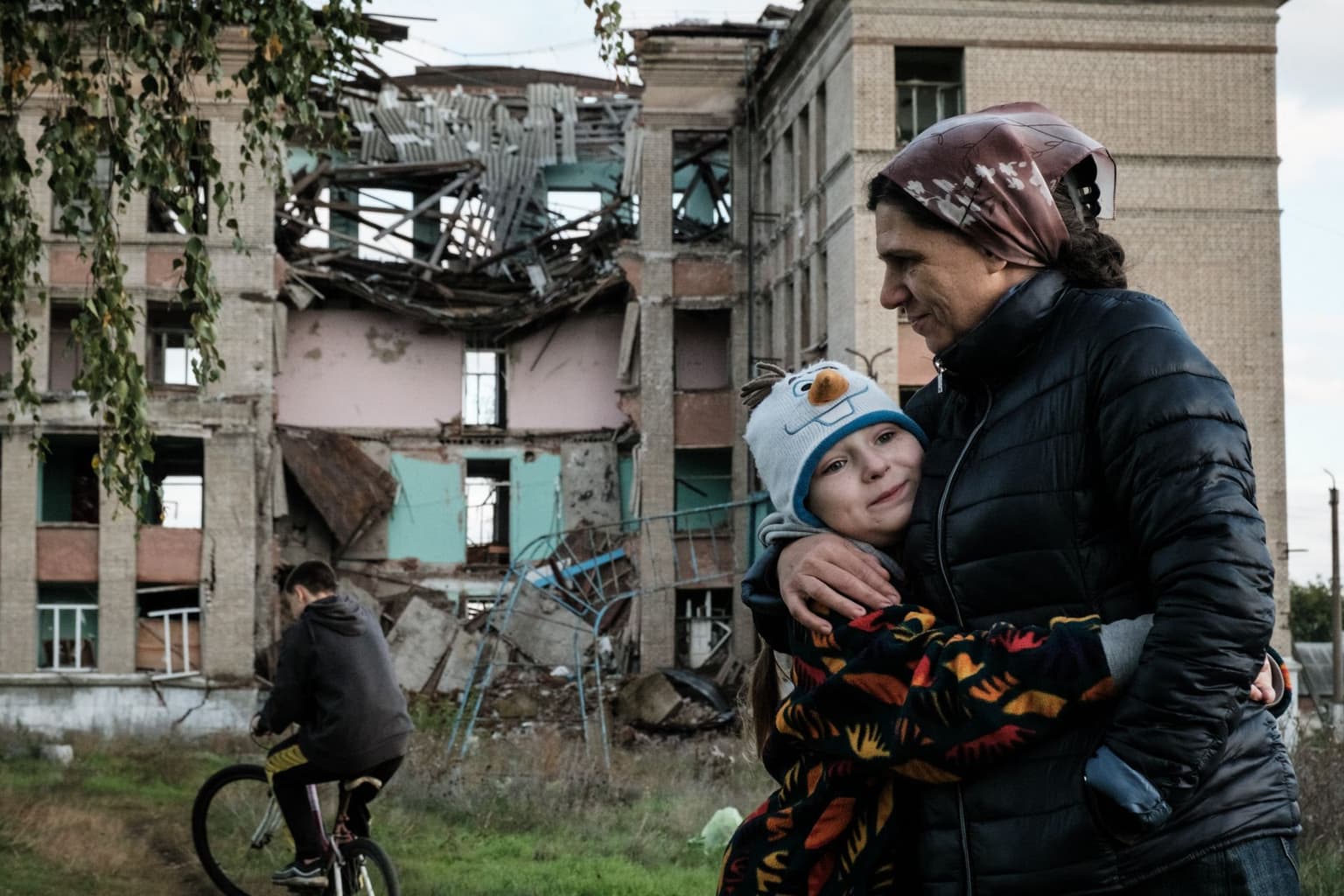
Olga Srednyakova hugs her youngest daughter, Vera, near the abandoned grounds of the destroyed school in Kostiantynivka, Donetsk Oblast, Ukraine, on Oct. 13, 2022. (Yasuyoshi Chiba / AFP via Getty Images)
 on Google
Irwin Redlener
Senior advisor to the Institute for Global Politics at Columbia University
Later this week, the Ukraine Recovery Conference, convening in Gdansk, Poland, is expected to host more than 5,000 attendees, including European heads of state, Ukrainian government leaders, ministerial representatives, non-governmental organizations, industry leaders, and subject matter experts.
They will collectively commit to supporting the rebuilding and recovery of Ukraine after a brutal war initiated by Russia's indefensible invasion in February 2022.
While the complexities of reconstruction and economic recovery will be daunting, perhaps costing well over half a trillion dollars, it is important not to lose sight of critical challenges facing Ukraine's children who have been through years of disruptive violence.
Through our work as cofounders of the Ukraine Children's Action Project, Karen Redlener and I have met many Ukrainian children and youth, including those in the war-driven diaspora who have been living outside of Ukraine since the onset of the conflict. While these children are extraordinarily resilient – and genuinely inspiring – they are growing up under unimaginably abnormal and challenging conditions.
Our own studies, including UCAP's May 2026 Crossfire! review, more than 3,500 children have been killed or injured since February 2022, at least 1.5 million have been severely traumatized psychologically, and nearly 5 million have experienced educational disruptions.
In addition, 20,000 Ukrainian kids have been abducted and brought to Russia, while more than 1.5 million children live under tight control by Russia in the currently occupied territories.
But what is abundantly clear to me is that the recovery of Ukraine after the war will, in large part, depend on what happens to Ukraine's children who have suffered greatly. How will their future unfold in a country where human potential is great, but conditions are exceedingly complicated and arduous?
It is worth keeping in mind that children are the bellwether of how any society is doing.
If children are living "normal" lives, meaning being raised by protective and loving caretakers, going to school, having positive, developmentally appropriate social interactions, and good opportunities to pursue productive and satisfying lives, then it is safe to say that society is doing well.
For children growing up in war, government and policymakers must develop strategies to address the specific challenges that face its youngest citizens.
Here's a potential roadmap to help guide what Ukraine must consider going forward:
First, Ukraine needs a national educational catch-up plan. Many children have experienced years of interrupted learning because of displacement, online schooling, damaged schools, lack of safe shelters, power outages, and repeated attacks on civilian infrastructure.

Educational recovery must be considered a national priority comparable to rebuilding roads or power plants.
Ukraine should consider a coordinated catch-up strategy that includes expanded tutoring programs, accelerated learning initiatives, summer academies, digital learning support, teacher training, and targeted interventions for children who have fallen furthest behind.
Second, Ukraine must prepare to manage the long-term psychological effects of war.
Not every child exposed to war develops lasting psychological injury. Children are remarkably resilient. But millions of Ukrainian children have experienced repeated exposure to missile attacks, prolonged separation from loved ones, displacement, loss of homes, and the deaths of family members and friends. Many have lived under chronic stress for years.
Ukraine should invest in a nationwide system of trauma-informed care that includes school-based mental health services, community support programs, family counseling, teacher training, and expanded access to child psychologists and social workers.
Third, Ukraine must find ways to bring its young people home.
Millions of Ukrainians have lived abroad since the full-scale invasion began. Many children have spent critical developmental years outside Ukraine, attending schools in Europe and building new social networks. Many of these students, especially those entering universities abroad, may want to return to Ukraine; others, not so much.
Ukraine will need a comprehensive national strategy to encourage the return of diaspora youth and families. Such a strategy should include educational incentives, university scholarships, housing assistance, career opportunities, and structured programs that allow young people to participate directly in national reconstruction.
And it’s important to remember that young Ukrainians who have been internally displaced need access to the same incentives to remain in Ukraine that are being offered to encourage the return of the diaspora.
Ukraine's future workforce, innovators, teachers, scientists, and civic leaders are among those currently living abroad. Their return could become one of the country's greatest recovery assets.
Finally, Ukraine must confront the challenge of restoring the national and cultural identity of children affected by Russian occupation and abduction.
This is perhaps the most difficult and morally urgent task. Ukrainian children who have been abducted by Russia, where many have been put up for illegal adoption or consignment to military training camps, are considered victims of crimes against humanity.
Russian President Vladimir Putin is committed to the erasure of Ukraine as a sovereign nation and an enduring culture. He has focused his obsession on turning Ukraine's children away from their families and their identities. This is flagrantly obvious in territories under Russian occupation, where education, media, language, and civic life are tightly controlled by Russian authorities.
The term "de-Russification" may be politically contentious, but the underlying challenge is real: helping children reconnect with Ukrainian language, culture, history, family ties, and national identity after prolonged exposure to coercive assimilation.
Successful reintegration will require educational support, family reunification efforts, psychological services, and sustained international pressure to secure the return of abducted children.
This is why focusing on improving the lives of Ukraine's youngest citizens will benefit children's well-being and be necessary for the prosperous, democratic future of their country.
Editor's note: The opinions expressed in the op-ed section are those of the authors and do not purport to reflect the views of the Kyiv Independent.