Will Ukraine's 'long-range sanctions' decide the war?
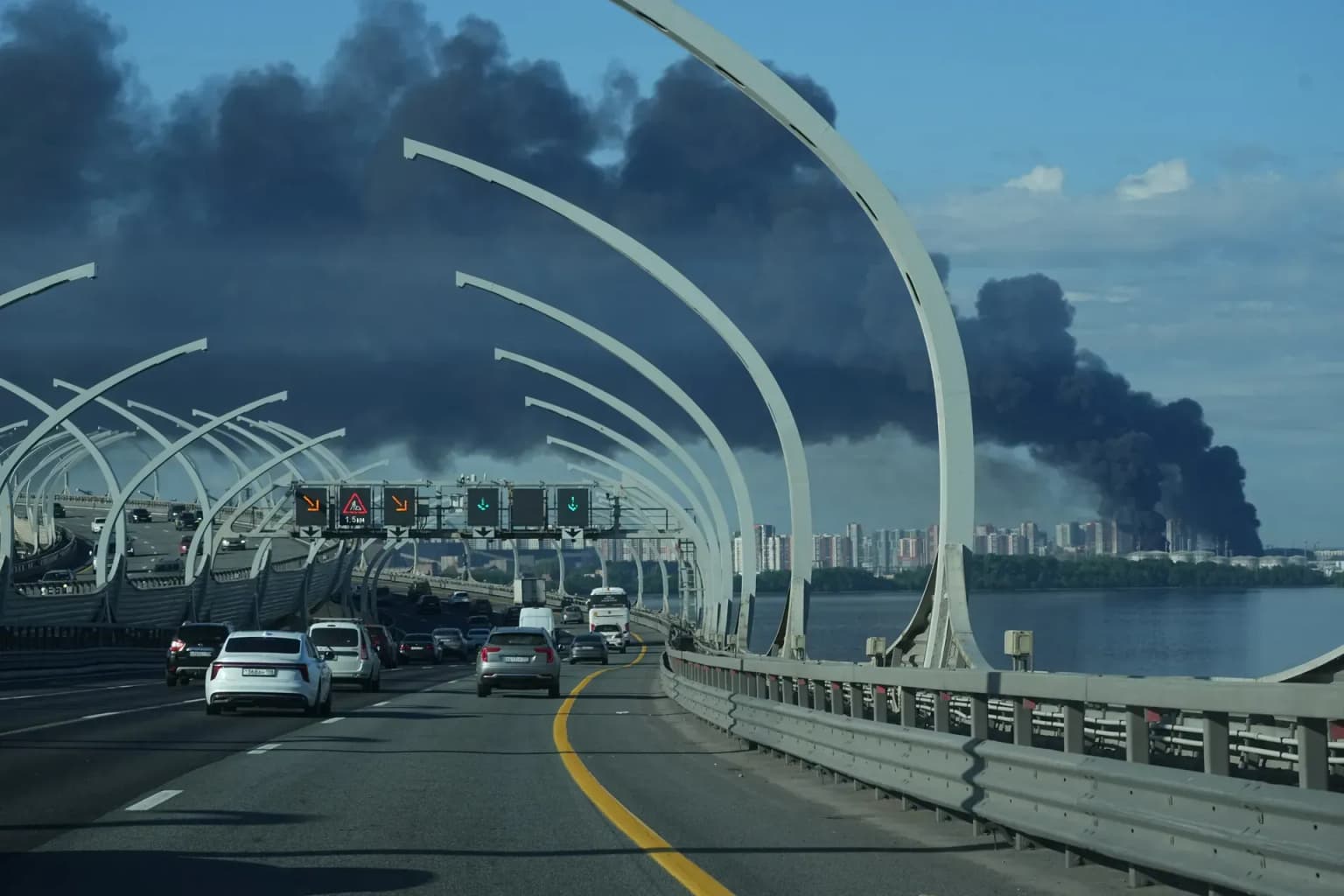
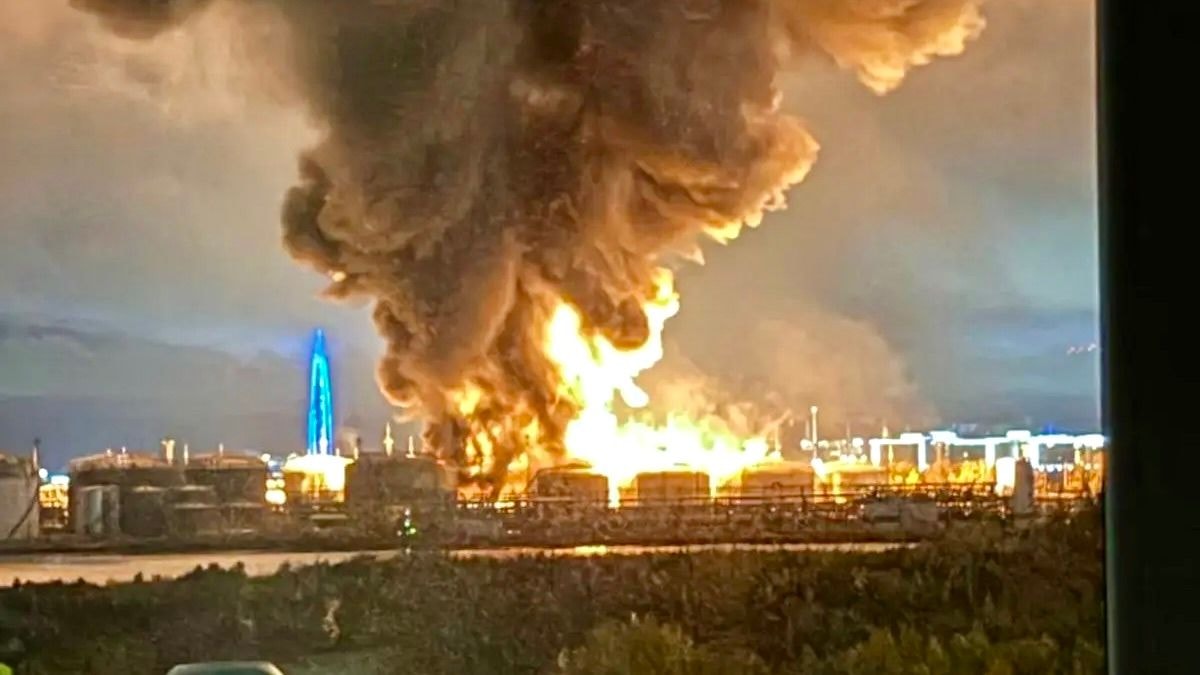
A plume of black smoke rises over the port of Saint Petersburg, Russia, following a Ukrainian drone attack on June 3, 2026. (AP)
 on Google
Lesia Bidochko
Policy Fellow at the European Policy Institute in Kyiv (EPIK)
The Russian drone and missile attacks on Kyiv in early July 2026 were the largest such state terrorist attacks to date against civilian infrastructure in the Ukrainian capital. Yet, these acts by the Kremlin do little to change the overall picture of the war.
In contrast, the recent Ukrainian strikes on Russian energy facilities in St. Petersburg, Moscow, and elsewhere have altered the global perception of the Russia-Ukraine war.
This is especially true for ordinary Russians and observers outside Europe, where until now there had been little doubt about Russia's supposedly overwhelming superiority. The images of spectacular strikes by Ukrainian long-range drones and cruise missiles on Russian oil processing facilities and other sites are a major embarrassment for the Kremlin, both within and outside Russia.
A growing number of videos showing massive explosions and fires, even beyond the European part of the country, are shaking Russia's previously dominant international and self-image as one of the greatest military powers in the world and in history.
Yet, what may be even more important than Moscow's PR disaster are the growing material results of the multitude of dramatic and not-so-dramatic successes of the Armed Forces of Ukraine in Russia's rear.
Until a few weeks ago, it was not entirely clear what the rationale, substance, and results of Ukraine's new long-range attack strategy against Russia's energy and other economic infrastructure would be.
For several months already, there has been visual documentation of ever deeper and more precise Ukrainian strikes on military and industrial objects in the Russian hinterland. Still, the dominant assumption till recently remained that, even if visually astounding, such Ukrainian successes constitute merely pinpricks for mighty Russia.
In view of the size, spread, solidity, repairability, and redundancies of the huge Russian fuel refinery, transportation, and storage sector, so the story went, the Ukrainian "long-range sanctions" would hardly have been able to change the course of the war.
In the last few weeks, it has become clear that both the traditional respect for Russian industrial capacity, military prowess, and strategic depth, on the one hand, and the widespread skepticism regarding the effectiveness of Ukrainian long-range weapons development and deep-strike drone and missile attacks, on the other, were unfounded.
In June 2026, Russia's gasoline production fell by 25% compared to the same period in 2025, as well as to March 2026, when Ukraine's drone strikes had begun to intensify. By the end of June 2026, at least 17 regions had imposed mandatory restrictions on gasoline and diesel sales, and today most Russian Oblasts have imposed such restrictions.
Fuel rationing is no longer only a major problem for Russia's temporarily occupied Ukrainian territories but is now also spreading across the Russian Federation itself. Even the country's traditionally well-supplied capitals, Moscow and St. Petersburg, cannot satisfy their inhabitants' demand for gasoline and diesel. Faraway regions in Russia's huge Asian part, too, are increasingly drawn into a now full-scale and country-wide fuel crisis.

Kyiv's speedy introduction of new systems such as the Flamingo or FP-5 cruise missile, and a new generation of long-range UAVs, has made heavily defended strategic targets in and around Moscow, St. Petersburg, and other locations in the European part of Russia and partly beyond vulnerable.
Until recently, Russia's enormous territory had been regarded as an enormous strategic advantage. It now turns out, however, that defending an interconnected energy infrastructure spread across a huge country spanning eleven time zones is a challenge rather than an advantage vis-a-vis an enemy with increasing long-range and relatively low-cost strike capabilities. At least for now, Moscow is unable to shield the numerous pieces of its large energy system – oil refineries, gas and fuel pumping stations, railway hubs, and storage depots – simultaneously.
Perhaps, worst of all for the Kremlin, this general issue has in recent weeks acquired an outrightly dramatic dimension for illegally annexed Crimea.
The peninsula is not only the crown jewel of Putin's expansionism but, since 2022, also Russia's major logistics hub for military operations in the Ukrainian south. The geographically determined, strategically important role of Crimea as Russia's quasi-aircraft carrier in the northern Black Sea is also the peninsula's problem.
Crimea is at a relatively high distance from Russia itself, close to the Ukrainian mainland, and thus particularly vulnerable to Ukraine's newly introduced weaponry and modern approach to warfare.
Fuel supplies to the peninsula have been disrupted not only and not so much due to refinery damage, but mainly because transportation routes from Russia to Crimea are now under constant Ukrainian attack.
This goes for both the rail- and motorway connection from Russia via occupied southern Ukrainian dryland to Crimea, and for the seaway transport on the newly built Kerch bridge and by large Black Sea ferries. The growing tension between Russia and Crimea makes it, moreover, increasingly difficult for Moscow to sustain troop rotation, ammunition and supply stocks, as well as equipment maintenance on the occupied peninsula.

Russia cannot fully and swiftly compensate for, repair, or replace the facilities and stocks that Ukrainian UAVs and cruise missiles have cut off, damaged, or destroyed throughout the western parts of the Russian Federation and the area it has illegally captured from Ukraine.
According to eminent Germany-based historian of Russia, Nikolay Mitrokhin, now "Ukrainian strike drones control the Russian airspace at least as far as the Urals, the Russian air defense system has shrunk to a few points desperately defended by the last remaining 'Pantsir' missiles, and the Ukrainian Armed Forces now have the ability […] to take out virtually any targets."
Moreover, the accumulating disruptions in Russia's fuel sector coincide with declining Russian energy export revenues.
Falling global oil prices have reduced budget income much more than previously anticipated, forcing Moscow to revise budget projections.
Should this trend continue or even worsen for Russia, the overall context of the Russian-Ukrainian conflict changes. The war may currently be turning from a short-term and minor into a mid-term and major hindrance to the functioning of Russia's daily economic and social life. In Mitrokhin's words, "perhaps this abyss has a bottom. But it isn’t visible yet. And Russia is hurtling toward it at an ever-increasing speed."
Editor's note: The opinions expressed in the op-ed section are those of the authors and do not purport to reflect the views of the Kyiv Independent.