'We know more is to come' — Pro-Ukrainians in Crimea greet strikes on Russian logistics
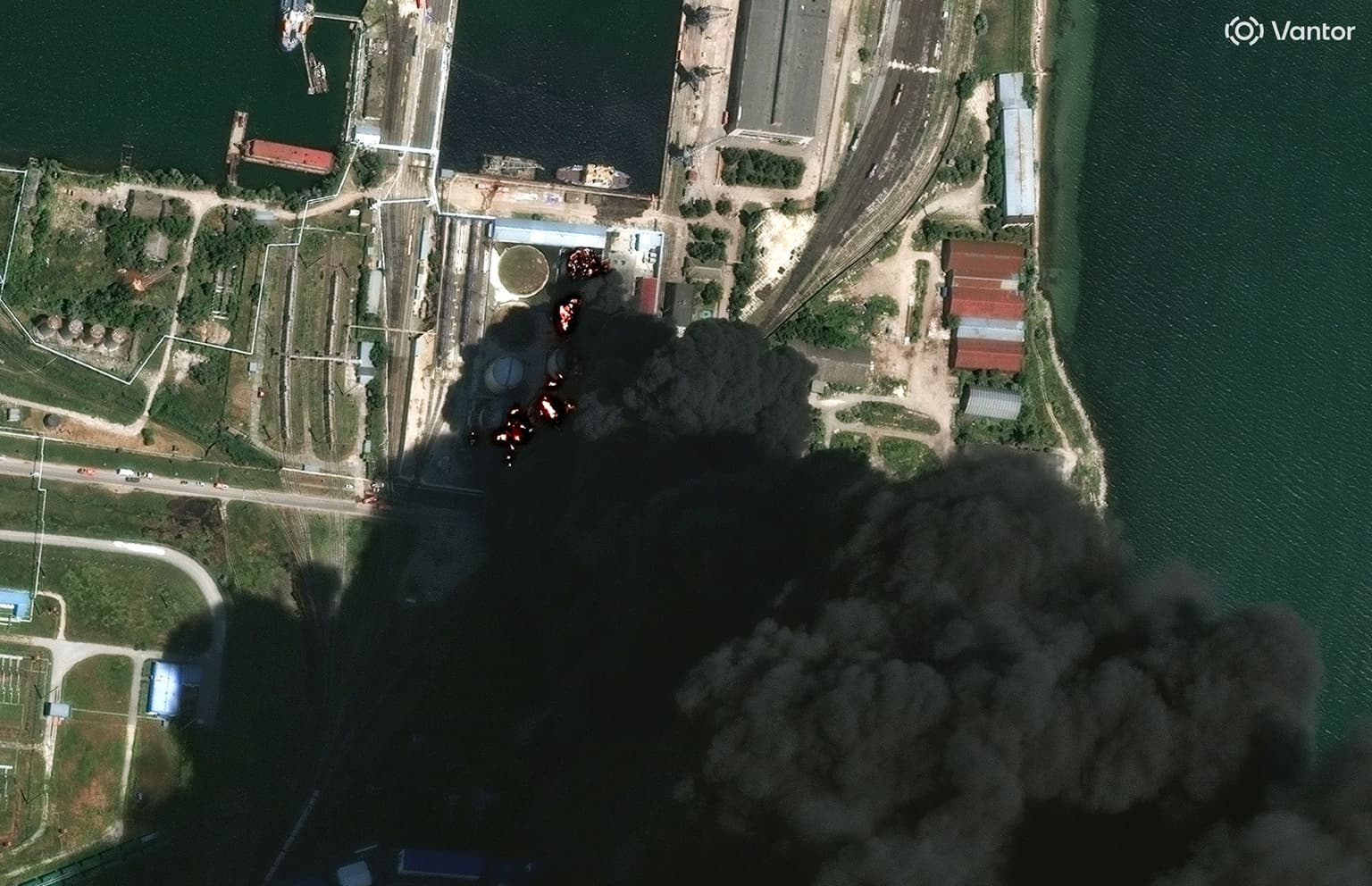
A satellite image shows burning storage tanks and heavy smoke following attacks in Kerch, Russia-occupied Crimea, Ukraine, on June 20, 2026. (Vantor / Getty Images)
 on Google
While Ukrainian forces are carrying out daily strikes on logistical and military targets in Crimea to further isolate the occupied peninsula, Ukrainian residents there say the campaign has given them hope of a possible deoccupation for the first time since the 2023 counteroffensive.
"I understand that we are far away from this (deoccupation), but we haven't had such hopes since 2023. And there has been no such 'carnival' in Crimea ever before, and we know that more is to come," a Crimean resident who lives under Russian occupation, told the Kyiv Independent on condition of anonymity due to security concerns.
The source added that pro-Ukrainian people are anxious, but at the same time, they are waiting for "a total collapse" of the occupation regime in Crimea and the possibility of the arrival of Ukrainian troops.
Crimea has been occupied by Russia since 2014. Since then, it has become increasingly dangerous for people to openly share pro-Ukrainian views.
Despite constant surveillance and the risk of detention over social media posts, donations to the Ukrainian army, or public displays of Ukrainian identity, many Crimeans continue to resist the occupation and share their views. Some groups, such as the Atesh partisan movement, are involved in military operations.

"Some (Ukrainian citizens) have been living under occupation for over 12 years. Every day, they face repression, persecution, and systematic violations of their rights. Yet they continue to preserve their Ukrainian identity and uphold their dignity despite constant pressure from the occupying authorities," Yevhen Perebyinis, deputy foreign minister, said on June 30 during the Fifth International Forum of the Crimea Platform Expert Network.
"We must not forget the Ukrainian political prisoners held in Russian detention centers. Their names must continue to be heard on the international stage," Perebyinis added.
According to the Crimean Tatar Resource Center, as of April 20, human rights defenders have documented 520 politically motivated criminal persecutions in occupied Crimea since 2014, more than half involving Crimean Tatars.
Russian authorities have used politically motivated prosecutions, arbitrary detentions, searches, and lengthy prison sentences to suppress dissent, prompting many residents to flee. Others stayed to care for elderly relatives because they could not afford to leave, or simply refused to abandon their homes.
Olha Kuryshko, the Ukrainian president's representative in Crimea, told the Kyiv Independent that her office is currently observing an increase in political cases in Crimea, but cannot yet say exactly how many. Her office observed the same trend in 2023, during Ukraine's counteroffensive.
"We cannot say exactly how many pro-Ukrainian people there are in Crimea, as it is very dangerous to reveal one's pro-Ukrainian stance," Kuryshko said.
Another Crimean resident told the Kyiv Independent, speaking on condition of anonymity, that while "there is no fuel and electricity, water supplies are being disrupted," they still would "be patient and wait for the Ukrainian army."

Ukraine's attacks on Russian infrastructure in Crimea have led to a crisis in fuel supplies, food shortages, electricity disruptions, and sea pollution.
Russian-installed authorities also announced a state of emergency on June 26.
On June 19, Ukraine's Presidential Office's Representative in Crimea said that Ukraine's military targets only Russian military forces and infrastructure, not civilians. The office said that efforts to "isolate" Crimea are aimed solely at destroying Russia's military capabilities and urged Ukrainian residents to follow safety recommendations during attacks.
Moscow's declaration of a regional state of emergency is perhaps "the most significant demonstration yet of the effectiveness of Ukraine's extensive and systematic drone strikes" on strategic targets in Russia and across the Russian-occupied territories, Jenny Mathers, a senior lecturer in international politics at Aberystwyth University in the U.K., told the Kyiv Independent on June 26.
"That strategy undermines Putin's attempts to shield most Russians — including those who have flocked to occupied Crimea as tourists or residents — from the impact of the war," Mathers told the Kyiv Independent.