Ukrainian 'cyber revenge' hack disrupts Russian election systems, HUR source claims
 on Google
Ukraine's military intelligence (HUR) carried out a "cyber revenge" hack on the Russian Central Election Commission (CEC) on Sept. 14 in response to elections held in occupied Ukrainian territories, a HUR source told the Kyiv Independent on Sept. 15.
The attack coincided with Russia's unified voting day, which included elections for 21 governors, deputies of 11 regional assemblies, and around 47,000 municipal leaders.
Voting was also staged in illegally annexed Ukrainian territories, including direct "regional head elections" in Sevastopol in occupied Crimea.
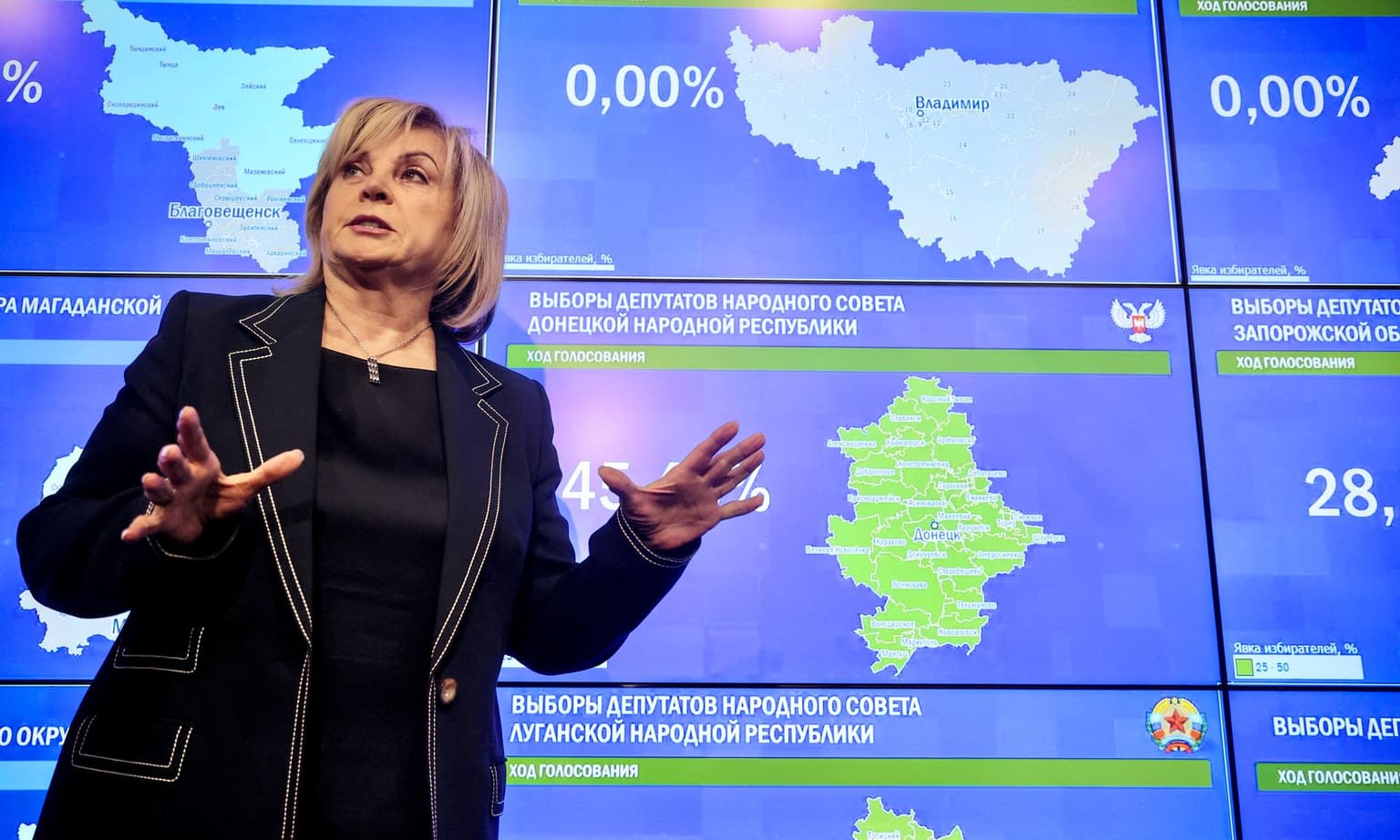
Russia's CEC chief Ella Pamfilova acknowledged a "major hacker attack" against commission resources on Sept. 14, saying the internet was down at the CEC headquarters.
According to the HUR source, the denial of service (DDoS) attack targeted servers of the CEC, Russia's electronic voting platform, and the state digital services portal Gosuslugi.
"The goal was to disrupt online voting, particularly in occupied Ukrainian regions," the source said.
Digital services were paralyzed for a period, leaving many Russians unable to vote electronically in mayoral and gubernatorial races, the source claimed.
Russia's CEC later reported overall turnout at about 47%, with some 26 million voters participating.
Independent political competition in Russia has become almost impossible. In July, the Golos movement for voters' rights announced it was shutting down due to government pressure.
Experts noted that municipal filters, repression, and the declining number of registered political parties have left even fewer opposition candidates than in previous years.