Ukraine war latest: Zelensky confirms Ukrainian strikes on Russian oil depot, Moscow Oblast logistics facilities, 6 Black Sea vessels
 on Google
Key developments on July 20:
- Zelensky confirms Ukrainian strikes on Russian oil depot, Moscow Oblast logistics facilities, 6 Black Sea vessels
- Ukrainian drones strike Russian FSB coordination center in occupied Kherson Oblast, SBU says
- Ukrainian regiment claims capture of 64 Russian soldiers
- Up to 145 Russian troops remain in Kostiantynivka as Ukrainian forces hold defense, military says
- Ukrainian drones strike 7 Russian shadow fleet vessels, energy infrastructure facilities in occupied Crimea, military says
Ukrainian forces struck an oil depot and logistics facilities in Russia's Moscow Oblast, as well as six Russian vessels in the Black Sea, in an overnight attack on July 20, President Volodymyr Zelensky confirmed on X.
"We are responding, justly, to every Russian strike against our cities and communities," Zelesky said. "This war must be brought to an end, and that is only possible by increasing the pressure on the sole cause of this war – Russia."
The six vessels hit included two tankers and four dry cargo ships, according to the president.
Zelensky did not specify the locations of the oil depot and logistics facilities that were struck but said the attacks took place more than 400 kilometers (250 miles) from the Ukrainian border.
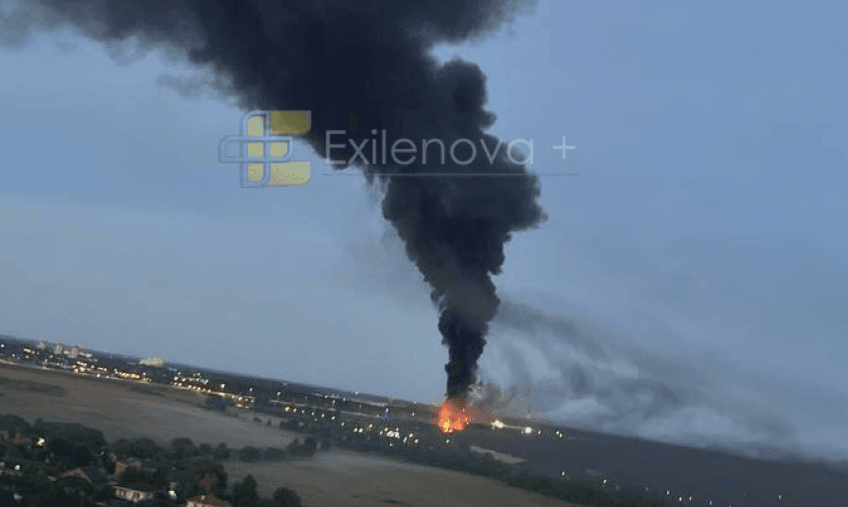
Photos and videos posted to social media purport to show thick black smoke rising over the city of Podolsk, located about 40 kilometers (25 miles) south of the Kremlin, following a strike on an oil depot.
Another fire was also reported a warehouse belonging to the major Russian online retailer "Wildberries." Monitoring channels reported one of the company's fulfilment centers was struck in the town of Kolyedino, just south of Podolsk.
Elsewhere in the region, a fire was reported at a residential building in the city of Domodedovo following a purported drone strike. While in the community of Belye Stolby, warehouses were destroyed at the Yuzhnye Vorota logistics park.
Amid the reported attack on Russia's capital region, Moscow Mayor Sergey Sobyanin claimed that over 400 Ukrainian drones were launched towards the Russian capital region, with 85 drones downed while approaching the capital. Videos posted by local residents appear to show long-range strike drones flying over the region.
The Kyiv Independent cannot immediately verify the reports.
The attack comes two days after Ukraine's military launched a separate attack on Moscow Oblast, striking a Russian logistics center, as well as an oil depot in the region.
In his report on the attack, Zelensky did not specify whether the Wildberries warehouse stored equipment intended for the Russian military. But in a video address following the attack, he said the warehouses targeted in the overnight operation were linked to the military.
Ukraine has intensified its long-range strike campaign against military, industrial, and energy targets inside Russia in recent months, with drones repeatedly reaching Moscow and other regions hundreds of kilometers from the Ukrainian border.
In response, Russia has bolstered air defenses in the capital, deploying new Pantsir-SMD-E air defense systems on the rooftops of civilian buildings in Moscow.
Kyiv considers oil facilities to be valid military targets, as the energy sites provide fuel and funding for the Kremlin's war machine.
Ukraine has been waging an increasingly successful deep strike campaign against Russian oil infrastructure, striking oil depots, disrupting production at major facilities, and in some cases halting operations indefinitely.
Reuters reported on June 24 that the Moscow Oil Refinery is unlikely to resume production this year after suffering extensive damage in recent Ukrainian drone attacks.
Ukraine's attacks on oil infrastructure have mounted pressure on the Kremlin by aggravating a domestic fuel supply crisis that has already caused export bans, price hikes, and sales restrictions across Russia. Residents of various Russian regions continue to report hours-long wait times at service stations.
Ukrainian drones strike Russian FSB coordination center in occupied Kherson Oblast, SBU says
Thirteen Ukrainian drones struck a coordination center and a base used by Russia's Federal Security Service (FSB) in the Russian-occupied part of Kherson Oblast, the Security Service of Ukraine (SBU) said on July 20.
The operation was conducted by special forces from the SBU's Alpha Special Operations Center. The facility was located inside a boarding house in the Russian-occupied part of the region, according to the agency.
Preliminary reports indicated that around 100 Russian service members may have been present at the facility at the time of the attack, the SBU said.
More than 70 vehicles were also located at the site, which was protected by armed guards, checkpoints, engineering barriers, and underground shelters, according to the statement.
The SBU said 13 of its drones hit the facility, causing a large fire. The agency did not disclose the number of casualties or the precise location of the target.
"Such special operations inflict significant losses on the enemy in the temporarily occupied territories, disrupt their command and control systems, force the Russians to redeploy additional forces to guard their own facilities, and significantly complicate logistics and the supply of FSB units," SBU said.
The Kyiv Independent could not independently verify the claims. Russia has not publicly commented on the strike.

Russia occupied most of Kherson Oblast during the opening weeks of its full-scale invasion in 2022. Ukrainian forces liberated the regional capital and other territory on the western bank of the Dnipro River in November that year, but Russia continues to occupy most of the oblast's eastern bank.
The occupied part of Kherson Oblast forms a key section of Russia's land corridor to occupied Crimea and contains military bases, command facilities, and supply routes supporting Russian forces in southern Ukraine.
read also
Ukrainian regiment claims capture of 64 Russian soldiers
Ukraine's 225th Separate Assault Regiment claimed on July 20 that its troops captured 64 Russian soldiers during an operation to clear infiltrating Russian groups from several settlements in Zaporizhzhia Oblast.
According to the regiment, Russian troops had been tasked with infiltrating behind Ukrainian positions without engaging in combat. Their reported mission was to locate Ukrainian drone crews, gather intelligence, and plant Russian flags in villages for "propaganda footage" falsely portraying the settlements as captured by Russian forces.
Ukrainian troops said they detected and cleared the infiltrating groups from the areas of Ternuvate, Kosivtseve, Rizdvianka, Verkhnia Tersa, and Vozdvyzhivka in Zaporizhzhia Oblast.
The regiment said the operation resulted in the capture of 64 Russian soldiers, who have been added to Ukraine's pool of prisoners of war (POWs) available for future exchanges.
The unit also published a video purportedly showing some of the captured Russian soldiers speaking after their capture.
One POW said on camera that he had been told to avoid close-quarters combat "to minimize casualties." Another said they were offered the chance to surrender, and were then "immediately fed" and taken away from the front line.
Ukraine's 225th Separate Assault Regiment did not specify when the Russian soldiers were taken into captivity.
The Kyiv Independent could not independently verify the authenticity of the footage or the regiment's claims.
The 225th Separate Assault Regiment is regarded as one of the units closely associated with Ukraine's Commander-in-Chief Oleksandr Syrskyi.
Up to 145 Russian troops remain in Kostiantynivka as Ukrainian forces hold defense, military says
Russian forces have concentrated up to 145 troops in Kostiantynivka, where Ukrainian units continue defending the city and conducting counter-sabotage operations, Syrskyi said on July 20.
The Kostiantynivka sector remains one of the most intense areas of the front, with Russian forces launching up to 20 attacks a day and continuing attempts to infiltrate deeper into the city, according to Syrskyi.
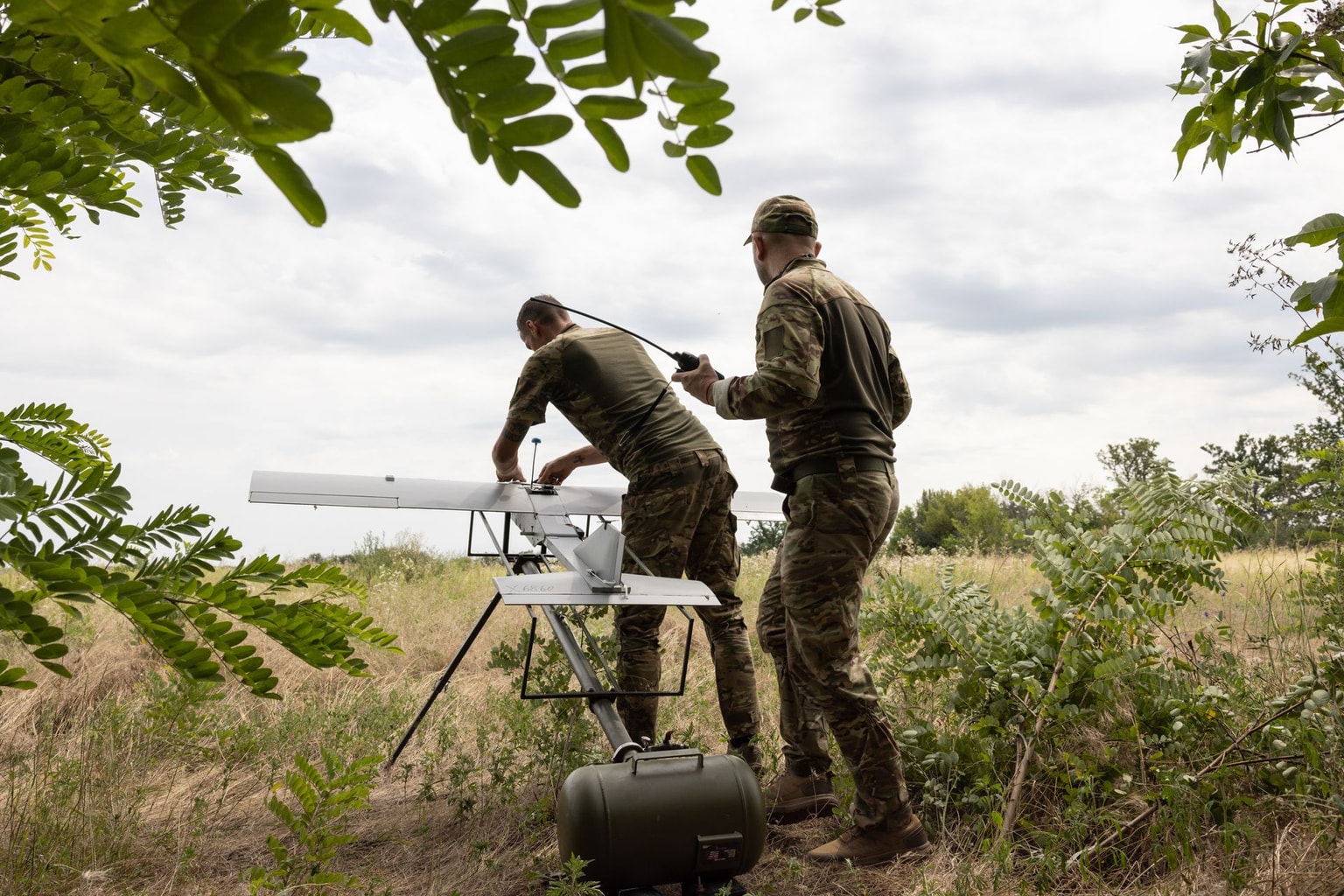
Ukrainian troops are conducting search-and-strike operations and extensively using first-person-view (FPV) drones and bomber drones to detect and attack Russian infantry and firing positions, the statement read.
"Our defense remains active. Drones always go first, both to detect the enemy and to strike it," Syrskyi said.
According to the commander, Ukrainian forces killed 21 Russian soldiers, wounded six others, and struck six Russian shelters in Kostiantynivka on July 18.
Syrskyi made the remarks following a visit to the Kostiantynivka sector, where he received reports from the leadership of Ukraine's 19th Army Corps and commanders of brigades and other units operating in the area.
Syrskyi said the main priority was expanding the use of all types of unmanned systems to increase pressure on Russian forces while reducing risks to Ukrainian personnel.
Vladyslav Urubkov, head of the military department at the Ukrainian foundation Come Back Alive, told the Kyiv Independent that despite the volatile situation and the presence of Russian troops in Kostiantynivka, it would be inaccurate to say that Russian forces control the entire city, despite repeated Russian media claims to the contrary.
"For at least a month now, maybe even longer, the situation in the city has been as follows: the Russians move in, build up their forces, and we try to drive them out. Our presence there remains," Urubkov said.
"This applies to any urban combat — there is no front line as such; even a larger Russian presence in a particular neighborhood does not indicate their complete control over that neighborhood, since there may also be Ukrainian positions there."
Urubkov said Ukrainian units are now reaching their positions in the area primarily on foot, as even ground robotic systems face difficulty entering them because the two access roads are under heavy Russian fire control.
Urubkov said Russian troops are positioned at varying depths on both flanks of Kostiantynivka but that there is no indication the city is at risk of semi-encirclement. He added that Russian forces continue to maintain constant pressure, affecting the defense of the neighboring town of Chasiv Yar, where heavy fighting has continued for more than two years.
"It's very difficult right now to say how long the defense of Kostiantynivka can hold out."
"For now, fortunately, the city is holding out and Ukrainian troops remain there. The main thing is to avoid a full-scale encirclement, where people would be unable to leave the city — that is something that must definitely be avoided."
Once home to more than 100,000 people, Kostiantynivka is the southernmost city in Ukraine's so-called Donbas "fortress belt," which also includes Druzhkivka, Kramatorsk, and Sloviansk. The group of cities remains the main barrier to Moscow's objective of occupying the entirety of Donetsk Oblast.
Russian infiltration groups began entering residential neighborhoods on the city's outskirts over the winter, exploiting gaps between overstretched Ukrainian positions and increasingly difficult front-line logistics. By early June, Ukrainian commanders acknowledged that more than 100 Russian soldiers were operating within the urban area.
Russian authorities have repeatedly claimed control over Kostiantynivka, while Ukraine's General Staff has denied those assertions and said Ukrainian forces continue operating against infiltrating Russian infantry groups.
Ukrainian drones strike 7 Russian shadow fleet vessels, energy infrastructure facilities in occupied Crimea, military says
Ukrainian drones struck seven Russian shadow fleet vessels, seven energy facilities in occupied Crimea, among other military targets, overnight on July 20, Unmanned Systems Forces Commander Robert "Madyar" Brovdi said.
Three tankers and four dry cargo ships were hit in the Black and Azov seas as part of Operation "MoLoCHKa," according to Brovdi. He did not identify the vessels or specify the extent of the damage.
The operation, whose acronym translates from Ukrainian as "Moscow will fall because of Crimea," began on July 6 and aims to disrupt Russia's shadow fleet and logistics. Brovdi claimed that Ukrainian forces had struck 183 vessels between July 1 and 20, including 119 in the Azov Sea and 64 in the Black Sea.
As part of a separate campaign dubbed "Crimean Switch Off," Ukrainian drones targeted seven energy hubs and electrical substations in Yalta, Morske, Pryvitne, Luchyste, and other locations in Russian-occupied Crimea, Brovdi said. Ukrainian forces have targeted 103 energy facilities under the campaign since the beginning of July, according to the commander.
Brovdi added that Ukrainian forces destroyed six Russian air defense assets in Yeysk, Primorsko-Akhtarsk, and Kamyshevatskaya in Russia. The targets included a Tor-M2 air defense system, two Nebo-SV radar systems, and Nebo-U, Kasta-2E2, and Gamma-S1M radars.
According to Brovdi, Ukrainian drones have destroyed 25 Russian air defense assets since July 1, including 12 air defense systems, 12 radar systems, and one electronic warfare system.
The Kyiv Independent could not independently verify the claims.
Brovdi also said on July 19 that the strikes had reduced the capacity of the Kerch Strait ferry service between Russia and occupied Crimea by 75%.
Three of the five ferries serving or held in reserve for the route have been destroyed, while the remaining two have lost the ability to move under their own power and are being used as barges pulled by tugboats, according to the commander.
Before the operation, the ferries could transport between 180 and 250 vehicles per day, around 80% of which supported the Russian military, Brovdi said. The Kerch Strait is a critical logistical route that Moscow uses to transport personnel, equipment, and supplies between Russia and occupied Crimea.
Note from the author:
Ukraine War Latest is put together by the Kyiv Independent news desk team, who keep you informed 24 hours a day, seven days a week. If you value our work and want to ensure we have the resources to continue, join the Kyiv Independent community.