Ukraine second only to Moldova in reform speed, top EU official says
 on Google
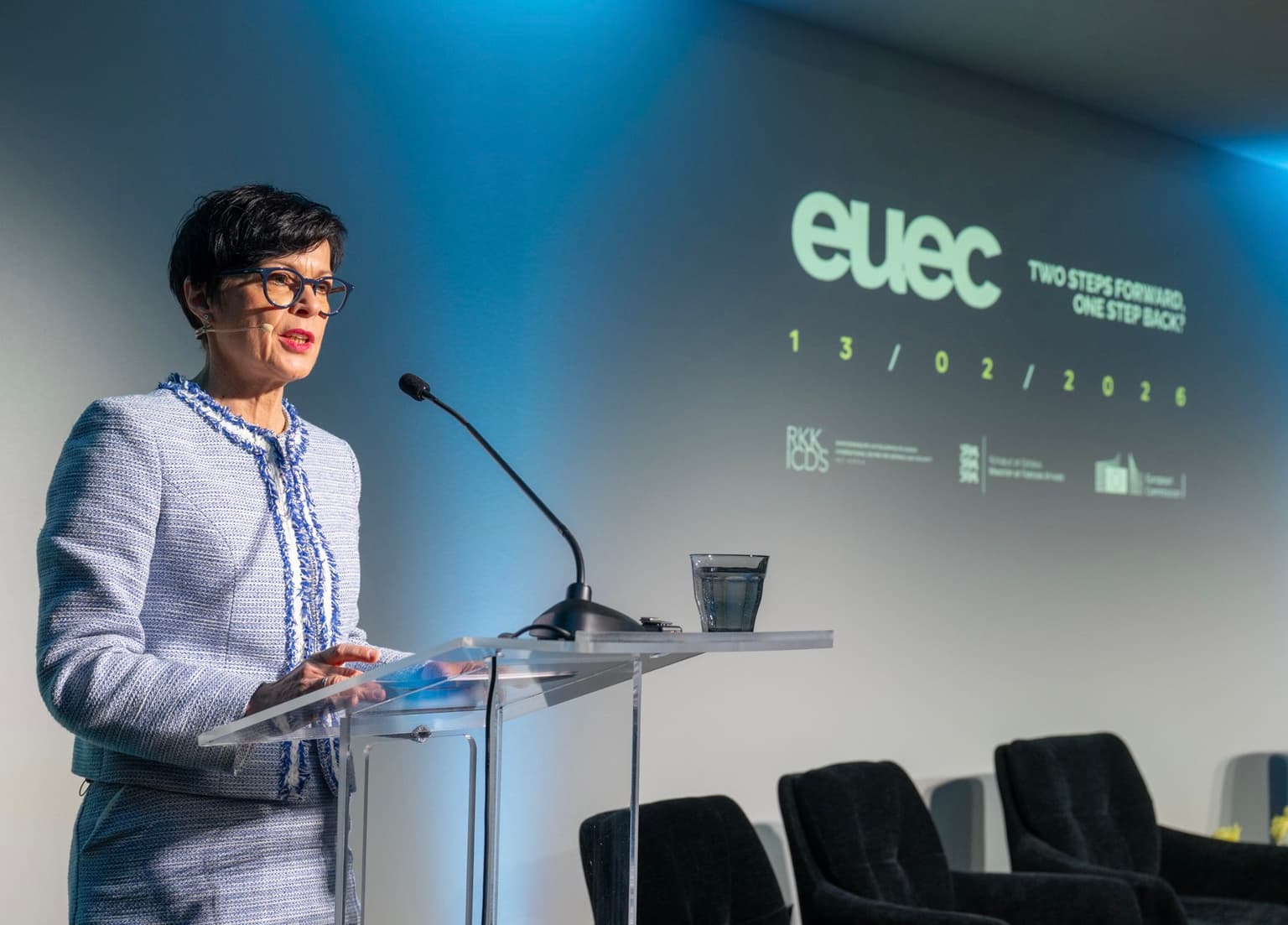
Marta Kos, the European Union's commissioner for enlargement, on April 20 praised the speed of Ukraine’s reforms to align with European standards and called for stronger safeguards to prevent future backsliding.
Kos’ assessment comes despite criticism that Ukrainian authorities are dragging their feet on the rule-of-law and economic reforms needed for European integration. In recent months, Ukraine’s parliament has passed some bills required for EU accession but has struggled with others.
Kos spoke at a meeting with members of the European Parliament.
The meeting gave lawmakers in the European Parliament’s foreign affairs committee a chance to discuss the state of play of all current and potential EU candidate countries, as well as the reforms needed for an EU of 30+ members instead of the current 27.
Ukraine’s rate of implementing reforms stands at 87%, second only to Moldova’s 93% and far ahead of last-place Serbia, at only 30%, according to Kos.
This progress is being achieved “in spite of bombs falling on the country, in spite of the country fighting for their lives, for survival,” Kos said in her opening remarks to members of the European Parliament (MEPs).
The enlargement chief also addressed the perception that Ukraine might be being treated more harshly than other countries, by reminding that there is simply more engagement.
Alongside the accession process, there “is the transformation of the economy, and then we have pure survival, which we don’t have in other countries.” Kos noted.
She also repeated her belief that the 2027 deadline for EU membership namedropped by Ukrainian President Volodymyr Zelensky is “impossible."
Kos added, however, that Zelensky “needs assurance that they will be able to become a member of the EU.”
Kos and MEPs in the committee observed that the enlargement process needs to be reformed, both because it is perceived as taking too long, and to guarantee countries don’t backslide once they become full members of the EU.
“The methodology we are using today is made for peacetime and it is plus or minus the same as it was 40 years back,” Kos said.
With that in mind, the European Commission has proposed flexible accession paths, including “gradual integration,” where progress in one area brings early access to some EU benefits.
Kos noted that the concept is not entirely new, pointing to non-EU countries such as Norway, Switzerland, and Iceland participating in the Schengen Area. She also highlighted Ukraine’s inclusion in the EU’s mobile roaming area and said she would like to extend this benefit to candidate countries in the Western Balkans.
Kos endorsed safeguards built into the accession treaties of new member countries, arguing that “safeguard clauses in the accession treaties are not new.”
For example, the ten countries which joined the EU in 2004 did not automatically have total freedom of movement with the bloc — an attempt to prevent a mass exodus of people.
On April 15, Kos said that Montenegro — widely seen as next in line for EU membership — will have safeguards built into its accession treaty, marking the first time such measures are used to prevent backsliding on the rule of law.
A European Commission spokesperson told the Kyiv Independent that “we are reflecting on how future accession treaties can include stronger safeguards,” but did not provide details.
Montenegro’s mission to the EU did not reply for a request for comment by the time of publication.
The next big step for Ukraine's European integration will be the start of the main stage of EU accession talks, which may take place within weeks.
Kyiv was granted candidate status in 2022, and the EU formally opened accession talks with Ukraine in 2024.
Preparatory work on the talks has been underway since then. However, the main stage of negotiations on specific accession clusters has yet to begin, as Hungarian Prime Minister Viktor Orban has blocked the process.
Orban lost the April 12 parliamentary election, which could help unblock Ukraine’s accession talks.
Ukraine-watchers will also have their eye on if the Ukrainian parliament passes further EU reforms in its session at the end of April.