Russia uses failed exams to funnel students into army in occupied territories, militarizing Ukrainian youth, lawyer says
 on Google
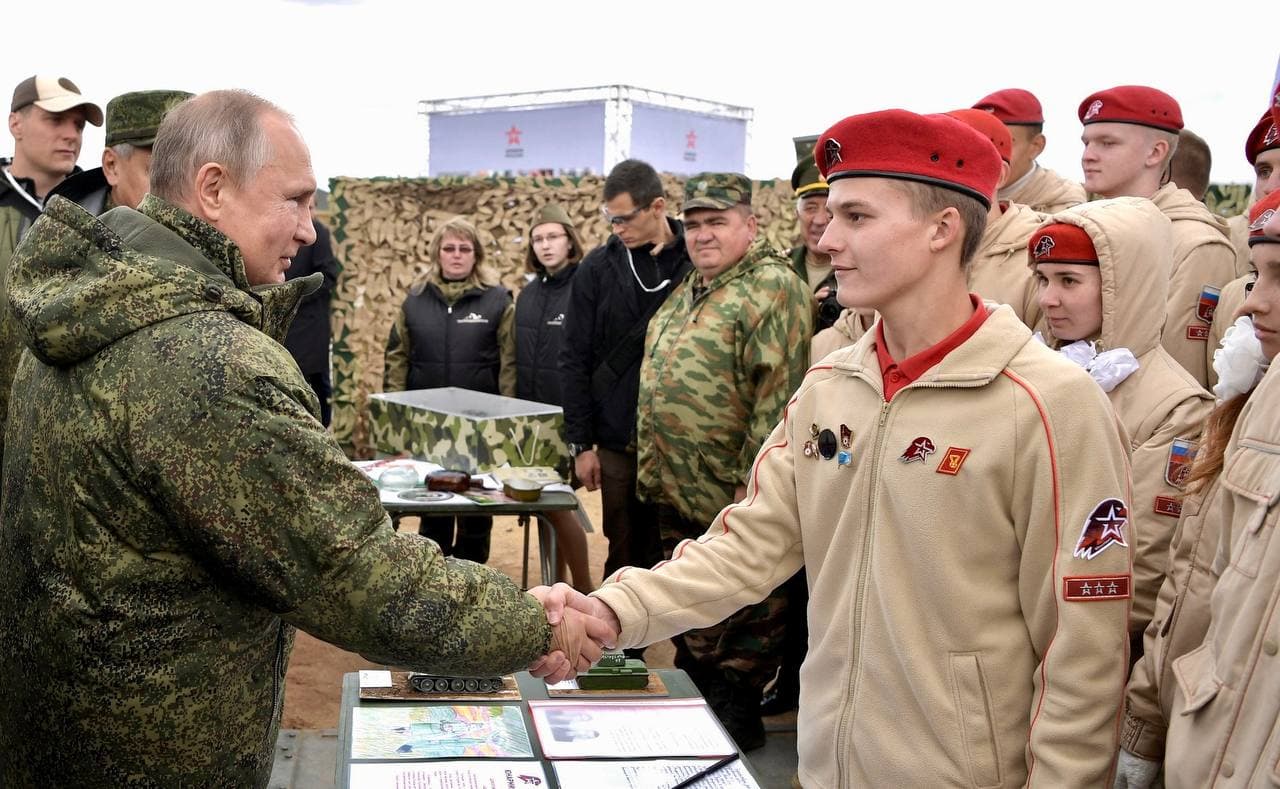
Forcing Ukrainian students in Russian-occupied territories to join the Russian army if they fail an exam is another example of Russia's militarization of Ukrainian youth, Taya Avram, a lawyer within the Donbas SOS NGO, told the Kyiv Independent on March 20.
Russia regularly commits war crimes in the occupied territories against Ukrainian children and young people who, for various reasons, cannot leave for areas under Ukrainian control. One of the most common abuses is the forced conscription of individuals who have recently reached adulthood into the Russian army to fight against Ukraine.
Oleksii Kharchenko, the head of the Luhansk Oblast Military Administration, said on March 17 that students who failed their exams and are trying to retake them are being coerced into joining Russian forces in exchange for keeping their spot at the academic institution.
In doing so, Russia violates the laws and customs of war, as the mobilization of civilians and the militarization of education violate the Geneva Convention on the Protection of Civilian Persons in Time of War and are regarded as war crimes under international humanitarian law.
"They will be expelled anyway. Therefore, they must agree to serve as drone operators to avoid later being drafted into the infantry," Kharchenko said.
Kharchenko added that those students who agree to join the army are being promised academic leave for the duration of their service.
Russia is extensively militarizing Ukrainian children and youth in the occupied territories to "raise future soldiers" and involve them in the fight against their own people, Avram told the Kyiv Independent.
The lawyer said the method mentioned by Kharchenko is "nothing new" in the occupied part of Luhansk Oblast, most of which has been under Russian control since 2014, and has been used by Russia throughout nearly the entire duration of the occupation.
Educational institutions at all levels — from kindergartens to universities — are directly connected to the occupying authorities and implement policies dictated by Russia, according to Avram.
"In kindergarten, children sing songs that at first glance appear to be for entertainment, but they carry a completely different meaning and purpose. In school, children build (combat) drones during handicraft lessons," Avram said.
Yet failing exams does not necessarily indicate that students' knowledge is slipping. "Rather, it means that a certain number of students must be failed so that they can later be offered the opportunity to join the military," she added.
According to Avram, the Donbas SOS hotline frequently receives inquiries about how young people in the occupied territories can avoid mobilization. Some parents attempt to evacuate their children, but not everyone has the opportunity to relocate.
Russia's regular army has grown to 2,391,770 personnel, including 1,502,640 active-duty troops, according to a March 4 decree, marking an increase of 2,640 active-duty troops.
The increase reflects the Kremlin's effort to sustain the war without full mobilization, relying instead on contract recruitment and financial incentives to avoid the political backlash that followed the 2022 draft.
Russia has also moved from seasonal conscription in the spring and autumn to year-round conscription in 2026.
While conscripts are officially prohibited from serving abroad, reports suggest many are pressured into signing contracts with the Defense Ministry and are subsequently deployed to fight in Ukraine.