US seizes Russian-flagged oil tanker after it evaded Venezuela blockade
 on Google
Editor's note: The story has been updated with the latest details.
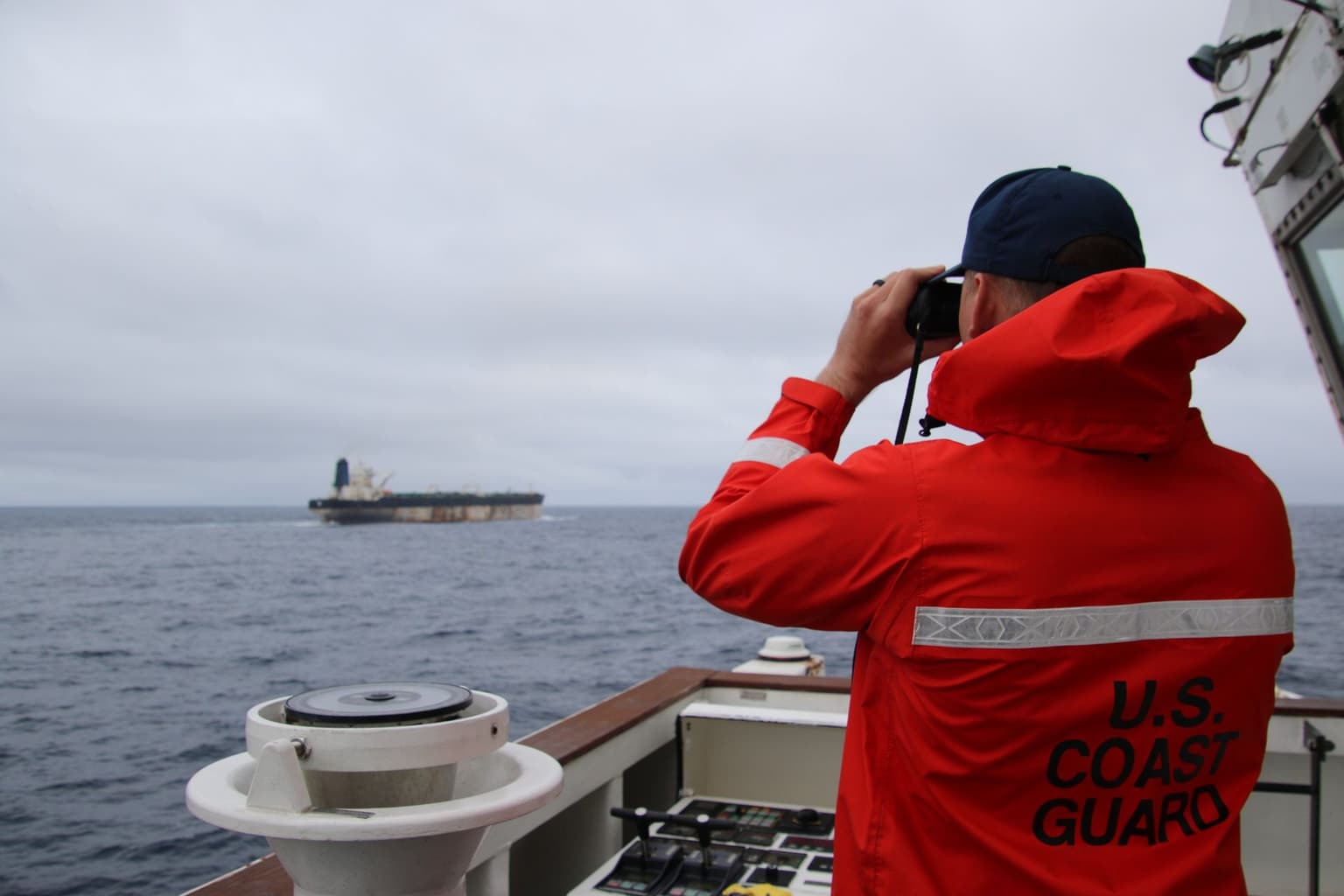
U.S. authorities had seized the tanker formerly known as Bella 1 in the North Atlantic over sanctions violations after a weeks-long pursuit, the U.S. military announced on Jan. 7.
The announcement follows reporting that U.S. forces boarded the empty oil tanker, which was renamed Marinera and adopted a Russian flag after evading a U.S. blockade near Venezuela in December.
The unprecedented incident risks further inflaming tensions between Russia and the U.S., sharpened by Washington's military operation in Venezuela that resulted in the capture of dictator Nicolas Maduro, Moscow's ally, and Russia's refusal to cease hostilities in Ukraine.
The move was part of what U.S. Homeland Security Secretary Kristi Noem called a "back-to-back meticulously coordinated boarding of two 'ghost fleet' tanker ships," with another Venezuela-linked ship captured in the Caribbean.
read also
The tanker's capture
The boarding of Marinera was carried out in coordination with the U.S. Justice Department, the Homeland Security Department, and the Defense Department, according to the U.S. European Command.
"This seizure supports @POTUS Proclamation targeting sanctioned vessels that threaten the security and stability of the Western Hemisphere," the command said on X.
Russia appealed to the U.S. to halt the pursuit and reportedly dispatched a submarine and other vessels to escort the tanker before it was boarded by U.S. forces.
Undisclosed officials told Reuters that the operation was carried out by the U.S. Coast Guard and the military.
Russian military vessels, including a submarine, were in the general vicinity of the operation, though there was no sign of a confrontation, according to the news agency.
The New York Times seemingly disputed this claim, writing that, according to its sources, no Russian warships were near the tanker. The U.S. military dispatched a Navy P-8 submarine-hunting aircraft and AC-130 gunships to assist with the capture, with several planes taking off from U.K. bases on the morning of Jan. 7, the newspaper reported.
The British Defense Ministry confirmed it has provided operational support to U.S. forces at Washington's request.
Russian state news outlet RT published footage of what is claimed to be a U.S. helicopter approaching the vessel.
Russia's reaction
"Today, at approximately 3:00 p.m. Moscow time, in the high seas outside the territorial waters of any state, U.S. naval forces boarded the vessel, and communication with the ship was lost," Russia's Transport Ministry said.
The ministry noted that the tanker was granted "temporary authorization" to sail under the Russian flag on Dec. 24, 2025, adding that "no state has the right to use force against vessels duly registered under the jurisdiction of other states."
The Russian Foreign Ministry, in turn, said Moscow "demands that the U.S. ensure humane and dignified treatment of Russian citizens on the ship" and "not to hinder... (their) prompt return to their homeland."
However, White House Press Secretary Karoline Leavitt said the crew could be brought to the U.S. to face trial over potential federal law violations "if necessary," without mentioning Russian crew members specifically.
She also referred to the ship as a "Venezuelan shadow fleet vessel," in line with other U.S. officials who have avoided mentioning Russia in connection to the case.
According to Leavitt, the vessel was deemed "stateless" after flying a false flag. The spokesperson deflected a question on a possible confrontation with Russian warships.
The U.S. Coast Guard initially intercepted Bella 1 in the Caribbean in December as it sailed from Iran to load oil in Venezuela. U.S. authorities said they were acting on a seizure warrant because the ship was falsely flying a Guyanese flag.
The ship's crew refused to be boarded at the time, after which the vessel was renamed and re-registered under a Russian flag.
The tanker has been sanctioned by the U.S. for purportedly transporting black-market Iranian oil on behalf of organizations designated by Washington as terrorists.
Ukraine presented the apprehension of the ship as evidence of "President Trump's resolute leadership."
"We welcome such (an) approach to dealing with Russia: act, not fear," Foreign Minister Andrii Sybiha said.
read also

Venezuelan oil trade and the shadow fleet
Separately, U.S. forces also intercepted another Venezuela-linked tanker in Latin American waters. The vessel, M/T Sophia, "was operating in international waters and conducting illicit activities in the Caribbean Sea," the U.S. Southern Command said.
"The United States continues to enforce the blockade against all dark fleet vessels illegally transporting Venezuelan oil to finance illicit activity, stealing from the Venezuelan people," U.S. Defense Secretary Pete Hegseth said.
"Only legitimate and lawful energy commerce — as determined by the U.S. — will be permitted."
The news comes as the U.S. intensifies its crackdown on the shadow fleet, a group of aging tankers Moscow uses to evade international sanctions.
Dan Hamilton, a non-resident senior fellow at the Brookings Institution, says U.S. President Donald Trump is demonstrating that "the U.S. will determine what energy flows out of Venezuela."
Referring to the U.S. military operation in Caracas on Jan. 3, the expert noted that "while Russia has criticized U.S. actions publicly," it sees Washington's interventions in Venezuela as a sign that "big powers can intervene in the affairs of small powers."
In December, the U.S. seized the tanker The Skipper off the Venezuelan coast after Guyana said the ship was falsely flying its flag — a common method employed by the shadow fleet.
While this marks the first case in recent memory of the U.S. seizing a Russian-flagged vessel, European countries have previously detained several ships from the shadow fleet, suspected of engaging in illicit activities.