Russia confirms $12 trillion pitch to Trump tied to Ukraine deal — White House stays silent on proposals
 on Google
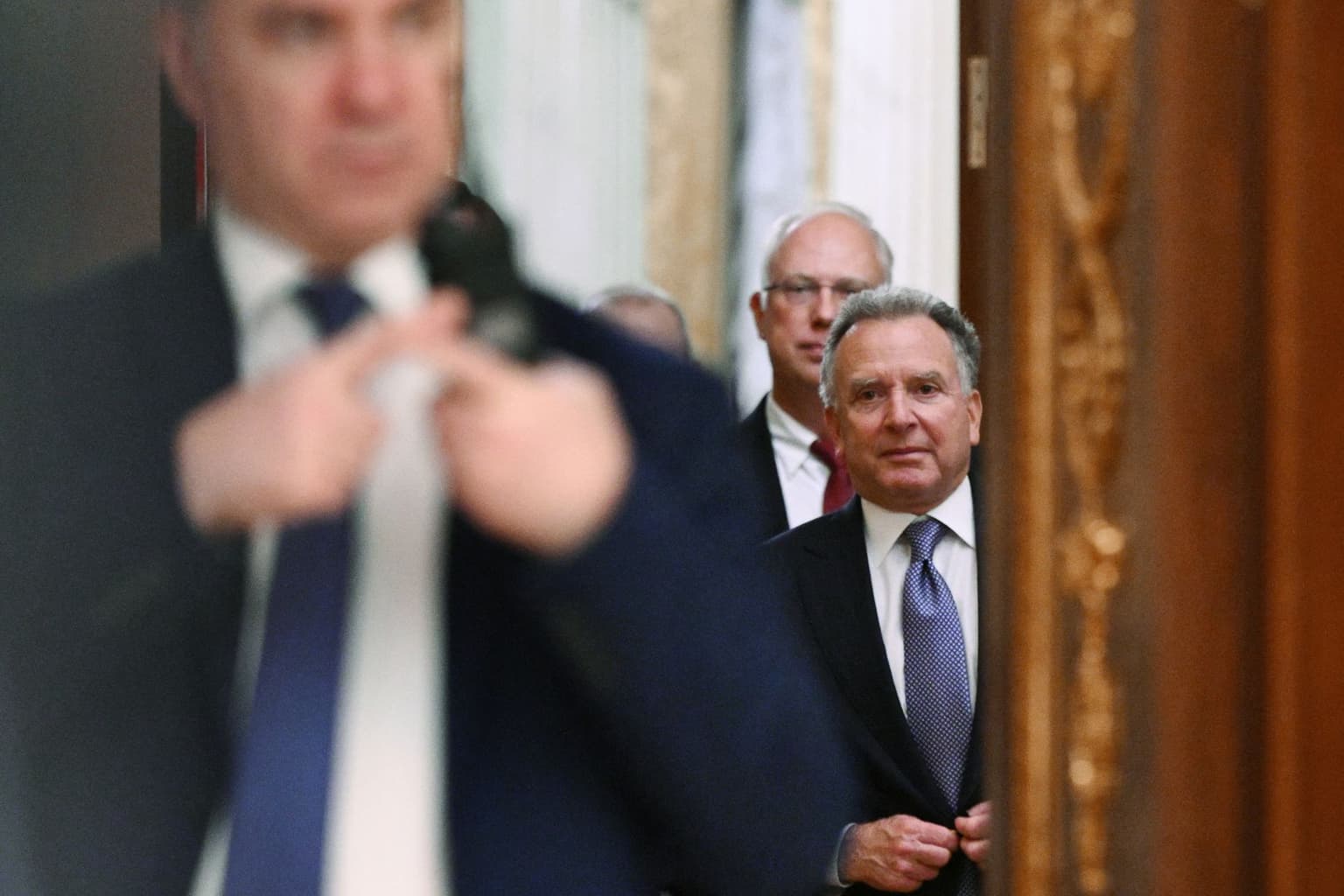
Russia appeared to confirm on Feb. 13 the existence of a sweeping U.S.-Russia economic proposal known in Kyiv as the "Dmitriev package," days after President Volodymyr Zelensky first disclosed it publicly.
The Ukrainian president said on Feb. 6 that intelligence had briefed him on what he described as a roughly $12 trillion framework for large-scale economic cooperation between Moscow and Washington.
"Intelligence showed me the so-called 'Dmitriev package' that he presented in the U.S. — it amounts to around $12 trillion," Zelensky told reporters in Kyiv.
The reference is to Kirill Dmitriev, an envoy who heads Russia's sovereign wealth fund and has remained engaged with top U.S. officials, including Special Envoy Steve Witkoff.
The White House twice declined to confirm the existence of such proposals in comments to the Kyiv Independent — first after Zelensky's disclosure and again following a subsequent Bloomberg reporting.
The Russian acknowledgment marks the first official signal that such proposals are on the table as the U.S. pushes for a deal to end Russia's war against Ukraine.
What's inside?
That Bloomberg reporting offered a detailed look at what Russia may be seeking.
The outlet reported on Feb. 12 that Russia seeks to secure a wide-ranging economic partnership with the U.S. as part of an arrangement tied to Ukraine.
Citing an internal Russian memo prepared earlier this year, the outlet said Moscow wants relief from restrictions that have cut it off from the dollar payment system.
Russia reportedly views the restoration of dollar-based settlements as part of a potential peace deal. The memo outlines seven areas of possible U.S.-Russia cooperation.
Beyond regaining access to dollar transactions, Moscow reportedly seeks long-term contracts for American aircraft to modernize Russia's commercial fleet, as well as joint ventures in hard-to-recover oil extraction and liquefied natural gas production.
The Kremlin has long sought the lifting of U.S. sanctions on its aviation sector.
The proposals also include cooperation in nuclear energy, and expanded mining projects for lithium, copper, nickel, and platinum.
To sweeten the offer, the Kremlin signals it is ready to factor in previous American investments in Russia and contribute to compensation for losses incurred after Western companies exited the market following the start of Moscow's all-out war.
U.S. firms would receive preferential treatment if they return to Russia's market.
The plan also envisions joint efforts to promote fossil fuels globally as an alternative to the so-called "green" climate-focused policies.
Moscow's careful confirmation
When asked about the package on Feb. 13, Kremlin spokesperson Dmitry Peskov didn't deny its existence. He framed it as a natural extension of shared economic interests.
"This Bloomberg article explains something that is quite obvious," Peskov said. "Of course, we are offering cooperation. Of course, companies from both countries are potentially interested in this cooperation — so there you have joint ventures."
Russia has not refused to use dollars — it was the United States that imposed restrictions on the use of the currency, he added.
His response marked Moscow's first public acknowledgment that economic cooperation proposals are under discussion with Washington — a significant shift given the White House's refusal to confirm such talks.
The dollar gambit
Among the proposals, Russia's push to return to dollar-based settlements stands out as the most politically sensitive — and hypocritical.
Russian President Vladimir Putin has repeatedly argued that the dollar's global dominance is declining and accused the U.S. of "parasitizing" the world economy.
Putin has also predicted that U.S. sanctions policy against Moscow would ultimately undermine the dollar's role in global finance.
A renewed embrace of dollar transactions would mark a reversal from the Kremlin's recent policy of "de-dollarization," as Moscow's officials have called it.
Since 2022, Russia has expanded settlements in national currencies with partners such as India and China and promoted alternatives within the BRICS group.
Although Putin said in October 2024 that there were no immediate plans to create a single BRICS currency, he noted the bloc's pursuit of financial sovereignty.
That effort has earlier drawn a warning from the Trump administration.
In January 2025, U.S. President Donald Trump threatened to impose 100% tariffs on BRICS members if they attempt to adopt a new or existing currency to replace the U.S. dollar in international trade.
Ukraine as bargaining chip
Taken together, the reported "Dmitriev package" suggests that Moscow is linking any movement on Ukraine not only to territorial and political demands, but also to a sweeping reset of economic relations with the United States.
Russia sees the war in Ukraine as leverage for extracting massive economic concessions from Washington, while trying to push its maximalist demands for Kyiv.